11 November 2009

Dante's Inferno

Quick set of questions for my gentle readers (I assume you’re all fairly mild-mannered, but maybe I am wrong. Any members of Genghis's Golden Horde reading this?) - If you were to describe hell how would you do it? How would you structure hell? Who would you put in in? How would you punish them? If you’re Dante Alighieri, you’d give hell a crazy, intricate structure from off the top of your head and people it with tons of historical/mythological/

literary figures (and your own political opponents, of course!) and make an epic poem for the ages out of it.


Ah, Dante’s Inferno. Who wouldn’t find this plot fascinating: Sinful poet descends to hell and is given a personal tour by Virgil. Sound morbid? Well, The Inferno is morbid in spots, but that’s not the whole story. This poem is philosophical, grotesque, poignant, and even humorous, but never boring. What really sets this piece apart from other medieval poems is the first person narration - Dante makes himself the main character. The result is an intimate journey through the nine circles of hell, and it feels like you’re along for the ride. I really loved the personal encounters Dante had (which range from political adversaries to mythological beasts)- they’re alternately horrifying, heartbreaking, and hilarious. Dante’s rich characterizations make this poem's characters' seem so human. The Inferno is also amusing in a morbid, ironic way. The punishments are so fitting (I sincerely hope I am not the only person who has laughed at the punishment for the misers and spendthrifts in the Fourth Circle. Hehe It made me giggle in class), plus it’s fun to see where Dante puts someone. Achilles from The Iliad gets banished to the Second Circle. Hmm…I would have put him in the fifth circle for being sullen, but it’s Dante’s hell and Dante's rules. Don’t let any of this fool you though - The Inferno is also a serious reflection on sin, punishment, and redemption. My fellow poetry geeks take note as well: The structure of this poem is superb. Dante broke this down mathematically: 33 cantos (plus prologue), with 33 tercets (3 line stanzas) per canto, with 33 syllables per tercet. As a wannabe poet, I am impressed with how complex this poem's structure is (and I am feeling a bit inferior)!


The Inferno is a great read, but it is really complex, so I suggest using the Allan Mandlebaum translation. Mandlebaum’s poetry is suitably lyrical but not at all daunting. Plus, use an annotated version. This poem is full of allusions to historical, mythological, Biblical, literary, and contemporary characters (at least Dante’s contemporaries). You may not understand what’s going on if you don’t understand who he’s talking to.


So pack your bags, my friends! Dante’s Inferno is an epic poetic journey that descends to the icy depths of hell (Yep, it's icy down there) and manages to be beautiful, entertaining, and philosophical as well. Maybe Virgil will give us the VIP tour. We just won’t stay past lunchtime..if you don't mind.


Next Week: I am going to blog on Simon Montefiore’s Sashenka. This is an amazing contemporary historical novel about the Russian Revolution. I have waited for a year, A YEAR, to get my hands on this book. I was finally able to read it this weekend and can’t wait to share it!

04 November 2009

The Hunger Games

The North America of the future is not a world you would recognize…or a world you would want to live in, for that matter. Panem, as the continent is now called, is ruled by the ruthless Capitol. As punishment for a rebellion decades earlier, the other twelve districts of Panem are required to send a teen boy and girl to the yearly Hunger Games in which the kids are then required to fight each other to the death in a reality show that sounds like Survivor meets The Coliseum. The kids are selected by lots, so sixteen year old Katniss, who is solely responsible for keeping her mother and sister alive, is relieved when she is not selected. Her momentary relief turns to terror when her beloved sister is chosen to go to The Hunger Games. Desperate to spare her sister, Katniss volunteers. The other contestants may think that Katniss is at a disadvantage, coming from the most squalid district in Panem, but they have another thing coming…

Laura suggested this book to me last month, and I only now got my hands on it. (*glares at library wait list*) I absolutely loved this book! (Thanks again, Laura!) The Hunger Games is an incredibly original book. I've never read anything quite like it, but it reminded me of so many different books and themes: Lord of the Flies, Frank Peretti’s Veritas Project series, dystopian sci fi, the Minotaur myth, reality TV at its worst (is there such a thing as it at its best?), Soviet era Russia. This book’s primary strength is Katniss. She is just so likable and easy to sympathize with. She is no mamby-pamby Bella "Rescue me! I have a paper cut!" Swan, but she’s also not one of those obnoxious tough guy, er, girl characters that makes you want to vomit. The story is told in Katniss’ distinctive, ironic, witty voice, and the narration is also in the present tense, which greatly adds to the suspense. And suspenseful this plot certainly is! I started this book one Friday night when I had finished all of my homework. I figured I would get a headstart on my reading for the week. I didn’t stop until I finished it in the wee hours of Saturday morning – this book is that addictive.

Now, I know what you may be thinking: “Zella, brag on that book all you want. It sounds like a slasher movie!” I know it sounds that way, but I promise you, it isn’t. Yes, The Hunger Games is built upon a gruesome, disturbing premise, but the book itself is not gruesome, although it is a bit disturbing. Collins does a masterful job of conveying what is happening with out being unduly graphic. (It is a YA book, after all.) Besides, I think there is a huge difference between something that wallows in the dark recesses of the human mind to celebrate it and something that delves into the dark recesses of the human mind to make a serious statement about that side of human nature. The Hunger Games is definitely the latter. This book is actually very philosophical, without being ponderous. I really loved how this book subtly attacks reality TV. I hope I don't hurt any feelings, but I hate reality TV. I think it is the most unreal, disgusting thing on TV. I despise the way Survivor, Big Brother, and I am a Celebrity Get Me Out of Here! condone despicable behavior in the name of entertainment. Yeah, pal, that is not entertainment, at least not in my book. The Hunger Games very effectively portrays reality TV, with its emphasis on ruthlessness and appearance, for what it really is – shallow.

I have learned that modern YA fiction falls into two categories: really good and really bad. Put The Hunger Games in the first category. It is well-written and absolutely impossible to put down. But be warned: This book is part of a series. The cliffhanger ending will both intrigue and anger you (in an "Arggh! I have to know the rest of the story!" sort of way), especially at 2am. If you read The Hunger Games, you will end up hunting down the second novel in the series, Catching Fire!

P.S. Thanks for all of the excellent recommendations! I am happy to know that all of my readers have such great taste in books! I am also going to blog on Ayn Rand's Anthem (suggested by Math is a Plentiful Harvest) and Something Wicked This Way Comes and 1984 (both suggested by Rebecca on her excellent blog Readers Anonymous.) Please send me more recommendations!

~

Next Week: Part Two of Zella Kate Presents: The Medieval/Renaissance Epics - Dante's Inferno. (I was planning to blog on another book, but I am reading three or four right now and can't make up my mind. I am a book glutton. I pile too much on my proverbial plate and then must consume everything on said plate. Not unlike my behavior at Chinese restaurants!)

28 October 2009

Beowulf

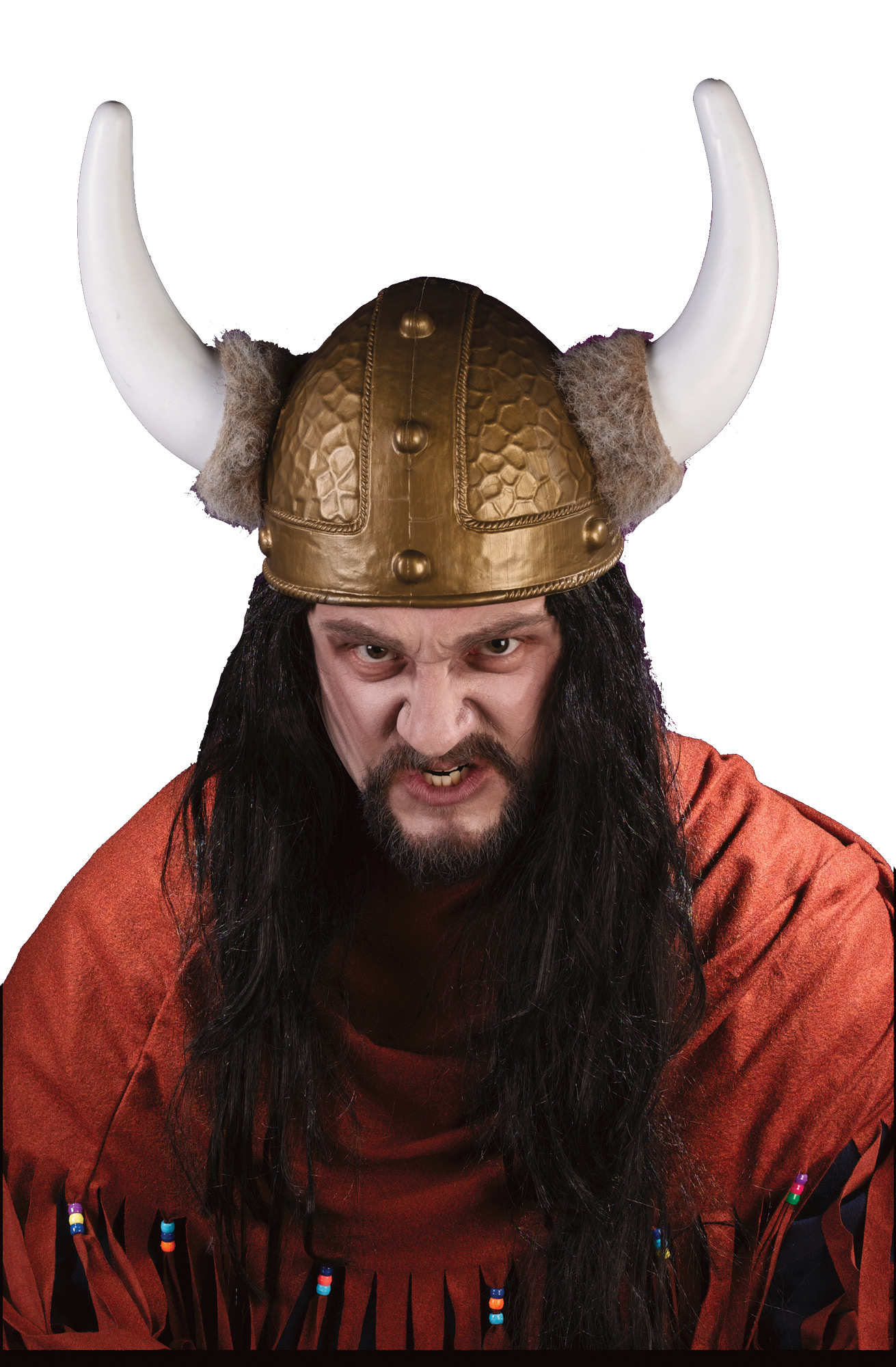
Many centuries ago, the Danes led a pleasant life, full of typical Viking activities (raiding villages, exploring the Atlantic, and wearing awesome, pointy, horned helmets). And they partied in true Dark Ages fashion with copious amounts of mead and Scandinavian folk ballads. Tis the life! And then, the Danes would snuggle into their cozy beds for the night in their mead hall. Their peaceful slumber only disturbed when the vile demon Grendel storms into their hall and GOBBLES THEM UP ALIVE! This is not right! One minute you are asleep, the next minute you’re being eaten by a gnarly demon. This can not be! Grendel must be stopped! Somebody help! Fortunately for the Danes (and Western literature), a hero does emerge from the icy Scandinavian fjords to teach this grubby creep a thing or two. And that would be none other than the fearsome Geat hero Beowulf! *cue triumphant hero music*

As I announced last week, I am kicking off my Zella Kate Presents series with that most awesome of Anglo Saxon epic poems - Beowulf. Forget Schwarzenegger and Stallone (in case you already haven't), Beowulf is the best action hero ever! Even though Beowulf is a poem, and you would think there isn’t much excitement to be had, Beowulf is full of great fights, cool monsters, nasty blood feuds, and ample treasure. It’s absolutely action packed! I was especially impressed that, although Beowulf is missing a few passages, it didn't affect my enjoyment of the text. Some of the ancient texts I've read in class have been really good, but the plots seemed stilted and forced. In large part, this is because some of the text has been lost and parts have been added and taken away for centuries, which has a tendency to weaken a text. But this was not a problem with Beowulf at all. The plot stayed consistent and the missing pieces are not vital to understanding the text. And even though you don't get the character development that you would with a traditional prose narrative, Beowulf, as a character, is easy to like. He is brave, chivalrous, and pretty clever, as his verbal smackdown with Urfurt proved. ("Take that, you sniveling Shieldling!") Beowulf's likeability is a big plus, and it helps make the ending especially poignant. If you like mythology and fantasy, take note! Beowulf has many of the elements associated with high fantasy and was a major influence on J.R.R. Tolkien. (Side note: If you're a fantasy fan and have never read Norse or Celtic mythology, get thee to a library! You will love these myths because this is largely where fantasy, especially high fantasy, draws much inspiration from.)

Almost everyone I’ve talked to (or eavesdropped on) who has read Beowulf told me the same thing: Great story but the Old English is just so….hard. I love Old English - it is a fascinating language, but it is hard to read. In fact, Old English is essentially a foreign language because it is far closer to modern German than modern English. If Beowulf has frightened you in the past due to the Old English, I suggest the Seamus Heaney translation. He preserves the formal, elegant, somewhat archaic tone you’d expect but without the complex original Old English. Heaney is a Nobel prize winning poet, and his version preserves Beowulf’s best attributes and makes it more accessible. His passages are so elegant and beautiful. He preserves the traditional alliteration, so it's also fun to read aloud! Only problem: Heaney is an Irish poet and he uses quite a few Irish words. Wouldn't be a problem, but I am nit picky and didn’t think it was appropriate to use Gaelic words in an Anglo Saxon text about Scandinavian Vikings. It’s a small issue though. I also suggest getting an annotated version, in case any of the cultural or historical aspects of the text stump you.

I know that the two words "epic poem"strikes more fear in your average person than the words "Nazi torture," but give Beowulf a chance! Beowulf is an epic adventure, an amazing poem, and a fascinating slice of Viking/Anglo Saxon culture. Don’t let the haters fool you – Beowulf is a great read!

Next Week: I am so excited! By blogging on Beowulf, I not only read a great classic and had an excuse to surf the internet whilst in search of great images related to awesome pointy, horned helmets, I was also able to read my book for next week. Yay! A few weeks ago, Laura suggested Suzanne Collins' The Hunger Games. Unfortunately, due to a wait list, I only got my hands on the book last weekend. (O Wait List, thou art the bane of my reading existence. Thou art evil. Thou shalt be obliterated the day I take over the world and print enough copies of each book for everyone. *cough*) The Hunger Games is an excellent book, and I can’t wait to share it! I just have to write my review.