Showing posts with label Zella Kate Presents: The Medieval and Renaissance Epics. Show all posts

02 December 2009

Hamlet

I assume you've all heard that old saying about misfortune: "When it rains, it pours." I would think Prince Hamlet would know all about that phrase. Just two months after his beloved father's death, his father's brother, Claudius, has wedded Hamlet's mother and is now the reigning king of Denmark. As if that's not enough of a downer, Hamlet encounters a ghost who claims to be his father. The Ghost reveals that he did not a die a natural death - Hamlet's dad succumbed to murder. And the murderer is none other than Claudius. The Ghost orders Hamlet to avenge him, but Hamlet, ever the thinker, is not sure. Is The Ghost telling the truth? Is Claudius guilty? Leave it to crafty Hamlet to uncover this mystery.

How now, gentle readers! As the final installment in Zella Kate Presents: The Medieval/Renaissance Classics I bring you my favorite Shakespearean play: Hamlet! *trumpet flourish* One reason I love this play is because Hamlet blends a moving mix of action, tragedy, suspense, and humor all into one package. I always groan when I hear people describe Shakespeare as boring. I think what these people assume is that since Shakespeare's name is now synonymous with brilliant literature, his work must be boring. I think calling Hamlet boring is operating with a strange definition of boring. Ghosts, intrigue, poisonings (Yes, plural!) , insanity, and the most dysfunctional family this side of Days of Our Lives is boring? Hmm. I think what they fail to realize is that Shakespeare didn't set out to write masterpieces. He was an entertainer. He wrote what would sell! Although our Elizabethan forebears may have had questionable hygiene practices and worn weird, uncomfy shoes, I refuse to believe that the masses of Elizabethan England would've flocked to Shakespeare's plays if they were not entertaining. To think these plays are no longer entertaining because the actor says "Prithee" is being a bit narrow-minded.We still love a train wreck as much as we did then…and oh! what a train wreck this family and country is!

Although Shakespeare may have been an entertainer, I think it speaks volumes of his talent that his work is brilliant literature, even though it wasn't written with that intent. (Come on, how many people 400 years from now are going to look at our summer blockbusters and call them masterpieces? Mmm hmm. That's what I thought.) Yes, the language in Hamlet is beautiful, and this play is full of some of Shakespeare's most famous lines ("Something is rotten in Denmark," "The play's the thing," Fickle thy name is woman," and my personal favorite: "Methinks it is like a weasel.") But the real draw for me is the character Hamlet. This philosophizing, avenging Dane is one of the most fascinating, contradictory, and complex figures in all of literature. (And he is one of my favorite characters, hands down.) Hamlet is undoubtedly noble and brilliant, as his melancholy, philosophical soliloquies and shrewd plotting illustrate, but he also possesses a razor sharp wit, an inexhaustible supply of puns, and a dark sense of sarcasm. (I laugh every time I read his "Polonius is at supper" exchange with Claudius.) But as likable as Hamlet is, he is also capable of being irrational, impulsive, and, at times, downright cruel. Is he perfect? Far from it, but it's his combination of strengths and weaknesses that make him so appealing. Hamlet is one of my favorite characters because he is so human. Furthermore, how can you not feel sorry for the poor guy? His dad's dead, his uncle stole the throne, his mom married the nasty uncle, and now they're both accused of killing dear old Dad…by dad himself. I firmly believe poor Hamlet needs a hug.

I recently read a poll that said the most common issue readers have with Shakespeare is the complex, ornate Elizabethan English. I am not going to argue that Shakespeare's plays are easy to read. You do have to make an effort to read and comprehend the text. However, I am firmly convinced that this is more of a matter of how you go about reading the texts, rather than an issue with the plays themselves. I have posted a companion blog that gives some ideas on how to do this. Feel free to adapt it to your own purposes.
Don't dismiss Shakespeare's Hamlet as a dry, boring, waste of your time! That couldn't be the further from the truth! Hamlet is a masterfully crafted, psychologically intense drama with an unforgettable cast of characters.

~

Next Week: I am not sure. My finals are next week, so I can not guarantee that I will get anything read. If that's the case, I'll post a blog about my favorite poets or a list of the books I'd take if I were stranded on a deserted island (one must always be prepared). If I do get something read, it will probably be a classic British murder mystery by Dorothy Sayers or Ellis Peters. I miss my mysteries and I want something more light hearted after all of the deep, dark things I've been blogging about. I believe a witty, genteel murder mystery with minimal amounts of blood and ample amounts of entertainment is exactly what we need. Hopefully, next week, I'll meet you here over a (figurative) corpse. And to make up for extorting pie off of you last week, I'll make us tea, erm, of the non-poisoned variety. Oh, fine, I'll taste it first, but I assure you I am not trying to kill any of you. *hides arsenic behind back and grins innocently*

11 November 2009

Dante's Inferno

Quick set of questions for my gentle readers (I assume you’re all fairly mild-mannered, but maybe I am wrong. Any members of Genghis's Golden Horde reading this?) - If you were to describe hell how would you do it? How would you structure hell? Who would you put in in? How would you punish them? If you’re Dante Alighieri, you’d give hell a crazy, intricate structure from off the top of your head and people it with tons of historical/mythological/

literary figures (and your own political opponents, of course!) and make an epic poem for the ages out of it.


Ah, Dante’s Inferno. Who wouldn’t find this plot fascinating: Sinful poet descends to hell and is given a personal tour by Virgil. Sound morbid? Well, The Inferno is morbid in spots, but that’s not the whole story. This poem is philosophical, grotesque, poignant, and even humorous, but never boring. What really sets this piece apart from other medieval poems is the first person narration - Dante makes himself the main character. The result is an intimate journey through the nine circles of hell, and it feels like you’re along for the ride. I really loved the personal encounters Dante had (which range from political adversaries to mythological beasts)- they’re alternately horrifying, heartbreaking, and hilarious. Dante’s rich characterizations make this poem's characters' seem so human. The Inferno is also amusing in a morbid, ironic way. The punishments are so fitting (I sincerely hope I am not the only person who has laughed at the punishment for the misers and spendthrifts in the Fourth Circle. Hehe It made me giggle in class), plus it’s fun to see where Dante puts someone. Achilles from The Iliad gets banished to the Second Circle. Hmm…I would have put him in the fifth circle for being sullen, but it’s Dante’s hell and Dante's rules. Don’t let any of this fool you though - The Inferno is also a serious reflection on sin, punishment, and redemption. My fellow poetry geeks take note as well: The structure of this poem is superb. Dante broke this down mathematically: 33 cantos (plus prologue), with 33 tercets (3 line stanzas) per canto, with 33 syllables per tercet. As a wannabe poet, I am impressed with how complex this poem's structure is (and I am feeling a bit inferior)!


The Inferno is a great read, but it is really complex, so I suggest using the Allan Mandlebaum translation. Mandlebaum’s poetry is suitably lyrical but not at all daunting. Plus, use an annotated version. This poem is full of allusions to historical, mythological, Biblical, literary, and contemporary characters (at least Dante’s contemporaries). You may not understand what’s going on if you don’t understand who he’s talking to.


So pack your bags, my friends! Dante’s Inferno is an epic poetic journey that descends to the icy depths of hell (Yep, it's icy down there) and manages to be beautiful, entertaining, and philosophical as well. Maybe Virgil will give us the VIP tour. We just won’t stay past lunchtime..if you don't mind.


Next Week: I am going to blog on Simon Montefiore’s Sashenka. This is an amazing contemporary historical novel about the Russian Revolution. I have waited for a year, A YEAR, to get my hands on this book. I was finally able to read it this weekend and can’t wait to share it!

28 October 2009

Beowulf

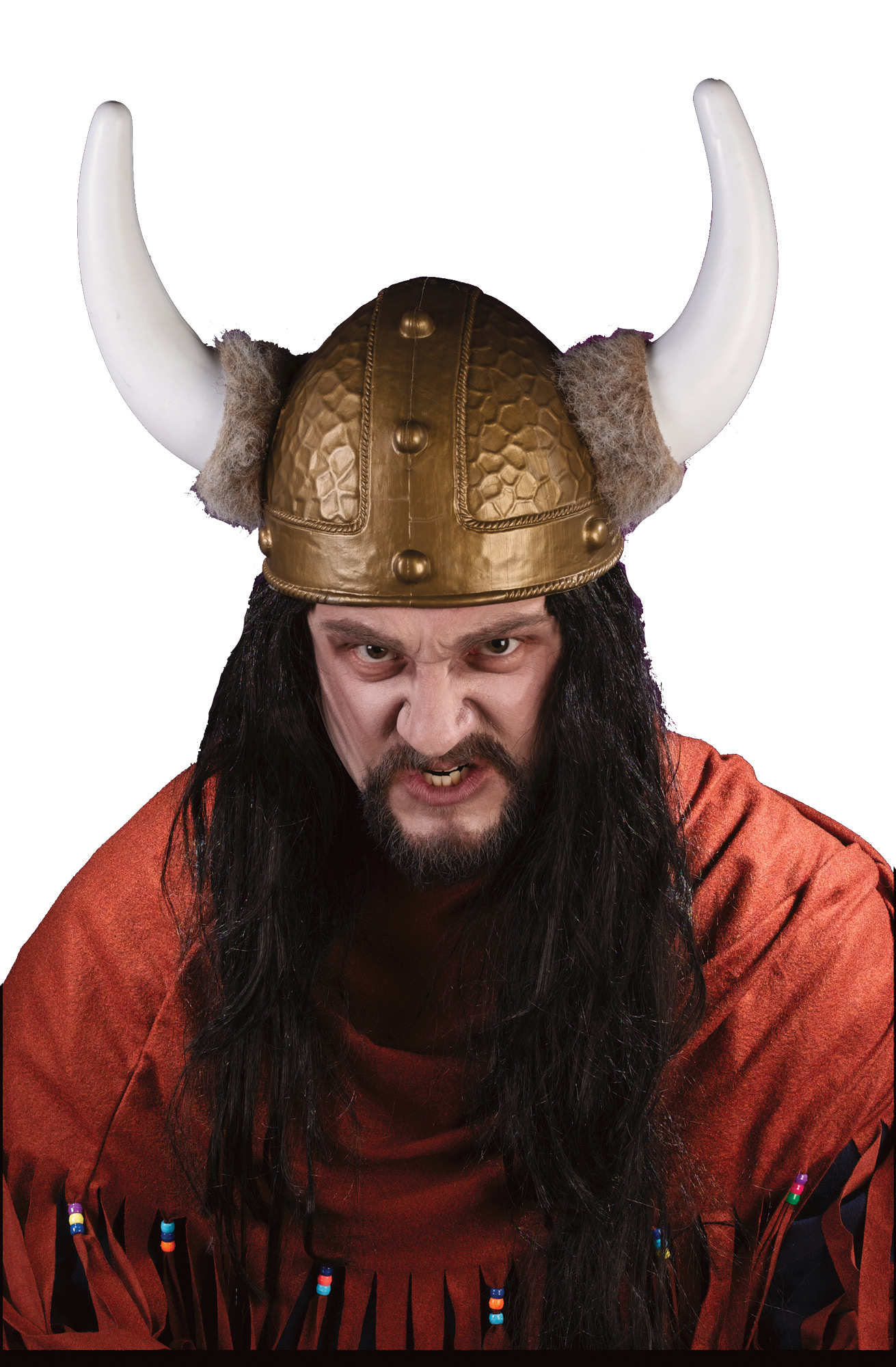
Many centuries ago, the Danes led a pleasant life, full of typical Viking activities (raiding villages, exploring the Atlantic, and wearing awesome, pointy, horned helmets). And they partied in true Dark Ages fashion with copious amounts of mead and Scandinavian folk ballads. Tis the life! And then, the Danes would snuggle into their cozy beds for the night in their mead hall. Their peaceful slumber only disturbed when the vile demon Grendel storms into their hall and GOBBLES THEM UP ALIVE! This is not right! One minute you are asleep, the next minute you’re being eaten by a gnarly demon. This can not be! Grendel must be stopped! Somebody help! Fortunately for the Danes (and Western literature), a hero does emerge from the icy Scandinavian fjords to teach this grubby creep a thing or two. And that would be none other than the fearsome Geat hero Beowulf! *cue triumphant hero music*

As I announced last week, I am kicking off my Zella Kate Presents series with that most awesome of Anglo Saxon epic poems - Beowulf. Forget Schwarzenegger and Stallone (in case you already haven't), Beowulf is the best action hero ever! Even though Beowulf is a poem, and you would think there isn’t much excitement to be had, Beowulf is full of great fights, cool monsters, nasty blood feuds, and ample treasure. It’s absolutely action packed! I was especially impressed that, although Beowulf is missing a few passages, it didn't affect my enjoyment of the text. Some of the ancient texts I've read in class have been really good, but the plots seemed stilted and forced. In large part, this is because some of the text has been lost and parts have been added and taken away for centuries, which has a tendency to weaken a text. But this was not a problem with Beowulf at all. The plot stayed consistent and the missing pieces are not vital to understanding the text. And even though you don't get the character development that you would with a traditional prose narrative, Beowulf, as a character, is easy to like. He is brave, chivalrous, and pretty clever, as his verbal smackdown with Urfurt proved. ("Take that, you sniveling Shieldling!") Beowulf's likeability is a big plus, and it helps make the ending especially poignant. If you like mythology and fantasy, take note! Beowulf has many of the elements associated with high fantasy and was a major influence on J.R.R. Tolkien. (Side note: If you're a fantasy fan and have never read Norse or Celtic mythology, get thee to a library! You will love these myths because this is largely where fantasy, especially high fantasy, draws much inspiration from.)

Almost everyone I’ve talked to (or eavesdropped on) who has read Beowulf told me the same thing: Great story but the Old English is just so….hard. I love Old English - it is a fascinating language, but it is hard to read. In fact, Old English is essentially a foreign language because it is far closer to modern German than modern English. If Beowulf has frightened you in the past due to the Old English, I suggest the Seamus Heaney translation. He preserves the formal, elegant, somewhat archaic tone you’d expect but without the complex original Old English. Heaney is a Nobel prize winning poet, and his version preserves Beowulf’s best attributes and makes it more accessible. His passages are so elegant and beautiful. He preserves the traditional alliteration, so it's also fun to read aloud! Only problem: Heaney is an Irish poet and he uses quite a few Irish words. Wouldn't be a problem, but I am nit picky and didn’t think it was appropriate to use Gaelic words in an Anglo Saxon text about Scandinavian Vikings. It’s a small issue though. I also suggest getting an annotated version, in case any of the cultural or historical aspects of the text stump you.

I know that the two words "epic poem"strikes more fear in your average person than the words "Nazi torture," but give Beowulf a chance! Beowulf is an epic adventure, an amazing poem, and a fascinating slice of Viking/Anglo Saxon culture. Don’t let the haters fool you – Beowulf is a great read!

Next Week: I am so excited! By blogging on Beowulf, I not only read a great classic and had an excuse to surf the internet whilst in search of great images related to awesome pointy, horned helmets, I was also able to read my book for next week. Yay! A few weeks ago, Laura suggested Suzanne Collins' The Hunger Games. Unfortunately, due to a wait list, I only got my hands on the book last weekend. (O Wait List, thou art the bane of my reading existence. Thou art evil. Thou shalt be obliterated the day I take over the world and print enough copies of each book for everyone. *cough*) The Hunger Games is an excellent book, and I can’t wait to share it! I just have to write my review.