Showing posts with label adventure. Show all posts

07 August 2011

Miss Peregrine's Home For Peculiar Children


For the time being, life sucks for teenager Jacob Portman. Oh, sure, he comes from a wealthy Florida family and wants for nothing, but he's recently been depressed lately. And who wouldn't be? He found his eccentric grandfather viciously mauled to death by dogs. Problem is, Jacob knows his grandfather didn't die that way. His grandfather was actually killed by monsters, a reflection of the strange childhood the former used to tell Jacob about when he was younger, a childhood that involves a strange school on a secluded Welsh island that housed children who were invisible or capable of levitating. Of course, try telling the true story to anyone, and you get shipped off rather promptly to a shrink, which is exactly what happens to Jacob. Fortunately for his own peace of mind, he is able to connive a visit to the island his grandfather talked about to prove to himself whether or not the older man's stories had any basis in fact. There, he discovers that his grandfather's seemingly fictional tales are very real. . . .

I came across this unique young adult book while working at the library. One of my coworkers was reading about it on Amazon. We both were attracted to the creepy cover, so she ended up reading it. She told me the book wasn't spectacular but was undeniably weird. Naturally, I couldn't resist giving it a try. Ransom Riggs's Miss Peregrine's School For Peculiar Children is an uneven book with its share of flaws, but it is certainly unique and has enough good points that I recommend it.

After discussing this book with two other people who have read it, all three of us concurred that the best adjective for it is, ahem, "peculiar." It's not scary--Don't fear! This book will not give you nightmares--but it is certainly eerie. This haunting gothic atmopshere is exactly why I recommend it. The creepy gothic pictures that accompany the text play a substantial role in creating this atmosphere. In fact, even if this book isn't your cup of tea, I recommend checking it out just to look at the pictures, which range from levitating girls to creepy clown children. They are that good! Apparently, Riggs used actual old photos that he found in various collectors' stashes and then worked the images into the story. Overall, I thought he did a fairly good job of working random pictures into a a fairly cohesive plot. Occasionally, the plot did seem a little contrived--as if there were certain pictures that Riggs wanted to include just because they were so cool; thus, he added a related element in the story. Nevertheless, the effect more than makes up for this problem.

Personally, I had a bit of a hard time liking Jacob. Oh, he's not awful, not by any stretch of the imagination. He's just like every other somewhat sarcastic troubled YA hero I've met lately. I would have liked someone with a little more depth and individuality. The person he reminds me most of is Percy Jackson--more on that in a minute--but I found Percy a little more accessible. Jacob's first person narration is still pretty funny, though, and I don't necessarily have to like the protagonist to enjoy a book.

My only real complaint with the book is that about midway through, the story transitions from a good dark gothic horror/mystery story to a run-of-the-mill fantasy adventure, a la Percy Jackson. I like a good fantasy adventure, such as the aforementioned Percy Jackson series, but I was enjoying the gothic aspects of the story, so I felt a little cheated when the tone switched. To the book's credit, it's action-packed fantasy adventure with its own unique spin on the genre.

The ending leads me to believe that a sequel in the works, but I can't find anything to confirm that on the internet. I'm not sure the story is quite strong enough to generate a YA series, but I'll withhold judgment until I read any sequels. Riggs is certainly a creative writer with an eye for the eccentric, so I don't doubt that any follow-up would be equally as whimsical and strange . . . and feature just as many amazing photos! ^^

If you like gothic horror or are hankering for another fantasy adventure read now that Percy Jackson's series is at an end, I recommend Miss Peregrine's School For Peculiar Children. It's certainly not a book for everyone, but it has its charms, one being that it's a quirky fast-paced read, perfect for summer! At the very least, pick it up and skim the pictures. I kid you not--they are delightfully creepy.
~~~~
Next Time: I have no idea.
~~~
This Week In Literary History: 5 August 1850: French writer Guy de Maupassant is born. Truth is, I've only read one of his stories--"The Necklace"--but it's such a good short story! You should definitely read it if you never have.

10 January 2010

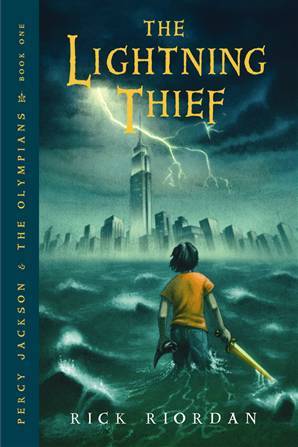
The Lightning Thief

Oh, boy, the gods sure are mad. Zeus has just accused Hades of stealing his master lightning bolt (a big no-no) and Hades insist that he is innocent of these charges! Most folks would call a lawyer, but hehe Greek gods do not do that when they get ticked at each other. Instead, they start the equivalent of World War III. What you don't know about this? Hmmph. Not exactly up on current affairs are you? Well, neither is troubled twelve year old Percy Jackson. In fact, he doesn't even believe that the gods are real, but when he learns that his absent father is a god (making Percy a Half-Blood), lands at a summer camp for his demigods, and is tasked with retrieving Zeus' bolt, Percy quickly gets up to speed on things. With his new friends, Grover and Annabeth, Percy sets off on a cross country trek that is fraught with peril and battles with all sorts of cool mythological creatures en route to putting a stop to the gods' pending war.
I have had several people (including Scott and Penguins Quack) recommend the Percy Jackson series to me. Thanks, guys! I loved The Lightning Thief, the first book in that series, and have already reserved the second one. I love mythology, so I am proud of author Rick Riordan, a former teacher of Greek mythology, for introducing younger readers to all of the great characters and stories of Greek mythology with his engaging books. (Riordan's books prove that there is way more to mythology than just characters with crazy, unpronounceable names.) Riordan weaves his allusions to the original myths in well with the modern story; I had a lot of fun guessing which villain was which mythological monster in disguise.

This is a fun book to read in general, though. The plot is action-packed, with frequent confrontations between Percy and the likes of Ares, Medusa, and Chimera, and lots of heart stopping twists and turns. Percy's snarky first person narration is easy to read and is also quite funny. I also enjoyed Riordan's characters - I liked Percy and his pals, and Riordan's characterizations of the mythological characters stay true to form but are still original.

My only problem, and it's a minor one, is that, in true adventure story fashion, there were a couple of parts where I got annoyed at Percy for walking into a trap that I thought was obvious. It wasn't angry annoyance though, so much as sympathetic "Percy, what are you doing? No! Don't do that! What's the matter with you? No!" annoyance, and it didn't affect my enjoyment of the story.

The Percy Jackson series is targeted toward junior high kids, but I firmly believe that nobody can outgrow a good book. The Lightning Thief is an exciting, inventive fantasy adventure that you won't put down. (At least, I didn't.) If you love mythology, you'll love Riordan's take on the original tales and enjoy recognizing the characters. If you have never read mythology, this accessible book is the perfect introduction.

~

Next Time: I will review Hemingway's classic Spanish Civil War saga For Whom The Bell Tolls. I am about halfway through it and I start school tomorrow, but I will try to have my review up in the middle of the week, if at all possible.

31 December 2009

Hatchet

Before thirteen year old Brian Robeson embarks on a plane trip across the rugged wilds of North Canada to spend the summer with his father, his mother gives him a hatchet as a parting gift. Brian thinks little of it when he hastily clips the hatchet onto his belt, but a few hours later, after his pilot dies and the plane crashes hundreds of miles off course, the hatchet is the only possession that Brian has. Brian quickly learns that the only way he'll stay alive in the rugged wilderness is to learn to use his hatchet...and his wits.

My dear friend Bev loves Gary Paulsen novels and she recommended Hatchet to me. (Thanks again, Bev!) As I have mentioned on here before, I adore a good survival story, and the Newberry Prize-winning Hatchet is no exception. A good survival novel has to have an appropriate level of suspense and action, and Hatchet certainly delivers on that count. Between the terrifying plane crash, Brian's pitiful early attempts to stay alive, and his unnerving encounter with an angry moose, I couldn't put this book down. Author Paulsen is an avid outdoorsman (He's even competed several times in Alaska's grueling Iditarod dog race); consequently, he infuses much of his knowledge of the wilderness into this book, adding an authentic feel that many other survival novels lack. I also enjoyed Paulsen's prose. He writes with a blunt, pared-down style, and his prose has a naturalistic, conversational tone which, oddly enough, reminded me some of The Catcher in the Rye. (That's a weird comparison, but it kept coming back to me as I read.) Paulsen also effectively uses repetition in his narration, giving the text an almost lyrical narrative poetry sound.

The biggest strength of this novel, though, is Brian. He is so easy to sympathize with. Of course, it's hard not to be sympathetic to his plight, but he is also a genuinely likable character. He lacks the angsty, whiny attitude that so many teenaged protagonists have (and which I find to be a distasteful turnoff.) Brian is also a realistic teenaged character who is easy to relate to. He's levelheaded and intelligent, but he's also no superhuman: he's vulnerable; he makes mistakes. His ordinary qualities make him all the more appealing.

Hatchet is a young adult novel which will delight readers of all ages. This novel is well-written, engaging, and exciting - the perfect antidote to a dreary winter day. Erm, dare I say this without being too corny? You'll enjoy getting lost with Hatchet.

~

Next Time: For my first article of 2010, I will finally post my long-promised article on online book resources. I promised waaaaay back in September to add links to my blog. (You thought I forgot. Admit it.)) This article will serve as a tour guide, if you will, of my additions. I'll include some of my favorite internet sources for books and book recommendations (you guys have to promise you won't desert me for polished reviewers who do not ramble incessantly!), genre-specific websites, and online recommendations lists. If, and this if is highly contingent on my notoriously inept techno abilities, I can get them to load, I will also have links to prominent annual book awards and the New York Times' bestseller lists.

28 October 2009

Beowulf

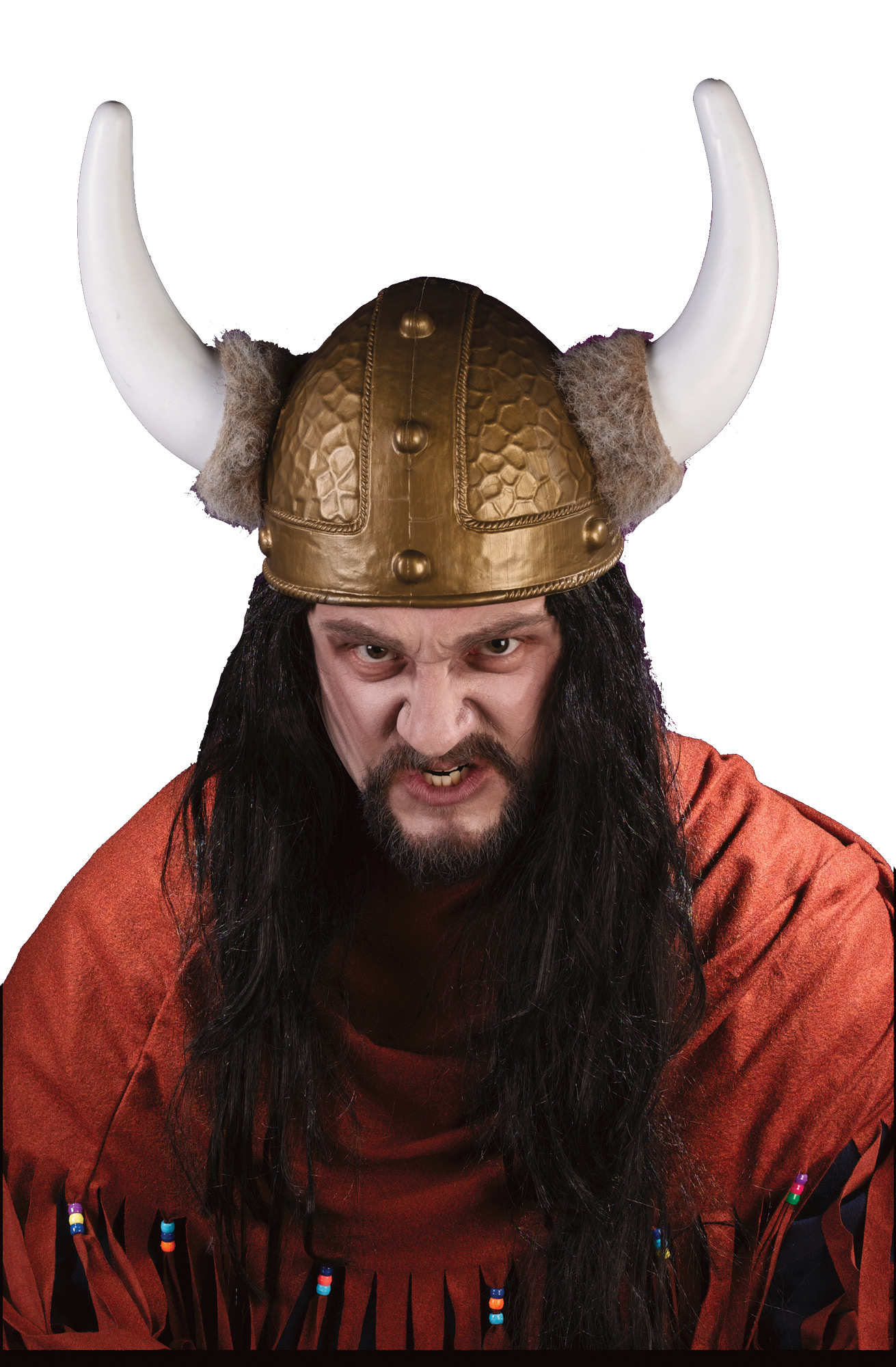
Many centuries ago, the Danes led a pleasant life, full of typical Viking activities (raiding villages, exploring the Atlantic, and wearing awesome, pointy, horned helmets). And they partied in true Dark Ages fashion with copious amounts of mead and Scandinavian folk ballads. Tis the life! And then, the Danes would snuggle into their cozy beds for the night in their mead hall. Their peaceful slumber only disturbed when the vile demon Grendel storms into their hall and GOBBLES THEM UP ALIVE! This is not right! One minute you are asleep, the next minute you’re being eaten by a gnarly demon. This can not be! Grendel must be stopped! Somebody help! Fortunately for the Danes (and Western literature), a hero does emerge from the icy Scandinavian fjords to teach this grubby creep a thing or two. And that would be none other than the fearsome Geat hero Beowulf! *cue triumphant hero music*

As I announced last week, I am kicking off my Zella Kate Presents series with that most awesome of Anglo Saxon epic poems - Beowulf. Forget Schwarzenegger and Stallone (in case you already haven't), Beowulf is the best action hero ever! Even though Beowulf is a poem, and you would think there isn’t much excitement to be had, Beowulf is full of great fights, cool monsters, nasty blood feuds, and ample treasure. It’s absolutely action packed! I was especially impressed that, although Beowulf is missing a few passages, it didn't affect my enjoyment of the text. Some of the ancient texts I've read in class have been really good, but the plots seemed stilted and forced. In large part, this is because some of the text has been lost and parts have been added and taken away for centuries, which has a tendency to weaken a text. But this was not a problem with Beowulf at all. The plot stayed consistent and the missing pieces are not vital to understanding the text. And even though you don't get the character development that you would with a traditional prose narrative, Beowulf, as a character, is easy to like. He is brave, chivalrous, and pretty clever, as his verbal smackdown with Urfurt proved. ("Take that, you sniveling Shieldling!") Beowulf's likeability is a big plus, and it helps make the ending especially poignant. If you like mythology and fantasy, take note! Beowulf has many of the elements associated with high fantasy and was a major influence on J.R.R. Tolkien. (Side note: If you're a fantasy fan and have never read Norse or Celtic mythology, get thee to a library! You will love these myths because this is largely where fantasy, especially high fantasy, draws much inspiration from.)

Almost everyone I’ve talked to (or eavesdropped on) who has read Beowulf told me the same thing: Great story but the Old English is just so….hard. I love Old English - it is a fascinating language, but it is hard to read. In fact, Old English is essentially a foreign language because it is far closer to modern German than modern English. If Beowulf has frightened you in the past due to the Old English, I suggest the Seamus Heaney translation. He preserves the formal, elegant, somewhat archaic tone you’d expect but without the complex original Old English. Heaney is a Nobel prize winning poet, and his version preserves Beowulf’s best attributes and makes it more accessible. His passages are so elegant and beautiful. He preserves the traditional alliteration, so it's also fun to read aloud! Only problem: Heaney is an Irish poet and he uses quite a few Irish words. Wouldn't be a problem, but I am nit picky and didn’t think it was appropriate to use Gaelic words in an Anglo Saxon text about Scandinavian Vikings. It’s a small issue though. I also suggest getting an annotated version, in case any of the cultural or historical aspects of the text stump you.

I know that the two words "epic poem"strikes more fear in your average person than the words "Nazi torture," but give Beowulf a chance! Beowulf is an epic adventure, an amazing poem, and a fascinating slice of Viking/Anglo Saxon culture. Don’t let the haters fool you – Beowulf is a great read!

Next Week: I am so excited! By blogging on Beowulf, I not only read a great classic and had an excuse to surf the internet whilst in search of great images related to awesome pointy, horned helmets, I was also able to read my book for next week. Yay! A few weeks ago, Laura suggested Suzanne Collins' The Hunger Games. Unfortunately, due to a wait list, I only got my hands on the book last weekend. (O Wait List, thou art the bane of my reading existence. Thou art evil. Thou shalt be obliterated the day I take over the world and print enough copies of each book for everyone. *cough*) The Hunger Games is an excellent book, and I can’t wait to share it! I just have to write my review.

14 October 2009

Life of Pi


I used to think that being stranded alone on a lifeboat in the middle of the Pacific Ocean would be the worst possible situation to be stranded in. After reading Yann Martel’s fascinating, surreal novel Life of Pi, I stand corrected. Being stranded on a lifeboat with a 450 lb. Bengal tiger in the middle of the Pacific Ocean is definitely the worst possible situation to be stranded in. And this is exactly what happens to Martel’s sixteen year old protagonist Pi Patel.

I love survival stories, but many of the more recent ones I’ve read have been so clichéd. (If I read another story about a band of egotistical teens that get stranded and learn the values of teamwork, I will scream.) Not so with Life of Pi. This is one of the most original books I’ve read in a long time. The plot is pretty outlandish (and at times a touch fantastical) but Martel always keeps it believable and interesting. (I didn’t want to put this book down!) I was really impressed with the skill Martel crafted his plot structure. He breaks the story down into three very different parts and alternates between settings and narrators. Many books I’ve read like this suffer from uneven pacing. (Yes, books suffer from this medical condition. Sadly, there is no cure.) I didn’t have this problem with this novel at all. The first section is a bittersweet, coming-of-age tale that only hints at what is to come. The second part is the meat of the story – Pi’s harrowing, psychological battle of wills with Richard Parker (the aforementioned Bengal tiger) which is intense, weirdly funny, and quite frightening. The third section is a short, sarcastic interview with Pi that calls into question the entire story of his ordeal on the Pacific. Martel weaves back and forth between these disparate elements of the story effortlessly, and each part more than stands on its own. Furthermore, this is one of the best written books I’ve read in a while. Martel infuses his scenes with so much humor, insight, and emotion. His descriptive scenes are wonderfully evocative and his narration often delves into philosophical territory about faith, fear, and survival, without ever being ponderous or cumbersome. This book is an emotional rollercoaster that has you laughing one minute and cringing in terror the next. (I don’t consider myself unduly squeamish, but there is one scene in here involving a hyena and a zebra that literally made me sick to my stomach. It takes an exceptional writer to produce that kind of an emotional response in a reader!)

As impressive as this book is, I think that Pi Patel stands out as Martel’s greatest achievement in this novel. Pi is intelligent, courageous, and sensitive – he always has your sympathy. I must admit: When I first read the plot description on the back cover, which explained that Pi was a practicing Hindu, Muslim, and Christian, I was a bit skeptical. I love to study religions myself, but I thought that sounded gimmicky. After reading the book, however, I realized that Pi’s novel religious beliefs fit him perfectly. One of the scenes that I ended up sympathizing with him the most was actually the one in which his parents and religious mentors desperately try to convince him that his unorthodox beliefs are impossible to reconcile. Many critics compared Pi to the protagonist of Hemingway’s The Old Man and the Sea. Pi reminded me more of Elie Wiesel in Night. I know that’s a strange comparison – Pi is an Indian castaway from the 1970s and Wiesel is a Romanian Jewish Holocaust survivor (and of course, Pi and Wiesel’s religious responses are polar opposites). But Pi’s maturity, wit, and wisdom (not to mention his distinctive, polished, conversational narration) reminded me a lot of Wiesel in Night.

Life of Pi is definitely one of the best contemporary novels I’ve read. Masterfully written, deeply thought provoking, and absolutely captivating, this book has become a modern day classic for a reason. You won’t soon forget Life of Pi.

P.S. Tis the season for Halloween this month, as I am sure that all of you know. I don't celebrate Halloween, but I enjoy being scared senseless and I was going to try to find something suitably spooky for you guys to read. However, I was perusing the Internet yesterday and found a great Halloween reading list on Shmoop that saved me the trouble. (What, you've never heard of Shmoop? *gasp* This is something I shall remedy! Shmoop is a website that features literature and history study guides. Their study guides are amazing [and hilarious.] Shmoop is a fairly new website, but they're adding new features constantly. I highly recommend them.) Shmoop's list features a wonderful assortment of classic horror novels (and poems!) which I either already love (Dracula, Frankenstein, anything by Poe), have been meaning to read and now really want to read (The Picture of Dorian Grey and The Turning of the Screw) or have never heard of and must read pronto (Browning's "Porphyria's Lover." You'll see why when you read the description.) So check out this great recommendation list and be afraid. Be very afraid.

~

Next Week: So far, I’ve been able to spare you guys one of my multiple choice teasers. Well, not this week. I have no idea what I am reviewing next week. I do know it will be either something by James M. Cain or John Le Carre or Lynne Truss's With One More Lousy Free Packet of Seed. I apologize for being so vague, but there is method to my madness. I anticipate that I am going to be attacked with a cruel and unusual amount of homework in the coming weeks, so I am trying to read some shorter novels (and review some of the books I’m reading in World Lit.), so that I can have things to post on and indulge in longer books (Discworld!) during my period of torture, I mean, studies. That’s the plan anyway. We’ll see how my strategy works out.

02 September 2009

The Adventures of Tom Sawyer


Tom Sawyer has a pretty easy life, contrary to what he may believe: his Aunt Polly is indulgent of his youthful pranks, his friends are easily duped into his zany schemes, and his free time is whiled away pretending to be a pirate or bandit. Tom’s carefree life comes to a screeching halt, though, when he and his pal, Huck Finn, witness a savage murder one night in the town cemetery. Tom’s problems suddenly expand from dodging responsibility to dodging the ferocious murderer, Injun Joe.

I’ve always liked Mark Twain as a writer – he’s a natural story teller and he has a wonderful sense of humor. His talents in both of these areas – particularly in the humor department – really shine in The Adventures of Tom Sawyer. Most of Tom’s adventures are pretty amusing – his running away from home to be a pirate was my favorite. Twain’s narration is also very easy to read. He was the first American writer who didn’t consciously imitate English authors in style. Consequently, his hilarious narration and realistic dialogue are easier to read than most 19th century classics. I didn’t have too much trouble with the rustic dialect that his Missouri characters used, but a couple of phrases did baffle me. (Annotated novels work wonders!)

A couple of minor problems: this novel doesn’t really have a plot – it’s very episodic. Most of the chapters are just scenes in which Tom is wrecking havoc on anyone who is unfortunate enough to be in his general vicinity. The most consistent story line is probably the one with Injun Joe. I usually don’t like these types of slice-of-life stories – I find them boring – but Twain keeps things pretty entertaining, so it didn’t annoy me too much. I didn't always find Tom very sympathetic though; Tom was too bratty for my taste at times. (Poor Aunt Polly - the woman has my sympathies.) And I thought the ending was a little too contrived. But these problems didn’t ruin the novel for me in any way.

With Tom’s frequent disappearances from school and his constant escapades, The Adventures of Tom Sawyer is a good book for summer. (I reviewed this one about two months too late!) It’s a fun, easy read. But don’t take this one to the beach. It just seems to call out for a hammock. If you have one…

16 August 2009

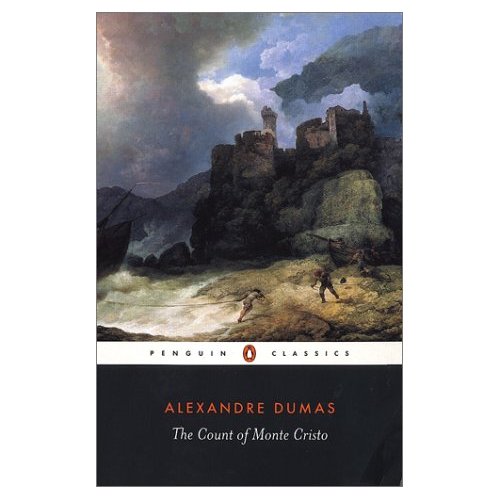
The Count of Monte Cristo


Sailor Edmond Dantès has it all. He has just been named captain of the Pharaon, he is going to marry the love of his life, Mercédès, and he is beloved by everyone who knows him. Then Edmond is denounced as a Bonapartist agent. In 1815 France, this is a serious charge of treason, but it is not true. Edmond is no servant of Napoleon. Someone has falsely accused him, but who? Nevertheless, Edmond is imprisoned in the notorious Château D’If in solitary confinement. After a daring escape from prison, Edmond assumes the identity of the mysterious and fantastically wealthy Count of Monte Cristo. Edmond is determined to make those responsible for his suffering pay. But will Edmond take his quest for vengeance too far?

The Count of Monte Cristo is arguably one of the world's best-known revenge tales, for good reason. Edmond’s elaborate plan for revenge is entertaining and satisfying. There’s just something reassuring about a good revenge story – it’s so nice to see the really bad guys get their justly-deserved comeuppance. Edmond Dantès is also one of my favorite characters in literature - it’s very easy to sympathize with him. The poor guy goes through a lot of pain and misery, but he still retains his ethics and code of honor. I also really enjoyed following his transformation from simple, humble Edmond Dantès to the dashing, manipulative Count of Monte Cristo. As the Count, Dantès is clever and witty – a formidable opponent for those whom he is paying back. Author Alexandre Dumas’s writing style, though melodramatic at times, is also easy to follow. Although this was written in 1844-1845, The Count of Monte Cristo is not a hard book to read.

As much as I enjoyed this story, I did have a few issues with it. My biggest problem: This book is a mammoth! The version I read was 1,462 pages long. I don’t mind long books, but I thought this caused The Count of Monte Cristo to have very uneven pacing. The opening part (which details Edmond’s arrest, imprisonment, and escape) was very good and held my interest, as did the chapters that record Edmond’s extensive game of cat-and-mouse with his enemies. But this book has a lot of subplots, and I found these distracting. (For example, after Edmond’s escape, the story abruptly switches to a young French noble named Franz and his adventures in Italy, and while Edmond’s wreaking havoc on the minds of his enemies, there is a lot of attention given to the secret love affair of one of his friends with one of his enemies’ daughters.) These side stories do eventually tie back into the revenge part of the story, but I thought the parts with Edmond were the most powerful. Whenever the story veered away from Edmond, I became a little exasperated because he was the character I found the most interesting. In all fairness to Dumas, he does make most of these other scenes interesting, so it’s not really painful to have to read them – it just irked me somewhat.

Despite my problem with the pacing, I thought The Count of Monte Cristo was an enjoyable read. The story is exciting and engrossing (particularly Edmond’s ingenious escape from prison), and Edmond Dantès is a character who is well-worth getting acquainted with. Don’t let the length of this novel intimidate you. The Count of Monte Cristo is a grand epic that is well worth your time.