Showing posts with label young adult fiction. Show all posts

11 July 2010

Fever 1793

Mattie Cook dreams of the day she can escape toiling in her family's Colonial Philadelphia coffeehouse for European luxury shops. Her daydreams must take a backseat to reality, however, when the worse yellow fever epidemic in memory strikes the city, causing widespread suffering and chaos. When her mother falls ill, Mattie and her grandfather flee the city to escape the pestilence, but when a cruel twist of fate sends them back to Philly, young Mattie learns far more about life than any jaunt to Europe would ever have taught her.

Laurie Halse Anderson's Fever, 1793 is a pleasant read that I enjoyed and recommend for history buffs and those who like coming of age tales, though it had some minor flaws. Anderson writes Mattie's first person narration with a natural tone that does not come off as too contemporary or sophisticated. I have always found disease tales fascinating. (I am morbid--I will not deny that.) The plot has the right touch of suspense generated not by humans so much as by the dreaded fever, which seems inescapable. The character's seemingly never-ending wait for frost to come adds a nice touch of the proverbial ticking time bomb. The novel's greatest strength is the historical accuracy. Anderson--who lives in Philadelphia--meticulously researched the real life yellow fever epidemic of 1793 that claimed the lives of 10% of the population and caused thousands more to evacuate the City of Brotherly Love. The period details are perfect without bogging the narration down and the scenes that depict the the city's descent into virtual anarchy are compelling.

If the historical detail is the novel's biggest strength, the tale's biggest weakness is Mattie herself. Oh, don't get me wrong: She's a likable enough character. The problem is she's just too . . . predictable. Other than the fever, her problems are all fairly standard--young love, a loving but frustrating relationship with her mother. I have seen a thousand YA protagonists like Mattie--not really a bad kid but slightly disillusioned and annoyed with her mother, just in need of the right crisis to set her squarely on her path to adulthood. I love a good coming-of-age story and the best ones have complex characters that you may on occasion want to kill, but they are complex and unique and, as consequence, all too human. I'm thinking of Gene in A Separate Peace, Holden in The Catcher in the Rye, Scout in To Kill A Mockingbird, and Anne of Green Gables, just to name a few. Mattie's not a bad character--and she's not totally bland and she has her charm--but she's nothing that you haven't seen before in YA fiction. And that is what makes this book, which is a fine read, a good book but not a truly great book, in my opinion.

Though I found Mattie a bit too two-dimensional for my taste, she is not a distasteful main character and her tale of fever, courage, and survival is a gripping read that will appeal to fans of historical fiction and coming-of-age tales. I have long wanted to read a Laurie Halse Anderson book. She's considered a premier voice in YA fiction, and I definitely want to read more of her work. She's a talented writer who is adept at spinning a fine tale and maintaining an impressive historical authenticity at the same time. I have read that her contemporary YA fiction is far more edgy and intense than this novel, so I look forward to sampling more of her work.


~~~~

Next Week: Um, we'll see.

~~~

This Week in Literary History:

10 July 1931: Canadian short story writer Alice Munro is born. Famous for her masterfully crafted literary short stories, Munro is considered one of the best living writers. I read her delightful short story "Walker Brother Cowboy" in World Lit II last semester, and I can't wait to read more of her work.
~~~

06 June 2010

Tamar

Undercover agents Tamar and Dart are parachuted into their native Holland by the British during the brutal Hunger Winter of 1944, following the disaster of Operation Market Garden. They are instructed to organize the fragmented Dutch resistance in central Holland to coordinate acts of sabotage against the Nazis and, even more importantly, control the rogue bands of partisans who often provoked severe reprisals upon the civilian population with their anti-Nazi activities. This proves near impossible as deprivation, infighting, and jealousy lead to a shocking act of betrayal, which is only fully revealed fifty years later when an English teenager named Tamar uncovers her relatives' past following a family tragedy.

I came across Mal Peet's award-winning YA novel Tamar one day at work in the library. I was filing away other books when the cover of this one--specifically the parachute on the cover--caught my eye. (As some of you know, my dad and grandfather were both paratroopers, so that automatically made me curious.) Then the tagline that said "Espionage, Passion, Betrayal" caught my eye. Yeehaw! Espionage and Betrayal! Two subjects that have long fascinated me. (Some of you may think my priorities are screwed up . . . ) I once tried to write a spy novel when I was younger. It was quite awful, but I love a realistic spy story--you may gather James Bond doesn't work for me--and that's precisely why I loved this book so much.

Tamar offers one of the most realistic and, as a consequence, harrowing portrayals of espionage I have ever read. Peet does a superb job of bringing alive the boredom, paranoia, and terror that dominated the life of an undercover operative in Nazi-occupied Europe. I adore good historical fiction, so I enjoyed the distinctive historical atmosphere he re-creates in this novel. I also loved the pacing in this novel. Though Tamar is over 400 pages long, I couldn't put this book down! Ironically enough, the descriptions of the partisans' bouts with boredom do not make for boring reading, and there is plenty of action to keep a reader happy. The highlight for me was an ambush on a high-ranking S.S. officer that hardly goes according to plan. I don't want to give too much away, but it reminded me some of the assassination of Reinhard Heydrich by the Czech Resistance, and I assumed that was the inspiration. In fact, Peet relied on an actual incident that occurred in Nazi-occupied Holland. (I refuse to give details away, because if you had the name you would google it and that would ruin the suspense. Besides, if you google it and read about the Nazis' payback for this ambush, you're liable to be distraught for awhile . . . )
I also especially enjoyed the characters. The two protagonists--known only by their aliases of Tamar and Dart--are complex characters who are both likable but definitely flawed. I especially liked the way Peet handled the jealousy that eventually leads to the tragic finale. I have always found novels that delved into jealousy fascinating precisely because that is an emotion we all have experienced at one point. No matter how much we may disagree with what characters in works like Othello, A Separate Peace, and The Count of Monte Cristo do when provoked by jealousy, deep down it is something we can all relate to. (Right? Or is it just me? *banishes self to sit with Othello, Iago, Gene, Danglars, and Fernand* I must say, I am a bit nervous in this company. . . ) In much the same way, the envy that rips this resistance group apart is disturbing precisely because it is so easy to understand where both sides are coming from. I sort of guessed what would happen about a third of the way through, but I think that was intentional on Peet's part. It didn't lessen my enjoyment. In fact, it made me keep reading to see if my guess was correct.

I liked this novel very much; however, I did find the modern scenes, in which a girl named Tamar slowly pieces together what happened, less compelling. Not that they were bad, but compared to the WWII scenes, which are so haunting and unique, the common YA subplot of a troubled teen who puzzles out her family's tragic past with the help of a relative's parting gift was just a bit too cliche for me. Tamar the Dutch resistance fighter interested me, because he was a unique character; Tamar the confused teen girl did not interest me very much, only because I have seen a thousand characters like her. Again, it is not that the scenes set in modern times are badly written. It's just they struck me as less compelling, because they lacked the originality of the rest of the novel.

If you like excellent historical fiction or are just looking for an action-packed good read, try Tamar. The historical atmosphere is impeccable, and the story is superbly crafted. I'm glad I picked this one up. :D

~~~~~

Next Time: Maybe some Daphne Du Maurier. Maybe some Dostoevsky.

This Week in Literary History:
31 May 1819: American poet Walt Whitman is born on Long Island, New York. My lit. professor once said that Whitman was not the first American poet, but he was the first distinctly American poet. Whitman's Leaves of Grass is a poetry classic, but I am quite fond of his heartbreaking "Into the Cradle Endlessly Rocking", an autobiographical poem in which Whitman describes the moment he realized he was born to be a poet.

I would also be remiss to not note, seeing as I am reviewing a novel about WWII, that today is the 66th anniversary of the D-Day invasions.

10 January 2010

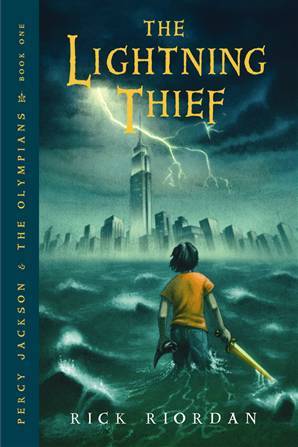
The Lightning Thief

Oh, boy, the gods sure are mad. Zeus has just accused Hades of stealing his master lightning bolt (a big no-no) and Hades insist that he is innocent of these charges! Most folks would call a lawyer, but hehe Greek gods do not do that when they get ticked at each other. Instead, they start the equivalent of World War III. What you don't know about this? Hmmph. Not exactly up on current affairs are you? Well, neither is troubled twelve year old Percy Jackson. In fact, he doesn't even believe that the gods are real, but when he learns that his absent father is a god (making Percy a Half-Blood), lands at a summer camp for his demigods, and is tasked with retrieving Zeus' bolt, Percy quickly gets up to speed on things. With his new friends, Grover and Annabeth, Percy sets off on a cross country trek that is fraught with peril and battles with all sorts of cool mythological creatures en route to putting a stop to the gods' pending war.
I have had several people (including Scott and Penguins Quack) recommend the Percy Jackson series to me. Thanks, guys! I loved The Lightning Thief, the first book in that series, and have already reserved the second one. I love mythology, so I am proud of author Rick Riordan, a former teacher of Greek mythology, for introducing younger readers to all of the great characters and stories of Greek mythology with his engaging books. (Riordan's books prove that there is way more to mythology than just characters with crazy, unpronounceable names.) Riordan weaves his allusions to the original myths in well with the modern story; I had a lot of fun guessing which villain was which mythological monster in disguise.

This is a fun book to read in general, though. The plot is action-packed, with frequent confrontations between Percy and the likes of Ares, Medusa, and Chimera, and lots of heart stopping twists and turns. Percy's snarky first person narration is easy to read and is also quite funny. I also enjoyed Riordan's characters - I liked Percy and his pals, and Riordan's characterizations of the mythological characters stay true to form but are still original.

My only problem, and it's a minor one, is that, in true adventure story fashion, there were a couple of parts where I got annoyed at Percy for walking into a trap that I thought was obvious. It wasn't angry annoyance though, so much as sympathetic "Percy, what are you doing? No! Don't do that! What's the matter with you? No!" annoyance, and it didn't affect my enjoyment of the story.

The Percy Jackson series is targeted toward junior high kids, but I firmly believe that nobody can outgrow a good book. The Lightning Thief is an exciting, inventive fantasy adventure that you won't put down. (At least, I didn't.) If you love mythology, you'll love Riordan's take on the original tales and enjoy recognizing the characters. If you have never read mythology, this accessible book is the perfect introduction.

~

Next Time: I will review Hemingway's classic Spanish Civil War saga For Whom The Bell Tolls. I am about halfway through it and I start school tomorrow, but I will try to have my review up in the middle of the week, if at all possible.

31 December 2009

Hatchet

Before thirteen year old Brian Robeson embarks on a plane trip across the rugged wilds of North Canada to spend the summer with his father, his mother gives him a hatchet as a parting gift. Brian thinks little of it when he hastily clips the hatchet onto his belt, but a few hours later, after his pilot dies and the plane crashes hundreds of miles off course, the hatchet is the only possession that Brian has. Brian quickly learns that the only way he'll stay alive in the rugged wilderness is to learn to use his hatchet...and his wits.

My dear friend Bev loves Gary Paulsen novels and she recommended Hatchet to me. (Thanks again, Bev!) As I have mentioned on here before, I adore a good survival story, and the Newberry Prize-winning Hatchet is no exception. A good survival novel has to have an appropriate level of suspense and action, and Hatchet certainly delivers on that count. Between the terrifying plane crash, Brian's pitiful early attempts to stay alive, and his unnerving encounter with an angry moose, I couldn't put this book down. Author Paulsen is an avid outdoorsman (He's even competed several times in Alaska's grueling Iditarod dog race); consequently, he infuses much of his knowledge of the wilderness into this book, adding an authentic feel that many other survival novels lack. I also enjoyed Paulsen's prose. He writes with a blunt, pared-down style, and his prose has a naturalistic, conversational tone which, oddly enough, reminded me some of The Catcher in the Rye. (That's a weird comparison, but it kept coming back to me as I read.) Paulsen also effectively uses repetition in his narration, giving the text an almost lyrical narrative poetry sound.

The biggest strength of this novel, though, is Brian. He is so easy to sympathize with. Of course, it's hard not to be sympathetic to his plight, but he is also a genuinely likable character. He lacks the angsty, whiny attitude that so many teenaged protagonists have (and which I find to be a distasteful turnoff.) Brian is also a realistic teenaged character who is easy to relate to. He's levelheaded and intelligent, but he's also no superhuman: he's vulnerable; he makes mistakes. His ordinary qualities make him all the more appealing.

Hatchet is a young adult novel which will delight readers of all ages. This novel is well-written, engaging, and exciting - the perfect antidote to a dreary winter day. Erm, dare I say this without being too corny? You'll enjoy getting lost with Hatchet.

~

Next Time: For my first article of 2010, I will finally post my long-promised article on online book resources. I promised waaaaay back in September to add links to my blog. (You thought I forgot. Admit it.)) This article will serve as a tour guide, if you will, of my additions. I'll include some of my favorite internet sources for books and book recommendations (you guys have to promise you won't desert me for polished reviewers who do not ramble incessantly!), genre-specific websites, and online recommendations lists. If, and this if is highly contingent on my notoriously inept techno abilities, I can get them to load, I will also have links to prominent annual book awards and the New York Times' bestseller lists.

20 December 2009

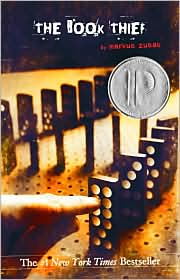
The Book Thief

I am not sure how to describe Markus Zusak's amazing novel The Book Thief. I could tell you that this superb, beautiful book is the coming-of-age story, as narrated by Death, of Liesel Meminger, a foster child in Nazi Germany who is obsessed with reading and whose family shelters a Jewish boxer from the authorities. And that would all be true. But I much prefer Death's own description from the prologue: "It's just a small story really, about, among other things: a girl, some words, an accordionist, some fanatical Germans, a Jewish fist fighter, and quite a lot of thievery..." This quote perfectly captures the quirky, wry nature of this book.

PIA recommended The Book Thief to me a couple of months ago, and Penguins Quack assured me that this was an excellent book a couple of weeks later when I mentioned on Sparklife that I was reading it. (A big thank you to both of you!) That delighted me because the subject matter already had me intrigued. (Remember in my review of Sashenka when I said one of the periods of history I planned to specialize in was The Russian Revolution? Well, Nazi Germany is the other. My mother's family is German Jewish and I've always been both mortified and fascinated with this historical period.) Fortunately, my excitement about reading this book was completely justified. The Book Thief did not let me down!

I adored this novel! This book reminds me of To Kill A Mocking bird and Life of Pi. As with these two novels, The Book Thief features a compelling coming of age tale, a strong protagonist, and an offbeat plot. I especially loved the narration, which is simultaneously hauntingly lyrical and sardonically conversational. Death has a distinctive, witty voice which greatly enhances the appeal of this novel. I also loved the pacing. This book is big (550+ pages), but I was never once bored. The Book Thief is alternately hilarious and sorrowful, but it's never slow. (You will not put it down. I was so taken in by the story that I snuck this book into a shoe store with me and read it.) The historical details of this novel also impressed me. Zusak portrays the little-seen world of ordinary working class Germans during WWII vividly.

My favorite part of this book, though, was the characters. Liesel is one of the most likable, realistic, and complex female protagonists that I've ever encountered and I loved her. (Her freakish obsession with books was another reason as well!) As great as Liesel is, the rich cast of colorful supporting characters are just as intriguing. You will not soon forget Hans, her kindhearted foster father; Rosa, her foulmouthed foster mother; Rudy, her mischievous best friend; Max, the determined Jew Liesel's family courageously shelters; and Death, the eccentric narrator who will surpass all of your preconceived notions about the Grim Reaper. I usually dislike fiction about this period because the characters are often so one-dimensional, especially if they're German. (It's as if authors believe that all Germans during WWII were devilish Nazi fiends or noble superhuman resistors. If you've ever read Gitta Sereny's powerful, disturbing nonfiction book Into that Darkness, you would know the situation was far more complex than that and is all the more troubling because of it.)

I have nothing but praise for this book, but I will warn you: You will cry at the end. I dare you not to. I sobbed for ten minutes and still have not fully recovered. Not that this book is unrelentingly melancholy. It isn't. In fact, The Book Thief is hilarious in many parts and has an essentially uplifting message. But after getting to know these characters, the heart-rending ending will bring you to tears.

Needless to say, I highly recommend this book. The Book Thief is a captivating novel about courage, family, and, yes, books which you will want to reread. This book has received high praise since its publication a few years ago and it has merited every bit of it.

~

Next Time: Well, the holidays are approaching and I decided to review a Christmas themed book: Hercule Poirot's Christmas. (Um, yes, it is a murder mystery. But I love Agatha Christie and I just bought this one. And it is set during Christmas, so it will do.) If I do not read this one, I am not sure what I will blog about.

04 November 2009

The Hunger Games

The North America of the future is not a world you would recognize…or a world you would want to live in, for that matter. Panem, as the continent is now called, is ruled by the ruthless Capitol. As punishment for a rebellion decades earlier, the other twelve districts of Panem are required to send a teen boy and girl to the yearly Hunger Games in which the kids are then required to fight each other to the death in a reality show that sounds like Survivor meets The Coliseum. The kids are selected by lots, so sixteen year old Katniss, who is solely responsible for keeping her mother and sister alive, is relieved when she is not selected. Her momentary relief turns to terror when her beloved sister is chosen to go to The Hunger Games. Desperate to spare her sister, Katniss volunteers. The other contestants may think that Katniss is at a disadvantage, coming from the most squalid district in Panem, but they have another thing coming…

Laura suggested this book to me last month, and I only now got my hands on it. (*glares at library wait list*) I absolutely loved this book! (Thanks again, Laura!) The Hunger Games is an incredibly original book. I've never read anything quite like it, but it reminded me of so many different books and themes: Lord of the Flies, Frank Peretti’s Veritas Project series, dystopian sci fi, the Minotaur myth, reality TV at its worst (is there such a thing as it at its best?), Soviet era Russia. This book’s primary strength is Katniss. She is just so likable and easy to sympathize with. She is no mamby-pamby Bella "Rescue me! I have a paper cut!" Swan, but she’s also not one of those obnoxious tough guy, er, girl characters that makes you want to vomit. The story is told in Katniss’ distinctive, ironic, witty voice, and the narration is also in the present tense, which greatly adds to the suspense. And suspenseful this plot certainly is! I started this book one Friday night when I had finished all of my homework. I figured I would get a headstart on my reading for the week. I didn’t stop until I finished it in the wee hours of Saturday morning – this book is that addictive.

Now, I know what you may be thinking: “Zella, brag on that book all you want. It sounds like a slasher movie!” I know it sounds that way, but I promise you, it isn’t. Yes, The Hunger Games is built upon a gruesome, disturbing premise, but the book itself is not gruesome, although it is a bit disturbing. Collins does a masterful job of conveying what is happening with out being unduly graphic. (It is a YA book, after all.) Besides, I think there is a huge difference between something that wallows in the dark recesses of the human mind to celebrate it and something that delves into the dark recesses of the human mind to make a serious statement about that side of human nature. The Hunger Games is definitely the latter. This book is actually very philosophical, without being ponderous. I really loved how this book subtly attacks reality TV. I hope I don't hurt any feelings, but I hate reality TV. I think it is the most unreal, disgusting thing on TV. I despise the way Survivor, Big Brother, and I am a Celebrity Get Me Out of Here! condone despicable behavior in the name of entertainment. Yeah, pal, that is not entertainment, at least not in my book. The Hunger Games very effectively portrays reality TV, with its emphasis on ruthlessness and appearance, for what it really is – shallow.

I have learned that modern YA fiction falls into two categories: really good and really bad. Put The Hunger Games in the first category. It is well-written and absolutely impossible to put down. But be warned: This book is part of a series. The cliffhanger ending will both intrigue and anger you (in an "Arggh! I have to know the rest of the story!" sort of way), especially at 2am. If you read The Hunger Games, you will end up hunting down the second novel in the series, Catching Fire!

P.S. Thanks for all of the excellent recommendations! I am happy to know that all of my readers have such great taste in books! I am also going to blog on Ayn Rand's Anthem (suggested by Math is a Plentiful Harvest) and Something Wicked This Way Comes and 1984 (both suggested by Rebecca on her excellent blog Readers Anonymous.) Please send me more recommendations!

~

Next Week: Part Two of Zella Kate Presents: The Medieval/Renaissance Epics - Dante's Inferno. (I was planning to blog on another book, but I am reading three or four right now and can't make up my mind. I am a book glutton. I pile too much on my proverbial plate and then must consume everything on said plate. Not unlike my behavior at Chinese restaurants!)