Showing posts with label 21st century American literature. Show all posts

07 February 2013

Critical Mass


Hello, everybody in Blogger world. I know it's been awhile since I have regularly updated this blog, but if there's anything I've learned in the past few years, it's that being an English major means I have much less time for fun reading because of all of my assigned reading. Fortunately, I got enough of a break to read some fun stuff. So I am quite pleased to present my review for the third novel in Cyrus Keith's NADIA trilogy:Critical Mass.

The last time we checked in with Nadia and her team of determined protectors, a major disagreement on what to do with the latest survivor of the Pinnacle's do-gooder sentiment gone horribly wrong--a young girl named Sofi--forced Nadia to make a difficult decision and strike out on her own. Critical Mass opens three years later, as she struggles with hiding from her adversaries and parenting a headstrong preteen. Despite her best efforts to remain discrete, circumstances force her to return to her friends in Virginia. By now, though, all roads lead to the group's complex in Virginia, as wildcard former Pinnacle operative Jenna reappears, with her previous employers hot on her trial. When all parties' paths finally cross in the book's (and the series's) gripping finale, what will become of Nadia and company?

I am very pleased to review the final book of this trilogy. (A big thank you to Cyrus for sending me an ARC!) I usually have a somewhat dim view of series. It's not that I don't love a good series--I really do. The problem is I rarely find a series where the quality remains even. Usually, the first book is okay, but the author only truly gets into their groove with the second or third book. Or the first book is amazing and then the rest sharply decline in quality. Or each book just descends into merely rehashing the plot of the original. Not so with Keith's NADIA series. All three books are excellent science fiction thrillers in their own right, each is integral to the series's overall story arc, and each features its own distinctive plot. It's refreshing to read a series that displays such quality craftsmanship.

As always with Keith's books, Critical Mass maintains a frenetic pace and expertly juggles multiple character points-of-view. The result is an immensely book that is really hard to put down. (I kept sneaking off to read it when I should have been doing my homework. I had to know how it ended!) The one aspect about this book that I really noticed, though, was the superb characterization. Each of the preceding books also featured great, complex characters, but I was especially impressed with them in this installation of the series. I think one of the reasons the characters jumped out at me even more so than usual is the believable character changes all have undergone. Sometimes character changes in a series, or really even the course of a book, are distracting because it feels forced, but that is not at all the case with these characters. Each major character--especially Nadia, Jon, and Jenna--has undergone some harrowing experiences in the course of the series, and as a result, each has also undergone some resulting personality adjustments. The development of these personality changes flows naturally from the characters themselves, as well as their recent experiences, ensuring that this action-packed tale also rewards readers with deft characterization, as well.

I was also especially impressed with the ending. I am picky about endings, so I appreciated the way Keith wrapped up the action in this book. He did not shy away from the unfortunate consequences of some of the characters' actions to provide readers with forced sentimentality, but he also does not gratuitously torture you with forced action and destruction, either. As a result, without giving anything away, the ending is bittersweet, but it is also realistic and powerful.

If you have read the previous two novels in Keith's series, you simply must read the final chapter in the NADIA saga. Critical Mass offers more of the same high-quality science fiction that Keith always provides, including a gripping plot, rich characterization, and a satisfying conclusion to the series. You will have to wait a couple of days to purchase it, but it will be released this Friday, February 8th.

P.S. If you're reading through this review, thinking, "But I haven't read the other books, so I wouldn't understand what's going on," get thee to the first two books in the series! You don't know what you're missing. As with this novel, they're wonderful reads. They're also, as I mentioned earlier, fast-paced thrillers that you will work through very quickly. As soon as you finish them, you will be desperate to know what happens next. And you won't have to wait to find out. :)

To purchase Critical Mass, follow this link to the publisher's website. If you're looking for the first two books, you can also find them--Becoming NADIA and Unalive--on the website, as well. Also, Becoming Nadia is now available as a print book. And, as to quote the late, great Billy Mays, "But, wait, there's more!" In June, the companion book, Lies and Paine, which focuses on the series's crafty and wonderful Jenna is scheduled to be released. So, stay tuned. The NADIA trilogy proper may be finished, but there's still more to come. ~~~~~~~

I'm not sure when I'll be able to post my next review, but it likely will not be until May. But by then I will have graduated--finally!--and I should have at least a couple of months to decompress before I move on to my next time-consuming adventure. Thus, I should be able to post some book review. Miss you guys!


07 August 2011

Miss Peregrine's Home For Peculiar Children


For the time being, life sucks for teenager Jacob Portman. Oh, sure, he comes from a wealthy Florida family and wants for nothing, but he's recently been depressed lately. And who wouldn't be? He found his eccentric grandfather viciously mauled to death by dogs. Problem is, Jacob knows his grandfather didn't die that way. His grandfather was actually killed by monsters, a reflection of the strange childhood the former used to tell Jacob about when he was younger, a childhood that involves a strange school on a secluded Welsh island that housed children who were invisible or capable of levitating. Of course, try telling the true story to anyone, and you get shipped off rather promptly to a shrink, which is exactly what happens to Jacob. Fortunately for his own peace of mind, he is able to connive a visit to the island his grandfather talked about to prove to himself whether or not the older man's stories had any basis in fact. There, he discovers that his grandfather's seemingly fictional tales are very real. . . .

I came across this unique young adult book while working at the library. One of my coworkers was reading about it on Amazon. We both were attracted to the creepy cover, so she ended up reading it. She told me the book wasn't spectacular but was undeniably weird. Naturally, I couldn't resist giving it a try. Ransom Riggs's Miss Peregrine's School For Peculiar Children is an uneven book with its share of flaws, but it is certainly unique and has enough good points that I recommend it.

After discussing this book with two other people who have read it, all three of us concurred that the best adjective for it is, ahem, "peculiar." It's not scary--Don't fear! This book will not give you nightmares--but it is certainly eerie. This haunting gothic atmopshere is exactly why I recommend it. The creepy gothic pictures that accompany the text play a substantial role in creating this atmosphere. In fact, even if this book isn't your cup of tea, I recommend checking it out just to look at the pictures, which range from levitating girls to creepy clown children. They are that good! Apparently, Riggs used actual old photos that he found in various collectors' stashes and then worked the images into the story. Overall, I thought he did a fairly good job of working random pictures into a a fairly cohesive plot. Occasionally, the plot did seem a little contrived--as if there were certain pictures that Riggs wanted to include just because they were so cool; thus, he added a related element in the story. Nevertheless, the effect more than makes up for this problem.

Personally, I had a bit of a hard time liking Jacob. Oh, he's not awful, not by any stretch of the imagination. He's just like every other somewhat sarcastic troubled YA hero I've met lately. I would have liked someone with a little more depth and individuality. The person he reminds me most of is Percy Jackson--more on that in a minute--but I found Percy a little more accessible. Jacob's first person narration is still pretty funny, though, and I don't necessarily have to like the protagonist to enjoy a book.

My only real complaint with the book is that about midway through, the story transitions from a good dark gothic horror/mystery story to a run-of-the-mill fantasy adventure, a la Percy Jackson. I like a good fantasy adventure, such as the aforementioned Percy Jackson series, but I was enjoying the gothic aspects of the story, so I felt a little cheated when the tone switched. To the book's credit, it's action-packed fantasy adventure with its own unique spin on the genre.

The ending leads me to believe that a sequel in the works, but I can't find anything to confirm that on the internet. I'm not sure the story is quite strong enough to generate a YA series, but I'll withhold judgment until I read any sequels. Riggs is certainly a creative writer with an eye for the eccentric, so I don't doubt that any follow-up would be equally as whimsical and strange . . . and feature just as many amazing photos! ^^

If you like gothic horror or are hankering for another fantasy adventure read now that Percy Jackson's series is at an end, I recommend Miss Peregrine's School For Peculiar Children. It's certainly not a book for everyone, but it has its charms, one being that it's a quirky fast-paced read, perfect for summer! At the very least, pick it up and skim the pictures. I kid you not--they are delightfully creepy.
~~~~
Next Time: I have no idea.
~~~
This Week In Literary History: 5 August 1850: French writer Guy de Maupassant is born. Truth is, I've only read one of his stories--"The Necklace"--but it's such a good short story! You should definitely read it if you never have.

30 July 2011

Unalive


Remember a few months ago when I reviewed Cyrus Keith's Becoming NADIA and promised that a sequel was on the way? Well, here it is! :)

Six months have passed since Nadia realized that her world was nothing at all like what she had imagined. She is not a journalist, as she had supposed. In fact, she is nothing at all what she had supposed, and the reality of what she actually is is almost too much to fathom. The ensuing fallout causes her to take refuge in a remote cabin with Jon Daniels and his ragtag team of vigilantes, who are determined to keep Nadia safe from her pursuers, the menacing and mysterious Pinnacle. Unfortunately for them, the Pinnacle is not pleased with the stubborn defiance they've received from Nadia and her friends. And for that, the Pinnacle is determined to extract vengeance from everyone connected to Nadia. . . .

It is my great pleasure to review the second installment in Cyrus Keith's gripping The Nadia Project trilogy! (Also, a special thanks to Cyrus for being kind enough to send me an ARC! :)) I think one of the hardest books to successfully pull off is the second one in a trilogy. More often than not, the second book is little more than a bridge whose only function is to give the reader the background essential for the finale. I think boring second book syndrome is a form of book abuse, for such texts are unfairly deprived of their own plots or identities. Tis not fair! I have reluctantly slugged through many such a book for the sole purpose of being prepared for the third book. Keith has avoided falling into this trap and, in Unalive, delivered a sequel that is every bit as engaging and suspenseful as the original. And that's no mean feat, for Becoming NADIA is a superb sci fi thriller, in and of itself.

Unalive possesses many of the same attributes that made its predecessor a great read: a fast-paced plot, great complex characters, and deep themes about identity. One thing that I particularly noticed in this book was the skill with which Keith switched between several related but quite different subplots throughout the book. I love these kinds of stories, but I'll be the first to admit they are often confusing. I never found myself perplexed with Unalive because the transitions between the varying plot threads was seamless.

I also enjoyed the villains here. Not only did they become more fleshed-out as characters--especially the intriguing spitfire Jenna Paine--and their nefarious motives somewhat more clear, but they also became even more creepy in the process. I think the most disturbing thing about them is how they feel they're acting for "the greater good." One of my favorite C. S. Lewis quotes is "Of all tyrannies, a tyranny sincerely exercised for the good of its victims may be the most oppressive." I think that quote sums up the members of the Pinnacle rather nicely.

If you're a fan of spine-chilling thrillers or good science fiction or any combo of the two, I highly recommend Unalive. With its readable style and action-packed plot, you'll easily while away these last days of summer.

If you're interested in purchasing Unalive, you'll have to wait--but not too long! Only a few days. Go to MuseItUp Publishing's website for details about purchasing a copy. I will note that this book is a good story independent of its role in the trilogy; nevertheless, as with most sequels, you'll enjoy the book far more and follow the action much better if you've read the first book. Fortunately, that's easily done for the first book is immensely readable and easily acquired. I guarantee you that if you start Becoming NADIA within the next few days, you'll have it finished in time to read Unalive when it is released this Friday (August 5th).
~~~~
What's Next: Probably Ransom Riggs's Miss Peregrine's School For Peculiar Children. I have three words for you: creepy gothic pictures. ^^
~~~
This Week In Literary History: 30 July 1818 On this day, Emily Bronte was born in England. Sadly, Bronte died at the age of thirty and authored only one book, which was roundly panned by then-contemporary critics as immoral. Happily for us, this maligned book is the gothic classic Wuthering Heights. I'm not a huge fan of happily ever after romances, so I suppose it's only natural--but twisted--that I enjoy this tale of Heathcliff and Cathy's tumultuous and dysfunctional relationship set amid the atmospheric Yorkshire moors. Personally, I have always envisioned Heathcliff as looking like Johnny Depp in Sweeney Todd. He'd be perfect for the role! Well, either him or Keith Richards, circa early 1970s. Think about it! Erm, on that note, I'm going to run away now. . . .

19 July 2011

Looking For Alaska


Miles Halter is prepared to depart from his home to attend the prestigious Culver Creek boarding school in Alabama. He is a peculiar teen with an obsession concerning the last words of famous people. However, his introverted world comes to a crashing halt once he arrives at Culver Creek and befriends a ragtag group of rebels, including his cocky roommate, the Colonel, and a quirky but troubled girl named Alaska. For the first time in his life, Miles has friends and truly lives life to the fullest. Alas, all of that soon comes to an end when a horrible tragedy strikes the boarding school. . . .

All right, I have something embarrassing to confess. I have had several people recommend John Green's Looking For Alaska to me, and--for whatever reason--I kept confusing this book with the movie Into The Wild, which I have never seen. Thus, I started it fully expecting the characters to eventually go trekking through the wilds of Alaska. I was about halfway through before I realized my mistake and felt like a complete goober. Regardless of my space cadetedness, I love a good coming-of-age story, and I enjoyed Looking For Alaska immensely. (What is about me and boarding school books?)

This story has the requisite number of quirky characters who engage in some crazy good adventures, always a bonus when dealing with a coming of age novel, but I think what sets this book apart from many is its protagonist and Green's witty narration. Miles is probably one of the most normal and non-dysfunctional main characters I've encountered in awhile, which is something I found refreshing. I like a good trainwreck character just as much as the next person, but I think some authors over-rely on tortured characters. Just because a character has issues doesn't mean the character is 3-dimensional. Green did a nice job of making Miles a complex but still believable and infinitely likable young man. The aforementioned narration was also a treat, one that frequently had me chuckling aloud. The random references to famous last words was also an, ahem, interesting touch. (I am now so obsessed with last words of famous people.)

As delightful as the book is, the basic premise is not really anything new. In fact, I sort of see this book as the plot of A Separate Peace narrated by a pre-Catcher in the Rye Holden Caulfield, before he gets bitter and hates phonies. Not necessarily is any of this bad, though. Green is a talented-enough writer that the book does not descend into triteness. Also, just a friendly FYI: I have read that several parents have complained to schools and libraries about this book because of the profanity and sexual content. Personally, I didn't find either one offensive--none of it was gratuitous, in my opinion--but I can see how some people may feel uncomfortable with it.

If you're looking for a fun read about the highs and lows of friendship or just want to meet some new fictional friends, I recommend Looking For Alaska. Just don't expect any of the characters to visit the state of Alaska. . . . *cough*
~~~
Next Time: Erm, not sure yet.
~~~
This Week In Literary History: This one is for my dear friend Penguins Quack. On 16 July 1951, J.D. Salinger's coming-of-age tale A Catcher in the Rye is published and becomes an instant classic. This book endlessly fascinates and frustrates me, though each time I read it, I like it more. I guarantee that you won't soon forget Holden.

10 July 2011

The Historian

History grad student Paul has a relatively mundane life, which is sort of a given when you're working on a doctoral thesis about Dutch merchants in the 17th century. Nevertheless, as often happens in novels, his life--and the danger quotient involved in it--changes drastically after he finds an unusual book that may be connected to the infamous Transvylanian ruler Vlad Tepes, better known to millions as Dracula. Paul's discovery triggers a desperate hunt throughout 1950s Eastern Europe for further information on the deadly, mysterious Tepes, with the former accompanied by a mysterious anthrolpology student named Helen and a ragtag team of scholars that he meets along the way.


I've been meanming to read Elizabeth Kostova's mammoth debut novel, The Historian, for quite some time. I've had several people recommend it to me. The description that usually accompanies it is "This is a real vampire novel, unlike Twilight." I'm not entirely sure I'd characterize this novel as the next best thing in vampire literature--I'm a diehard Bram Stoker fan--and I did find Kostova's book a bit uneven and flawed, but, nevertheless, I still enjoyed it.


Kostova uses letters and diary entires to relate much of her story, much as Stoker did in Dracula. I enjoy this approach to literature, and, overall, I think Kostova did a good job of pulling it off. The story flowed fairly well, though I did notice that her characters lacked tonal variety. All of their letters sounded as if the same person wrote them. They all also share the somewhat unnerving tendency of writing long, detailed letters to each other, even when the letterwriter is in mortal danger or just a bit of a hurry. One thing that Kostova excelled at, in my opinion, was her description of the many settings that the characters encounter in their travels. She has a knack for creating atmosphere, and, having just returned from Europe myself, I enjoyed the way she recreated locales from across the continent. The fact that the main characters were historians and spent a considerable amount of time in archives and libraries also did my nerdy heart good. I found Paul and Helen to be fairly likable protagonists--yay for nerds!--though I think my favorite character has to be a vampire librarian that pursue the pair. (He's the inspiration for my tweet a few weeks ago that read "I VANT TO SORT YOUR BOOKS!" Ahem, pray tell, why are you staring at me?)


As much as I enjoyed Paul and Helen, I had trouble liking Paul's daughter, whose story occurs is intersected with his adventure with Helen. She just struck me as completely devoid of any individuality or distinguishing characteristics. Fortunately, her story was subordinate to Paul's and Helen's, so that subplot, though it formed a sizeable portion of the book, wasn't too distracting for me. My biggest problem with the novel is some of the plotting. I think Kostova did a nice job of maintaining my interest through 640 pages--no small feat--but sometimes she took the easy way out and relied on contrivances and coincidences to advance the story. I'm sorry, but the characters acknowledging that their highly unlikely and fortuitous meeting that garned them lots of wonderful information about Dracula was a coincidence doesn't make the meeting any less of a coincidence that smacks of lazy plotting, especially when that formula is repeated throughout the story. There was also one particular aspect of the ending that bugged me as a bit too far-fetched. (I refuse to reveal it here to avoid spoilers. If you've read The Historian and want to argue or commiserate with me, PM me. I'll force you to hear me whine digitally. ^^)


I have seen discussions of the book where readers have complained that Dracula, in the book, is not scary. I agree with that description of him, but I don't necessarily see it as a flaw. He is creepy and a bit eerie, which is what Kostova intended according to interviews she's given, but he's also a bit more complex than how he's usually portrayed, something that I enjoyed.


I'm hesitate to unequivocally recommend this book, for the reasons I mentioned above, but I would be lying if I said I didn't enjoy this read. If you can look past some of the flaws, you'll find a nerdy adventure with some creepy overtones and an inventive take on the Dracula story.
~~~


Next Time: I have no idea. Consider it a delightful--or not so delightful--surprise.


~~~


This Week In Literary History: 9 July 1918: William Faulkner, one of my absolute favorite authors, joins the RAF to fight in WWI, though he didn't finish training in time to see combat. The war shaped literature and society for the next couple of decades, as people tried to cope with the fallout of a modern war, especially the truly horrifying number of casualties. In fact, as evidence of the widespread impact of the war, just the day before Faulkner joined, his future rival Hemingway was wounded severely on the Italian front.

26 March 2011

Becoming NADIA

Dear readers, my apologies for being away from Blogger for so long. Apparently, if you take four literature classes in one semester, you will have plenty of reading material but no time to blog about said reading. *deep sigh* To make up for my utter neglect of my blog, I have a special treat for all of you this week--a review of a superb novel that will be released next month. Are we even? ^^

When Nadia Velasquez wakes up from a coma that lasted three years, she is in remarkably good shape, all things considered. Nevertheless, her past life remains a hazy mystery to her. She only knows what her doctors and friends tell her about herself--that she was a respected journalist who was severely injured when her interview with the Nigerian president was interrupted by a devastating bomb. She works to regain her life but can't shake the feeling that everyone is concealing something from her. A chance encounter with a man named Jon, a stranger who she just knows is no stranger, confirms her suspicions but also places them both in danger because her pursuers will stop at nothing to prevent anyone from finding out the truth about Nadia's past.

Becoming NADIA is author Cyrus Keith's debut novel and the first in his The NADIA Project trilogy. (A special thank you to Cyrus for sending me an ARC to review!) I am not as familiar with science fiction as I would like to be, so this fast-paced sci fi thriller was a great introduction to the genre. And when I say fast-paced, I do mean fast-paced. From the moment Nadia opens her eyes in her hospital room to the final page, the plot is rife with suspense, surprises, and twists and turns. I love a good chase scene, and much of the novel is a protracted chase between Nadia and her enemies. Even better, the chapters rotate between focusing on Nadia and Jon and focusing on those who are chasing her. As a result, the dramatic tension mounts even more as you wait for the inevitable moment when everyone comes together. I think this structure is far more effective than if the story had just been told through Nadia's POV and the audience kept in the dark concerning the other characters.

Nadia herself is a likable character, and this factor, in addition to the engaging plot, is why I stayed up until the wee hours of the morning reading Becoming NADIA. As a general rule, I am often more critical of female protagonists just because I feel that, more often than not, they are usually not given as complex of personalities as their male counterparts. I liked the fact that Nadia is far from perfect but still remains a character you want to root for. It also certainly doesn't hurt that she's facing off against some of the most sinister villains I've encountered for awhile in a book. The remaining cast of characters are all also well-crafted, with my personal favorite being snarky, nebbishy computer hacker Bunny Kalinsky. Ah, we nerds must stick together.

Though Becoming NADIA certainly is a great read just on the basis of the suspenseful plot and realistic characters, what sets this book apart from others is its philosophical depth. The book raises several intriguing questions about the nature of identity and memory that I found compelling. Nadia and her allies' struggles to reconcile these issues with the reality of their situation adds a further touch of meat to this book but without ever bogging the action down.

This book is an excellent thriller with impeccable pacing and believable characters. I highly recommend it. However, I must warn you, if you read Becoming NADIA, plan on reading the rest of the series when those books are released because you will be hooked! Becoming NADIA will be available as an e-book from Museitup Publishing next month. You can order a copy and read an excerpt here. You can learn more about author Cyrus Keith here.

~~~~

Next Time: *stares into magic eight ball* I am going to go out a limb here and predict that I'm not going to be able to do another review until this semester ends in May. I'm sorry! I wish it were not so! I do have a review of Art Spiegelman's Maus almost finished, and if I get a chance to finish it, I might try to post that between now and May. If not, I should be able to resume regular book blogging in May after this semester is over. Thanks to all of you for your patience!

~~~

This Week in Literary History: 26 March 1920 F. Scott Fitzgerald publishes his first book, This Side of Paradise. Though the book turned Fitzgerald into an overnight success, he didn't truly make his mark on American literary history until he wrote his classic The Great Gatsby five years later. I love The Great Gatsby, primarily because I am obsessed with all things 1920s and adore Fitzgerald's eloquent style, but I'm also quite fond of some of Fitzgerald's short stories that he wrote later in life. After living through years of fame, decadence, and heartache, Fitzgerald descended further into alcoholism, but his writing style matured in the process. At the very least, humor me and read "Babylon Revisited."

01 August 2010

The Poisoner's Handbook

This week I was filing a book away in my library's true crime section when the title A Poisoner's Handbook caught my eye. I am a bit ashamed to say that my first thought was "Oh my God! We have a book on poisoning people!" and, as a consequence, I couldn't resist picking it up. (In my defense, I am not plotting to poison anyone's tea. I am merely stumped on a short story I have been working on for quite some time, in which poisoning plays a vital role to the plot. And I'm a little morbid, but that's a different story . . . ) As I thumbed through the book--rather than filing the other books I should have been attending to--I quickly saw that, no, this book is not a literal handbook for would-be poisoners. Author Deborah Blum does one better. She relates the strangely engrossing saga of forensic science in the 1920s New York City, as NYC's first medical examiner, Charles Norris, and his brilliant toxicologist, Alexander Gettler, transformed forensics from a little understood discipline to a highly respected science crucial to crime investigation.

In the 1910s, NYC's coroner's office was a joke. In one disturbing anecdote, Blum relates that a corpse found holding a gun and sporting an obvious gunshot wound to the mouth was declared dead as a result of a "rupture of thoracic aneurysm." Um, right. But this isn't too surprising, seeing as one didn't even have to be a physician to be a coroner at the time. Coroners ranged from carpenters to milkmen, while many of those who did hold medical degrees were incompetent. But the aristocratic Norris, a Yale graduate, cleaned up the department when he took over in 1918 and turned the city's pathology department into one of the best in the country. Alexander Gettler, the son of poor Hungarian Jewish immigrants, pioneered toxicology research during his tenure as the department's chemist. Along the way, Norris and Gettler's work helped solve crimes, paved the way for industrial safety standards, and provided a blueprint for other pathology departments across the nation.

The Poisoner's Handbook is a fascinating blend of science, true crime, and history that brings Jazz Age New York City to life. I have always been fascinated by true crime, as far back as I can remember, and one of my favorite historical periods is the Roaring Twenties, so I naturally enjoyed the cases Blum presents and the evocative description of the era. And as someone who finds medicine and pathology interesting, despite possessing a severe science handicap, I enjoyed the explanations of how different poisons work. One thing I did not expect to enjoy--let alone understand--was the explanations of the chemical compositions of poisons. I mean, I am Zella "Chemistry hates me and beat me up and called me names and stole my lunch" Kate. Chemistry and I are not good friends. But Blum's descriptions of the chemical nature of poisons was straightforward and fairly easy to comprehend, so I didn't mind reading them.

However, for me, the true draw was the colorful characters. Though I was familiar with a few of these cases--including the bizarre story of Michael "The Durable" Malloy, a homeless alcoholic who survived over thirty murder attempts when a group of his acquaintances decided to kill him for his meager insurance money, and the pathetic case of Ruth Snyder and Judd Gray, who conspired to murder Ruth's husband so they could be together, and inspired two of James M. Cain's most famous novels as a result of their inept murder plot--most of these cases were ones I was unfamiliar with, and not all of them were tales of vindictive or greedy poisoners. In fact, quite a few of the tales involve accidental poisonings, which were alarmingly common in a time when everyday household products had ingredients like cyanide and arsenic, and alcohol-related poisonings that were caused by drinkers indulging in industrial products for their alcohol content to dodge Prohibition.

I enjoyed this highly original book very much, but I will say the book's structure takes some getting used to. Each chapter is devoted to a specific poison and a specific point in chronological time in the department's history. (Hence, chapter 5 deals with mercury and the years 1923-1925). For the most part, I thought the author did a great job of chronicling Norris and Gettler's work while balancing it with a specific poison's profile and related true crime cases, but sometimes a few of the stories seemed a bit random at first read, though they always did tie together in the end. I didn't find the structure distracting--in fact, I was impressed with Blum's skill in juggling so many story lines so thoroughly and so seamlessly--but I can see how some readers may find this approach frustrating. Also, I am not a science person by any stretch of the imagination, but I was reading on a forum that there are a few minor errors in the book, like with measurement conversions. But I am not sure how qualified the people posting those comments were, so I'd love to hear what my more scientifically-minded reader think.

If you're interested in history, crime, and science--or any combination of them--you'll probably enjoy this intriguing tale of poison in the Big Apple. After reading this one, I want to see a CSI: 1920s New York edition. :D

~~~

Announcement: As some of you already know, I celebrated my one year blogiversary on my second blog earlier this week. Feel free to stop by and partake in e-cookies, which I swear are absolutely 100% poison-free. :D

~~~

Next Week: Not sure. I'd like to blog Douglas Adams' The Hitchhiker's Guide to the Galaxy, which I promised Scott I'd read this summer, but I can't promise anything.

~~~

This Week in Literary History:

25 July 1897: Jack London departs from his native California for Alaska, joining hundreds of others en route to Alaska's gold rush. While living in Alaska, London begin sending his short stories off to publishers, eventually leading to the publication of his classic novel The Call of the Wild, which was one of my absolute favorite books in middle school, though I remember very little of it now. (All the more reason to unearth my copy and reread it. ^^)

25 March 2010

The Help

Aibilene has spent most of her life working as a maid for well-to-do white families in Jackson, Mississippi. Her friend Minnie has done likewise, though with her sharp tongue job opportunities are few and far between. The two friends think that nothing will ever change in their world, which is ruled by cooking, cleaning, and ironing for others, though the civil rights movement has been at work for some time in the early 1960s. Then Aibilene is asked by her employer's friend, Skeeter Philan, a well-to-do recent college graduate who is desperate to become a writer but is expected to marry well instead, if she wants things to change. Aibilene is at first reluctant to discover what Skeeter has in mind, but once she finds out what Skeeter's plan is, she reluctantly agrees to help. The project they embark on could lead to both Aibilene and Minnie being fired or worse, and Skeeter being forever shunned, but they decide that the risk is worth it.

After reading Shutter Island, a grim noir set in 1950s Massachusetts, I needed an upbeat read. The Help was the exact opposite of Shutter Island--a bittersweet but ultimately triumphant tale set in 1960s Mississippi--and fit the bill perfectly. This book, which was a surprise bestseller last summer, was recommended to me by both my good friends Maddie and Claire. Thanks so much! I thoroughly enjoyed it!

The Help was author Kathryn Stockett's debut novel and I am very impressed! This is a very well-crafted novel, on all fronts. The plot is an uplifting examination of friendship and courage that is easy to relate to. Stockett also manages to build and maintain a tremendous amount of dramatic tension in what could have been a dreary domestic setting. Rather than relying on false plot twists to sustain reader interest, Stockett uses her characters' interactions with each other to build suspense and the result is a page-turner that I couldn't put down. Stockett also does a superb job of creating authentic period detail. This is a novel that is very much grounded in realism and the author paints a portrait of the South that is biased in neither direction, which is quite refreshing. Rather than being heavy-handed and lecturing about the injustice of the era, she shows it in action, and that is ultimately far more effective and poignant.

The real draw of this novel, though, is the characters. Aibilene, Minnie, and Skeeter are all complex characters, each with their own set of flaws and virtues, who are immensely likeable and utterly unforgettable. I am always kvetching about 2-D female characters and Stockett certainly avoids this in her novel. One major strength of this book is the narration, which is written in first person narration that alternates between Aibilene, Minnie, and Skeeter (in addition to one third person chapter). Each character has her own distinctive voice, and the Southern accents in the narration and dialogue are perfect. Overdone accents is a major pet peeve of mine, but Stockett--who was born and raised in Mississippi, went to college in Alabama, and currently lives in Georgia--makes their voices authentic, and the result is a delight to read.

The Help is a wonderful debut novel that is a blast to read. This is a book that truly is heart-warming, a phrase that ol' cynical me rarely applies to a book. I hope Stockett plans on writing more books. If they are anything at all like her first novel, reading them will be a pleasure.

~
Next Time: Hmm...I am not sure. My spring break is winding down, so I kind of have to, you know, study some this week. I have a couple of books I am reading now, but I am not sure if I'll blog on them. If I do find something to blog about, I'll post a review this weekend and then the next installation of "The Unblogged Chronicles" next week. If I don't come up with something, I'll post "The Unblogged Chronicles" this weekend and have a review ready for next Wednesday. That's the plan, anyway. (Nobody is allowed to mention how much I often don't follow my plans. I don't want to hear it! *covers ears with hands and hums an annoying tune*)


22 March 2010

Shutter Island

Greetings, gentle readers! (Or not so gentle readers, if you prefer that address.) Since this week is my spring break, I am going to blog more than just my usual one post per week (In addition to this post, I plan on doing a midweek post and a post next weekend). Hurray! At least I hope that's a cause for joy... Anyway, I am kicking off this week of book splurges with an excellent book (written by a new favorite author) that was recently adapted for film by one of my favorite directors. Enjoy!

In 1954, US Marshals Teddy Daniels and Chuck Aule are sent to Shutter Island, a maximum security insane asylum located in Boston Harbor where some of the country's most dangerous mentally ill prisoners are housed, to investigate the disappearance of delusional murderess Rachel Solando. Solando seemingly walked through a locked door, past several security checkpoints, and vanished. It doesn't take Daniels and Aule long to realize that something is very amiss with this case, especially when the asylum's staff prove unwilling to fully cooperate with the investigation. With one of the worst storms in recent memory blowing in, Daniels and Aule race to locate Solando. But they soon begin to realize that, in addition to the staff being unhelpul at best, someone on the island is trying to drive them insane...

All right, all right! I have a confession to make! *cough*I am a crime fiction fanatic. In fact, it's probably my favorite genre of genre fiction, with fantasy and horror in the running for a close second. My love for crime fiction is rooted in the fact that I harbor a secret, highly irrational desire to be either a district attorney or a criminal psychologist or an FBI agent specializing in organized crime (this, children, is what happens when you read too many Al Capone bios as a teen). I have gotten over this delusion and know that none of these career choices would fit me, but I still love to live vicariously through crime fiction books and movies. And one of my favorite source for crime movies is Martin Scorsese. (The Departed and Casino are two of my favorite movies EVER!) So when I saw that he and Leonardo DiCaprio had a new thriller out--Shutter Island--I was so psyched to watch it. Then when I read that it was based on a Dennis Lehane book, I wanted to read the book, partly due to my policy of reading books before seeing the movie but also because I have heard a lot of wonderful things about Lehane's work and have been meaning to read his novels for some time. This was my, erm, motive for reading Shutter Island this weekend, and I was not in the least disappointed. This novel is one of the best psychological thrillers I have read and now I am really psyched to see the movie. Yeehaw!

Any good thriller needs a page-turning plot, and Shutter Island certainly delivers in this respect. The investigation into Soldano's disappearance is a genuine page turner. I started this book in the morning and didn't put it down until I had read the last page. It was that involving! And that harrowing! The story involves a complex brainteaser that will challenge even the most adept suspense readers. I knew something was afoot, but I never saw the truly shocking ending, which is one of the most stunning I have ever read, coming. What sets this novel above typical thriller fare, though, is the overall quality of the novel. Yes, the plot is engaging, but the book is extremely well-written. I was particularly impressed with the characters. Sadly, most crime fiction characters are usually so stereotypical, they are not very interesting. Not so with this novel. Teddy is a sympathetic, intelligent protagonist and Chuck was equally as complex and believable. I also enjoyed the unique setting. I have had a long-standing fascination with mental illness, and this interest was especially piqued during a General Psych class I took my freshman year of college. For that class, I had to do a research project on treatment methods, specifically shock treatment, lobotomies, and psychiatric medication. While researching that paper, I was mortified at what passed as "medical treatment" in most 1950s era mental institutes and, therefore, I found this novel's setting at that exact time period to be quite chilling, in and of itself. Lehane does a great job of recreating that atmosphere.

I enjoyed this novel very much, but I must state a couple of things about it, to be fair. Though I loved the ending and thought it all tied together at the end, it is quite a stunner. When I first read it, I started mentally shouting "NOOOOOOO! That's not right! It cannot be!" Then Lehane laid it all out nicely and I saw I was wrong. Though I thought it was brilliant, I can't argue that the premise is not a bit, well, trippy, which some readers may find too outlandish. I think that would be missing the point of reading a psychological suspense thriller, though. Outlandish premises are the nature of thrillers. Going along for the ride and matching wits with the author is the primary purpose of this genre, and I think Lehane gives the reader plenty to enjoy in that department. This probably boils down to a matter of taste, more so than anything else. Also, in the name of public service announcements, I must warn you: This novel contains a lot of strong language and a few adult scenes. It's nothing gratuitous and certainly not the worst I've ever read, but it is there, in case that sort of thing turns you off.

Shutter Island is a fast-paced, well-crafted thriller that you won't be able to put down. This is a novel you'll want to read twice. I can't wait to read more Lehane novels! I already have reserved more. A new favorite author. Hurray!

~

Next Time: Hmmm..not sure. I did check another Lehane novel out of the library today, but I wouldn't blog about it, for y'all's sake. Maybe a Cormac McCarthy novel or some of the historical fiction cluttered on my nightstand. I should have the post about on Thursday or Friday. See you then!


10 January 2010

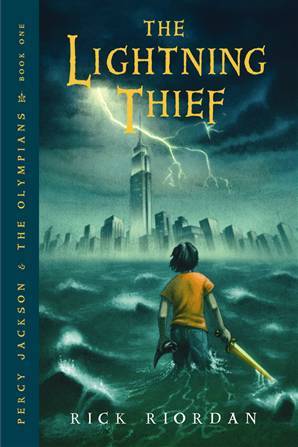
The Lightning Thief

Oh, boy, the gods sure are mad. Zeus has just accused Hades of stealing his master lightning bolt (a big no-no) and Hades insist that he is innocent of these charges! Most folks would call a lawyer, but hehe Greek gods do not do that when they get ticked at each other. Instead, they start the equivalent of World War III. What you don't know about this? Hmmph. Not exactly up on current affairs are you? Well, neither is troubled twelve year old Percy Jackson. In fact, he doesn't even believe that the gods are real, but when he learns that his absent father is a god (making Percy a Half-Blood), lands at a summer camp for his demigods, and is tasked with retrieving Zeus' bolt, Percy quickly gets up to speed on things. With his new friends, Grover and Annabeth, Percy sets off on a cross country trek that is fraught with peril and battles with all sorts of cool mythological creatures en route to putting a stop to the gods' pending war.
I have had several people (including Scott and Penguins Quack) recommend the Percy Jackson series to me. Thanks, guys! I loved The Lightning Thief, the first book in that series, and have already reserved the second one. I love mythology, so I am proud of author Rick Riordan, a former teacher of Greek mythology, for introducing younger readers to all of the great characters and stories of Greek mythology with his engaging books. (Riordan's books prove that there is way more to mythology than just characters with crazy, unpronounceable names.) Riordan weaves his allusions to the original myths in well with the modern story; I had a lot of fun guessing which villain was which mythological monster in disguise.

This is a fun book to read in general, though. The plot is action-packed, with frequent confrontations between Percy and the likes of Ares, Medusa, and Chimera, and lots of heart stopping twists and turns. Percy's snarky first person narration is easy to read and is also quite funny. I also enjoyed Riordan's characters - I liked Percy and his pals, and Riordan's characterizations of the mythological characters stay true to form but are still original.

My only problem, and it's a minor one, is that, in true adventure story fashion, there were a couple of parts where I got annoyed at Percy for walking into a trap that I thought was obvious. It wasn't angry annoyance though, so much as sympathetic "Percy, what are you doing? No! Don't do that! What's the matter with you? No!" annoyance, and it didn't affect my enjoyment of the story.

The Percy Jackson series is targeted toward junior high kids, but I firmly believe that nobody can outgrow a good book. The Lightning Thief is an exciting, inventive fantasy adventure that you won't put down. (At least, I didn't.) If you love mythology, you'll love Riordan's take on the original tales and enjoy recognizing the characters. If you have never read mythology, this accessible book is the perfect introduction.

~

Next Time: I will review Hemingway's classic Spanish Civil War saga For Whom The Bell Tolls. I am about halfway through it and I start school tomorrow, but I will try to have my review up in the middle of the week, if at all possible.

07 January 2010

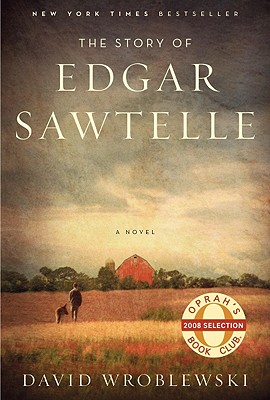
The Story of Edgar Sawtelle

The Sawtelle family has spent decades breeding and training their own unique breed of dogs on their rural northern Wisconsin farm. Gar and Trudy Sawtelle have raised their only child, mute teenager Edgar, to help with the family business; Edgar is happy and well-adjusted. Then his idyllic life is shattered when his father's estranged, enigmatic brother Claude returns from a long absence and moves in with the family. After a tension-filled stay, Claude leaves, but Edgar's father dies mysteriously shortly thereafter. Trudy and Edgar do their best to keep up the farm on their own, but Claude soon weasels his way into the family business...and into Trudy's affections. Edgar has a surreal encounter with an apparition claiming to be his father's ghost who accuses Claude of murder, and Edgar becomes determined to uncover the truth behind his father's death...

Sound familiar? If that synopsis had you going, "Now, wait a minute! I've heard that somewhere before," then I am proud of you. You either must have paid attention in your English classes or you remembered my teaser from my last post, because David Wroblewski's fascinating novel, The Story of Edgar Sawtelle, is a retelling of Shakespeare's classic play Hamlet, with the setting transferred from the courts of medieval Danish royalty to rustic Wisconsin farm country. I love Shakespeare (especially his tragedies), and I also enjoy well-written retellings of his work. Wroblewski, for the most part, stays with the original story, yet his take is inventive and well-rendered. Rather than simply retelling the story with different characters and settings, he makes his version his own - his take on the ghost scene and the epic showdown at the end are original, believable adaptations of the original which stay true to the source but are fresh interpretations that fit Wroblewski's setting.

As fun as it is to read this novel as a comparison, The Story of Edgar Sawtelle is fully capable of standing on its own merits. Wroblewski vividly recreates the rugged, northern Wisconsin setting (which is where he was raised), and his meticulous description of the Sawtelle's unique business is captivating. The characters are also well-crafted. I just loved Edgar - he is clever and sensitive, but he's not quite as brooding as Hamlet. Claude also ranks as one of the most despicable villains I've encountered in fiction in awhile. I was ready to volunteer to help Edgar kill him, but the stiff penalties for aiding and abetting literary vengeance made me back off and let Edgar handle it...

The Story of Edgar Sawtelle is a long novel (over 550 pages!), and I did find it a bit slow at times. Not that it's boring - it isn't. The slow parts are rich in atmosphere and are pivotal to the story. I believe my problem was more a matter of expectations. I assumed the story would follow the structure of Shakespeare's play, starting shortly after the murder. This novel, instead, starts at the beginning - long before Gar's death - and works its way forward. After I started reading it, I realized that Wroblewski's decision to structure his novel this way made sense, because it gave the much needed background information and allows the story to build to its ominous, inevitable conclusion. After I realized that, I didn't have a problem with the length, so I believe it's a matter of not judging a book by its predecessor more than anything.

The Story of Edgar Sawtelle is Wroblewski's debut novel and I am thoroughly impressed with his talent. Few authors would attempt such an ambitious first novel - a retelling of one of the world's most famous stories. But Wroblewski infuses so much originality into this novel that it comes off as far more than just a simple imitation. If you are a fan of Hamlet, you will love this contemporary reworking of that classic. If you're a fan of good books, The Story of Edgar Sawtelle will satisfy your needs, too.

~
Next Time: I will try to review Rick Riordan's The Lightning Thief, the first in the Percy Jackson series. Scott and Penguins Quack both recommended the series to me. So far, I have really enjoyed the book (Yay! A fun read!) and will try to have a review up this weekend.

17 December 2009

The Dictionary of Disagreeable English

If you know me, you know I adore snarky books about the English language. I am obsessed with Eats, Shoots and Leaves, addicted to The Joy of Lex, and infatuated with Anguished English. My family knows all about my love for English at its best…and worse. Therefore, for Hanukkah last week, I received a copy of Robert Hartwell Fiske's The Dictionary of Disagreeable English: A Curmudgeon's Compendium of Excruciatingly Correct Grammar. Ah, be still my beating nerd heart.

We all have dictionaries, right? (If you do not, just humor me and say you do. Please.) However, as Fiske illustrates in his book, dictionaries are not what they used to be. Prominent dictionaries, including the vaunted Merriam Webster, have increasingly resorted to including nonstandard English, i.e. improper English, in their texts, all in the name of recording English as it is used, rather than how it should be used. Fiske attacks this concept of "descriptivist" as inexcusable. Although I admit that English does evolve, I am firmly in Fiske's camp - dictionaries should champion proper English, not popular English. After reading this book, you may find yourself taking up arms in Fiske's war as well.

In The Dictionary of Disagreeable English, Fiske has compiled a rogue's gallery of painfully incorrect English. If you love acerbic sarcasm, you're in for a treat. Fiske's acidic commentary is frequently laugh out loud funny, as are the truly hideous examples of murdered grammar which Fiske has culled from journalists, celebrities, and politicians. As much fun as this book is to read, The Dictionary of Disagreeable English is also a handy, informative guide to avoiding the most common grammatical pitfalls. Fiske lists frequent misspellings, misuses (my favorite being "grisly" for "grizzly"), mispronunciations, and non existent words which are used with alarming frequency. Fiske also targets so-called "idiotic" words (many which were developed in business) which he argues have no place in the language, i.e. "consequate" and "office" as a verb. Many of the mistakes are absolutely inexcusable, but he also explains many grammar rules which are not common knowledge. (I was mortified to find several mistakes that I frequently make. I will never, ever use "plus" in a non-mathematical context as long as I live. Forgive me! I knew not what I did!)

If you are a fellow grammar geek/word nerd, you will adore this book. You will laugh at Fiske's biting wit and you will cry at some of the most foul atrocities that were committed against the English language in the examples provided. The Dictionary of Disagreeable English is the perfect way to both amuse and educate yourself. *cough* It would also make an excellent last minute gift suggestion this holiday season. *cough*

~

Next Time: I am reading Markus Zusak's The Book Thief and loving it. PIA suggested it to me and Penguins Quack raved about it on Sparklife a few weeks ago, so I cannot wait to finish and blog about it.

04 November 2009

The Hunger Games

The North America of the future is not a world you would recognize…or a world you would want to live in, for that matter. Panem, as the continent is now called, is ruled by the ruthless Capitol. As punishment for a rebellion decades earlier, the other twelve districts of Panem are required to send a teen boy and girl to the yearly Hunger Games in which the kids are then required to fight each other to the death in a reality show that sounds like Survivor meets The Coliseum. The kids are selected by lots, so sixteen year old Katniss, who is solely responsible for keeping her mother and sister alive, is relieved when she is not selected. Her momentary relief turns to terror when her beloved sister is chosen to go to The Hunger Games. Desperate to spare her sister, Katniss volunteers. The other contestants may think that Katniss is at a disadvantage, coming from the most squalid district in Panem, but they have another thing coming…

Laura suggested this book to me last month, and I only now got my hands on it. (*glares at library wait list*) I absolutely loved this book! (Thanks again, Laura!) The Hunger Games is an incredibly original book. I've never read anything quite like it, but it reminded me of so many different books and themes: Lord of the Flies, Frank Peretti’s Veritas Project series, dystopian sci fi, the Minotaur myth, reality TV at its worst (is there such a thing as it at its best?), Soviet era Russia. This book’s primary strength is Katniss. She is just so likable and easy to sympathize with. She is no mamby-pamby Bella "Rescue me! I have a paper cut!" Swan, but she’s also not one of those obnoxious tough guy, er, girl characters that makes you want to vomit. The story is told in Katniss’ distinctive, ironic, witty voice, and the narration is also in the present tense, which greatly adds to the suspense. And suspenseful this plot certainly is! I started this book one Friday night when I had finished all of my homework. I figured I would get a headstart on my reading for the week. I didn’t stop until I finished it in the wee hours of Saturday morning – this book is that addictive.

Now, I know what you may be thinking: “Zella, brag on that book all you want. It sounds like a slasher movie!” I know it sounds that way, but I promise you, it isn’t. Yes, The Hunger Games is built upon a gruesome, disturbing premise, but the book itself is not gruesome, although it is a bit disturbing. Collins does a masterful job of conveying what is happening with out being unduly graphic. (It is a YA book, after all.) Besides, I think there is a huge difference between something that wallows in the dark recesses of the human mind to celebrate it and something that delves into the dark recesses of the human mind to make a serious statement about that side of human nature. The Hunger Games is definitely the latter. This book is actually very philosophical, without being ponderous. I really loved how this book subtly attacks reality TV. I hope I don't hurt any feelings, but I hate reality TV. I think it is the most unreal, disgusting thing on TV. I despise the way Survivor, Big Brother, and I am a Celebrity Get Me Out of Here! condone despicable behavior in the name of entertainment. Yeah, pal, that is not entertainment, at least not in my book. The Hunger Games very effectively portrays reality TV, with its emphasis on ruthlessness and appearance, for what it really is – shallow.

I have learned that modern YA fiction falls into two categories: really good and really bad. Put The Hunger Games in the first category. It is well-written and absolutely impossible to put down. But be warned: This book is part of a series. The cliffhanger ending will both intrigue and anger you (in an "Arggh! I have to know the rest of the story!" sort of way), especially at 2am. If you read The Hunger Games, you will end up hunting down the second novel in the series, Catching Fire!

P.S. Thanks for all of the excellent recommendations! I am happy to know that all of my readers have such great taste in books! I am also going to blog on Ayn Rand's Anthem (suggested by Math is a Plentiful Harvest) and Something Wicked This Way Comes and 1984 (both suggested by Rebecca on her excellent blog Readers Anonymous.) Please send me more recommendations!

~

Next Week: Part Two of Zella Kate Presents: The Medieval/Renaissance Epics - Dante's Inferno. (I was planning to blog on another book, but I am reading three or four right now and can't make up my mind. I am a book glutton. I pile too much on my proverbial plate and then must consume everything on said plate. Not unlike my behavior at Chinese restaurants!)