Showing posts with label 20th century American literature. Show all posts

25 June 2012

Two for One: Malcolm X


Hey, there, fellow readers and book lovers. I am so sorry for my absence. I haven't posted on here for nearly a year because I've been busy with school and what not. But here I am, for the time being. :)

Last semester, I took a history class on the American Civil Rights Movement. One of the texts for the class was Malcolm X's The Autobiography of Malcolm X. I've always liked Malcolm X, though I don't agree with him on many things, and this book just sealed my fascination with this enigmatic man. How can I not adore someone who destroyed their eyesight via reading, the same as I did? ;)

For those of you who don't know, Malcolm X had a chaotic childhood and ultimately ended up as a teen-aged hustler and robber before being sent off to prison. While there, he converted to the controversial Nation of Islam, eventually rising to a position of national prominence in the organization after his release. However, he eventually broke with the NOI and formed his own organization, shortly before his assassination in 1965 at the age of 39. He's often painted as the direct opposite of Martin Luther King--opposed to nonviolence in the civil rights movement, though the truth is quite a bit more complex. (As my professor pointed out, he advocated self-defense, not unprovoked violence, and was never once responsible for inciting race violence.) Regardless, X still remains a divisive subject almost fifty years after his death.

I think one reason I enjoyed this autobiography so much is its distinctive style. It was dictated to Alex Haley and, thus, X's inimitable oratory skills seem to leap off of the page.(Having come off of watching his speeches on YouTube, I could hear his voice in my head as I read.)

I also enjoyed the structure. This book was composed during shortly before and after X's break from the NOI. It could have turned into a polemic against the organization--and X does have a tendency to get a little preachy in spots--but the structure of the book prevents that. When Malcolm is committing petty crime in Boston and New York, you're along for the fun. He saves the moralizing for after he's realized the errors of ways. Therefore, when he comes to his senses in prison and decides to reform, the change is all the more palpable because he didn't spend the entire first section ranting about his mistakes. Likewise, X's break with the NOI is all the more powerful because the section where he talks about his time with the organization does not come with condemnations of it--he saves those for later.

Chances are, some parts of this book may offend you. Some of his statements on women and Jews left this Jewish girl scratching her head, but, overall, I highly recommend this insightful read. (First rule of history: taking historical subjects as they are, not as you want them to be.) This book is widely considered one of the most influential American autobiographies ever written and, in my opinion, it is well worth your time.

After finishing the book, I next tried Manning Marabel's biography X, in which he sheds more light on Malcolm X. This book is also controversial, for Marabel argues that X exaggerated and omitted facts in his landmark autobiography, a fact disputed by some of Malcolm X's family and supporters. Personally, I can see why they would argue with Manning, but I found his book compelling, and it didn't affect my admiration for X. Overall, I found the Marabel autobiography well-written and well-argued, though I did think the final few chapters seemed a bit more likely to generalize without corroborating evidence. This book is a mammoth--I polished it off on a class trip for my Civil Rights class--but, if you find yourself intrigued with Malcolm X, I think it's a great followup read to The Autobiography of Malcolm X.

~~~~~~~~~What's Next: I'm not sure. Right now, I am busy studying for the GRE, so I may not get a chance to read much in the next few weeks. I will try to post more reviews as soon as I can. ~~~~~~~~~~

On a different note, I have missed you guys! Let me know what you're up to. :)

02 July 2011

Maus


All right, I am thoroughly ashamed of myself for not having posted for so long. My excuse--that I have been busy--is insufficient. Please forgive me! *pleads for mercy* I would like to try to post book reviews regularly until I go back to school. That's all I'll guarantee for now.

I usually review books with chapters on my book blog--a bit of a no-brainer there, right?--but today I am going to review a comic book instead. Why? Because Art Spiegelman's inventive, disturbing memoir/family history Maus is just that good. I have long wanted to read this Pulitzer Prize-winning comic book, ever since I heard about it in my freshman English Comp 2 class, but I never had a chance to until this past spring semester when my awesome roommate gave me a copy because she knows I like history.

As I have discussed at length on this blog before, World War II is one of my obsessions and, as someone who is part Jewish, the Holocaust is a subject that simultaneously fascinates and repulses me. I've read a lot of great Holocaust memoirs, but I have never read one quite like Maus, in which Spiegelman records his father Vladek's survival during the Holocaust, chronicling his often troubled relationship with his father some thirty years after the war as Art interviews Vladek about his experiences.

Rather than Art, who is a cartoonist, merely drawing his father and the other characters as realistically as possible, Spiegelman opts instead to draw the Jews as mice and the Nazis, as well as other Germans, as cats. The animal theme is carried over even further with the Poles as pigs, French as frogs, and Americans as dogs. The result is surreal and unnerving but also a bit more accessible than other Holocaust stories precisely because even though you know you're reading about something that actually happened, you're not faced with seeing human characters in those situations. The fantastical element does nothing to diminish the tragedy. In addition, the plot itself is gripping--I couldn't put the book down, even though I knew I had to be up at 5:30 the next morning for work.


I think what elevates Maus above other comic books, besides the somber subject matter, is the quality of the artwork and the depth of the characters. Even though the characters are all drawn as animals, their mannerisms are all too human and Spiegelman does a great job of portraying that. In addition, if you look closely, there's usually something happening in the background, whether it's funny, quirky, or sad. That attention to detail is exactly one of the reasons why I enjoyed this book so much. My inner English major likes to search for minute detail. . . .

Though Spiegelman makes his father and himself the subject of the Maus, he makes no effort to whitewash either of them. Sometimes his elderly father comes off as cantakerous and petty, though he also proves himself to be kind and clever. Art even draws himself as impatient with his father and unwilling to humor him. As you read Maus, you realize that the book is just as much a form of therapy for Art as it is a tale of his father's survival. It is my humble opinion that many artists and writers who embark on such a project often end up letting their emotions and close personal ties to the story overwhelm the piece and compromise its quality in the process. Not so with Maus. Art's central role in the story only adds to its complexity--and its complexity is exactly what puts this comic book leagues ahead of others like it.


If you're looking for a bit of variety in your reading list, add Maus. This book is one of the best, most inventive, and most haunting I've read in a long time. I think everyone should read Maus once.
~~~~
Next Time: Probably Elizabeth Kostova's The Historian. I make no promises, though.
~~~~
This Week In Literary History: 30 June 1936: Margaret Mitchell's Civil War epic Gone With The Wind is published. All right, confession time. I have actually never read this novel, but I have watched the 1939 Oscar-winning film adaptation, and I enjoyed it. That counts for something, right? RIGHT? Ahem. Anyway, this one is on my to-read list.

21 January 2011

A Streetcar Named Desire

Blanche DuBois has problems, to put it mildly. She has lost her beloved Mississippi plantation Belle Reve and is now forced to live in squalor in New Orleans' French Quarter with her younger sister Stella and Stella's brutal, animalistic husband Stanley Kowalski. The fragile Blanche, who has a tenuous grasp on reality as is, is determined to make her surroundings as refined as possible, though she soon learns that doing so while sharing living quarters with the uncouth Stanley is nearly impossible. Things soon degenerate as Blanche and Stanley become locked in a battle of wills against each other, with Stella trapped in the middle. Then, Stanley learns perhaps why his flighty, neurotic sister-in-law lost Belle Reve and is prepared to stop at nothing to gain the upper hand over her. And when I say stop nothing, I do mean nothing . . .

A Streetcar Named Desire is one of my favorite plays. Some of you may recall that back in 2009, I debated for a long time over whether or not to review this play or playwright Tennessee Williams' other masterpiece The Glass Menagerie. I ultimately decided on The Glass Menagerie, but I reread Streetcar for my American Lit 2 class last semester and SweetTart-Girl asked me if I'd do a review, seeing as she'll be studying it this semester in one of her classes. *Zella waves magic wand and grants wish because she fancies herself as a book genie* :D

This play is a masterpiece of dramatic tension, as Blanche and Stanley face off constantly over every petty scenario known to man. I think the tension rings true just because it is so realistic. Even if your family does get along well, who hasn't had a family argument turn nuclear over something inanely stupid? Despite Williams' effective use of tension, this play is still primarily a character-centric work, not plot-driven. All of the characters, except for maybe Blanche's potential love interest Mitch, are grotesque and troubled. It's hard to find one character to unequivocally root for, which is why I think some readers dislike the play. Even though Blanche is the main character and is quite pathetic, she's far from a traditional heroine. I like complex characters, so for me, the fact that there is no clear-cut good guy (though Williams clearly intends for us to sympathize with Blanche, even if we don't understand or agree with her) is a plus.

I am a hug fan of reading plays, but plays were still written with the intention of being performed. Soooo . . . your Streetcar experience will not be complete unless you watch the 1951 film version with Marlon Brando and Vivien Leigh. You must watch this one! Brando originated the part of Stanley on stage. It's what made him contender! I am making you an offer you can't refuse! Who me? An obsessive Brando fan? Erm . . . maybe. (Bonus points if you recognized the two Brando quotes in this paragraph.) But the original film version is easily the best, if not just because all of the actors are so good. I will warn you that even though the film version stays remarkably close to the play, the ending was changed to appease movie censors, who demanded that the bleak tragedy had to have some redeeming value.
If you're looking for complex characters and an intense story line, definitely read A Streetcar Named Desire. This play is one of the most famous written in the past sixty years . . . and for good reason, in my opinion. Not to mention that reading it is the perfect excuse to indulge in a Brando marathon afterwards. ^^
~~~~
Next Time: Art Spiegelman's Maus.
~~~~
This Week in Literary History: 27 January 1302 Political enemies exile Dante Alighiere from Florence. Though this may have seemed like a bad thing for Dante at the time, his banishment ended up being a good thing for literary history, for he wrote his masterpiece The Divine Comedy during this period.
~~~~
Announcements: I dole out some blogging awards on my second blog, so stop by. You may have an award waiting for you. :)

08 January 2011

The Green Mile

As the top prison guard on Louisiana's Cold Mountain Penitentiary's death row in the 1930s, Paul Edgecome saw some strange things . . . most of them disturbing, some of them amusing, and one thing that was amazing: John Coffey. Edgecombe initially has little sympathy for Coffey, a towering African American convicted of a horrible double murder. Truthfully, Edgecombe has little time to worry about Coffey. Between a painful medical condition and contending with a petulant well-connected colleague named Percy Whetmore, Edgecombe has enough to contend with. But then Edgecombe learns of Coffey's secret gift, a revelation that leads Edgecombe to suspect that the gentle giant is not at all guilty of the crime he was accused of committing. And that's when things get interesting. ^^

I am a bit ashamed to admit this, but I had never read any Stephen King before reading The Green Mile. I know, I know. See . . . I have really enjoyed a lot of Stephen King movies and some of his essays on writing and wanted to read his books, but I never got around to it. Shortly before I left home a few months ago, I saw a copy of this book for sale at the library. I loved the film version of this story, so I reasoned the book would be just as good . . . if not better. And, indeed, for the most part, it was.

King builds an intriguing plot that delves into the nature of friendship and the realm of the supernatural in a manner that is haunting but not necessarily scary. Though I had watched the movie and was aware of the plot, King's story was so engrossing I was anxious and tense while reading it despite knowing what happens. Even more importantly, it's heartwarming in a creepy sort of way. If the end doesn't have you a little misty-eyed, there's something wrong with you. *dabs eyes* The cast is colorful and memorable. Edgecombe himself is a likeable protagonist, though he does get a bit overshadowed by the larger-than-life Coffey. Kudos to King for creating an absolutely heinous antagonist in Percy. I wanted to beat him with a rubber hose . . . repeatedly and with much malice.

My only problem is that since this is a novel set in the Depression-era Deep South, I was expecting more atmopshere from that period and era. Edgecombe's narration is compelling and engaging, but I never could shake the fact that the voice sounded like a moden middle-aged guy *looks at King* and not an elderly man reminsicing about his past. And, no offense to native New Englander King, but the narration also lacked a certain Southern quality, as well. Some of the dialogue and narration sounded off to my Southern ear. (Yes, I am petty. I am the Queen of Petty. Nay, I am the Empress of NitPicky and the Duchess of Overbearing Attention to Detail. Bow before me. ^^) This didn't detract seriously from the story, but as a reader who relishes atmosphere--and is passionate about Southern fiction--I didn't find the atmopshere convincing. That being said, the plot and characters more than made up for this.

The Green Mile is a bittersweet exploration of faith, fate, and sacrifice. The powerfully evocative plot is the main draw, but the complex characters also add to this superb novel. If you like supernatural fare that is not ghoulish, give this book a read. I definitely am adding more King to my reading list. Misery being next. ^^

~~~~
Next week: Tennessee Williams' A Streetcar Named Desire
~~~~
This Week in Literary History:

12 January 1876: American writer Jack London is born. Most people are familiar with London's gritty, naturalistic survival novels set in Alaska, specifically White Fang--which I am going to reread in one of my American lit classes this semester--and Call of the Wild, but I highly recommend his, ahem, chilling short story "To Build A Fire." I dare you to read it and not feel bone-numbingly cold afterward. :D

22 May 2010

Grendel

I am so, so, so, so sorry for the lateness of this blog! *wallows in remorse* I have just been so busy, I didn't have time to read anything until now! I do have a new review and a new weekly treat in store for my dear readers, so I hope that somewhat compensates!

I have always enjoyed retellings of traditional stories through the villain's POV. One of my favorite books as a child was Jon Scieszka's hilarious The True Story of the Three Little Pigs, in which the Big, Bad Wolf explained why he was being unfairly accused. (If you did not read this as a child, you were seriously deprived.) As I have gotten older, I have also read (and enjoyed) Gregory Maguire's clever retellings of traditional fairy tales. So, when Feathery posted a comment describing John Gardner's Grendel--a retelling of the epic poem Beowulf, which I adore, through the eyes of Grendel, the antagonist--I was immediately intrigued and couldn't wait to read it. I am happy to say that I was not disappointed! Thanks so much, Feathery! :)

Grendel is a very much a character-driven novel--I think a good character-driven novel can be just as riveting as a novel that relies more on plot for suspense, as long as the protagonist is compelling and complex. Fortunately for this book, Grendel is about as compelling and complex of a character as I have ever encountered. Gardner does not attempt to transform Grendel into a particularly likable character--the monster is nihilistic, bitter, and murderous--but the author balances this out with a fascinating psychological exploration of why Grendel is the way he is. If, like me, you're a fan of psychological fiction, you will adore the multi-faceted persona of Grendel, who both loves and hates humans and, as a result, is trapped in an emotional maelstrom of self-pity, self-loathing, and extreme loneliness. Grendel emerges as a character that is both disturbing and pathetic. Though you may not agree with Grendel's jaded views on life, his first person narration is loaded with clever insight and acerbic wit that is a joy to read. At first, I thought the prose seemed anachronistically modern at times, but upon further reflection, I think that was actually a wise decision on Gardner's part. The narration, which is both eloquent and simple, ensures this is a highly readable book and that, in my opinion, makes it more accessible than if it had been written in a stilted, overly formal style.

I thoroughly enjoyed this book, but I must warn you: Do not, I repeat DO NOT, read this book if you have never read Beowulf. The plot assumes a knowledge of the original tale, and much of the enjoyment of this novel comes with contrasting Gardner's portrayal of Grendel with the traditional story. All of the major characters from Beowulf, some with interesting back stories added by Gardner, appear in the novel, as do most of the major events from the original epic. If you have read Beowulf before, you'll have no problem understanding this book, but you need to have that foundation to properly appreciate Grendel.

If you like alternative versions of famous stories, are a Beowulf fan, or are just looking for a superbly written psychological novel, try Grendel. You will never look at Grendel, the dreaded foe of the hero Beowulf, the same way again.

~

Next Week: *whines* I have no idea! I am sorry, but I'll find something. I will also try to be a bit more prompt about posting. *cries*

Now, to introduce the new treat I promised. I decided to start a new weekly series (or blurb series really), in which I post some trivia about important events in literary history that occurred this week. For instance, in "This Week in Literary History"--like the name? How original, Zella!--I could post about the publication of a landmark novel, the birth of an author, or a famous event somehow connected to literature. As a die hard lit geek (and a die hard trivia nerd), I love reading little random trivia factoids, and I hope you enjoy this new series. I think I'll usually just post one trivia fact per week, but since this debut week is special, I will post two author's birth anniversaries:

21 May 1688: Famed Enlightenment poet Alexander Pope was born in London, England. I adore Pope's exquisite poetry, for which he is justly famous, but you may also be familiar with many of his popular quotations, such as "To err is human; to forgive, divine." My personal favorite Pope quote is "There never was any party, faction, sect, or cabal whatsoever, in which the most ignorant were not the most violent."

22 May 1859: Sir Arthur Conan Doyle, the author who created Sherlock Holmes, my absolute favorite detective ever, was born in Edinburgh, Scotland. Trained as a physician, Doyle started writing the popular Holmes series because he was bored waiting for patients. (Thank God he didn't have many!) Doyle wrote four novellas and over fifty short stories starring Holmes. If you have never met the original Sherlock, I highly encourage you to read one of Doyle's stories (or more than one)! :)


Next week, in addition to a review, I will mark an important anniversary in classic horror. :D

14 April 2010

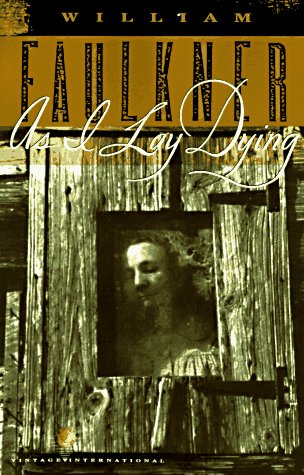
As I Lay Dying

Addie Bundren has one dying wish--she wants to be buried in her hometown, miles away from the dilapidated farmhouse she resides in with her volatile husband, Anse, and their dysfunctional brood of children. Her family agrees, thinking they will give the long-suffering woman some peace and comfort by fulfilling her request. Truth be told, Addie could care less about returning home. She just wants to punish the family she always despised by tasking them with a grueling quest, which the Bundren journey ends up being, what with raging streams, burning barns, crazy relatives, family secrets, and enough drama to fuel a soap opera.

I haven't been able to read for pleasure lately, so I had to go digging through my archives of reviews. After throwing Kafka at you last week, I hesitated about posting about Faulkner, but it was that or Samuel Beckett. As trippy as Faulkner may be, I assure you Beckett makes Kafka and Faulkner combined seem relatively normal, so I decided to post this review of my favorite Faulkner novel.
I adore Faulkner. One reason is I love his elaborate style, but his work with stream of consciousness and multi POV have greatly influenced me as a writer, and led to a few disastrous Faulknerian writing experiments as a teenager. (Let's not discuss it...) In this novel, Faulkner pieces together the voices of fifteen very different narrators to relate Addie's journey back home, including the dead woman herself. The result is a complex, fascinating work that reads like a puzzle. One is never quite sure what is going on until the very end, so it reads almost like a detective story, yet the solution is learning all about this family wrought with conflict and turmoil. The characters--especially the selfish Anse, stubborn Jewel, sensitive Darl, and enigmatic Dewey Dell--are vivid and memorable. Faulkner employs stream of consciousness technique superbly and crafts a hauntingly realistic portrait of one of literature's most dysfunctional families. I especially love the twist ending. I think it is one of the best ending lines ever written. ^^

Now, as much as I love Faulkner, I will admit: This kind of experimental fiction is certainly not to everyone's taste. As much as I enjoy it, I have to be in the right mood for it. I think it's a mistake to approach this with the same mindset you would a breezy beach read. If you're not willing to process all of the subtle clues Faulkner is giving you, you're going to be extremely confused. And that's the point. You cannot understand the book until you have completed it, so you must be willing to soldier through the whole work. If you look at it like a brainteaser or a puzzle, you'll be in a better frame of mind to appreciate what Faulkner is doing. That being said, I find this book more accessible than Faulkner's other stream of consciousness masterpiece The Sound and The Fury. Once you realize who all the characters are in As I Lay Dying, it's just a matter of following the action, as opposed to The Sound and The Fury. (I had no idea who anyone was until 3/4 of the way through that one.) It also helps to read the book a second time. Then you can concentrate on Faulkner's technique...rather than stumbling through wondering what the heck is going on.

Again, I know this sort of book isn't for everyone. But I highly recommend As I Lay Dying for anyone who likes experimental fiction. If you have never sampled any of Faulkner's stream of consciousness work, this book is not quite as intimidating as some of his other pieces. Give it a chance and tell me what you think. (I will still be friends with you if you throw the book at the wall and curse me for recommending it.)
~

Next Week: I am so sorry, but I just have no idea. I am trying to get something read for you guys! My coworker recommended a literary, alternative fantasy series about a book detective. I would like to try that, but I make no guarantees. I'll find something!

Also, Scott and Serena made eloquent pleas for mercy for "The Unblogged Chronicles". I still haven't made up my mind, but I am not entirely considering axing it now. I will make some changes, but for now, they will still be posted.

One more thing! Shmoop posted a book link in honor of Yom HaShoah--Holocaust Remembrance Day. Those of you who know me know I am very proud of my Jewish heritage. And, as a history major who plans to specialize in Nazi Germany, I am a firm believer in the old refrain: Those who do not learn from history are doomed to repeat it. I know the Holocaust is not a very pleasant event to remember, but it is something that can't go unmentioned. I would have posted a book review of an appropriate read but, alas, I didn't have time. But, still, read Elie Wiesel's Night or Anne Frank's Diary of a Young Girl or Markus Zusack's The Book Thief or Richard Glazar's Trap with a Green Fence this week. Maybe next year, I'll have an appropriate review, like Corrie Ten Boom's The Hiding Place or, if I can ever get a hold of an English translation, Lovely Green Eyes. Thanks...and shalom. :)

10 March 2010

A Separate Peace

Sixteen year old prep student Gene spends most of his days in the summer of 1942 doing whatever his best friend Phineas, better known as Finny, dictates. If Finny thinks they should invent their own game of blitzball during PE, then they do. If Finny thinks they should form a Super Suicide Society of the Summer Session, then they do. If Finny thinks they should cut class and go to the beach in lieu of showing up for a trig test, then they do. Eventually, Gene starts to suspect that his charming, free-spirited friend's impulsive decisions are a deliberate attempt to sabotage his stellar academic record. Gene's suspicions prompt him to lash back at Finny, leading to tragic consequences that neither of the two friends could ever have anticipated.

Scott recently recommended John Knowles' classic coming of age tale, A Separate Peace, to me, and I read it over the weekend. I had heard a lot of great things about this book (and I love a good coming of age story to start with) but had never read it before. I wish now that I had -- it's a new favorite! I started this book Friday evening and finished it early Saturday morning. Yes, it's that good. I loved Knowles' writing style. His prose is elegant and lyrical yet highly readable. Knowles' description of WWII era New England boarding school life is also realistic and makes for a unique backdrop. The petty rivalries between the students and the outrageous diversions that they develop to stave off boredom especially rang true. A Separate Peace is also a compelling study of the joy of friendship and the insidious influence of envy. It's definitely one of the more moving books I have read recently. (You may want a hankie handy for the tear-jerker ending.) That being said, the book isn't a totally depressing read. There is a lot of wit and humor present as well.

As much as I loved the style, setting, and plot, the real draw for me were the characters, who were complex and exceptionally well-constructed. I sympathized with Gene, the novel's sensitive, intellectual protagonist, but I adored Finny. We all know a Finny, that upbeat, charismatic, and devil-may-care friend whose carefree personality is one that you both admire and detest. I read many novels that have strong main characters, but very few books have as strong of a supporting cast as A Separate Peace. Knowles created a vivid mix of equally interesting and realistic characters in Gene and Finny's classmates, which range from the misunderstood Leper to the enigmatic Brinker to the insufferable Quackenbush (Admit it: You laughed at the name. Don't lie! I saw you giggle as you were reading this blog post.)

I highly recommend this novel. A Separate Peace is a superb book on every level. Well-written and moving, this novel features some memorable characters that are well-worth getting to know.

~

By the way, I love getting book recommendations, so please always feel free to suggest books to me. I'll read them as soon as possible. :)

Next Week: Vikas Swarup's Six Suspects.

I also have two announcements. Hey, don't run! They'll be quick. I promise. First, you may have noticed the new pages I have been adding to my blog. (Just humor me and pretend that you did. *points covertly to top of page*) I have added "What's All This, Then", which is a history of my blog; "And You Are...", which includes more information about me then you would ever wish to know; and "What's Next?", which is where I will be posting the books on my TBR list that I plan on reading in the not-so-distant future. I plan on adding a few more pages over the next couple of weeks and will point them out when I do get them finished.

Now, for the other announcement. My good friend over at Ergo, Scott, tagged me to predict my future. I have to tag ten other bloggers and make predictions about where I will be in ten years. I would mention that Scott is an excellent friend (and blogger) with an outrageous sense of humor and impeccable taste in books, but he insisted that I am not allowed to tag him back, so I won't. Be that way, Scott. ;)

Hmmm...where will I be in ten years? In ten years I will be thirty -- the age of Hamlet. This intrigues me, because Hamlet is not only one of my favorite characters who I insist upon dragging into every conversation, but I once took a personality test that said Hamlet was the literary character that I am most like. The similarities between the Prince and myself were truly scary. (Of course, I also once scored as Lady Macbeth and Sweeney Todd on similar tests, so maybe I shouldn't take these too seriously...) Regardless, I wonder: When I am thirty will I also develop an alarming case of insanity that involves my being responsible for the murders of several people? (Gee, I hope not...) Will I wander around a spooky Danish castle reeling off witty non-sequitors and shrieking "Fie on it!"? (Gee, I hope so...) Will I be an indecisive emotional basketcase? (Gee, I already am...) I wonder about these things, but the thorny question that I really ponder: Will I still be in college, like Hamlet was? (Gee, I bet so...) That is the question! I mean, I plan on sticking around and earning master's degrees in English and history then getting a Ph.D. in history, so it's very likely I'll be one of those pathetic ABD grad students, slaving away on some dry dissertation that only the insane, drunk, or academic would plod their way through. That's all right, though. Maybe if I am busy writing a dissertation on the political beliefs of Russian Revolutionaries, I will be too distracted to sword fight anyone named Laertes...

Enough of my nonsense! Now for the ten bloggers I have tagged:

Jean (Discarded Darlings) -- for her always amusing observations on writing.

Aly (My Seriously Unserious Life) -- for always being so cheerful and upbeat.

Bec (Propose With Oreos) -- for her funny, informative "How to" articles

N.A. (Zac Serves it right) -- for her original, engaging series on Zac the cafateria worker.

Math is a Plentiful Harvest (Math is a Plentiful Harvest) -- for her superb poems and essays.

Ryan (The Dark Corner of the Mind) -- for his always excellent take on writing.

Jourdie (I Read This!) -- for his great book reviews and literary analysis articles.

Rose (Shadowland) -- for her haunting, beautiful poems.

Lucy (Amusing Seth) -- for her amazing blog posts and great links.

Glenda (Schemer's World) -- for her hilarious take on writing and life.

Congratulations!

03 March 2010

Of Mice and Men

Migrant agricultural workers George Milton and Lennie Small wander from farm to farm looking for work in Depression-era California. Finding work isn't so much a problem for these two friends as keeping jobs, for the good-hearted but simple-minded Lennie has such a propensity for trouble that even smooth-talking George can't convince employers to keep them for long. When the two arrive at a ranch in Salinas County, they are determined to stay until they make enough to buy a small farm where they can be their own boss, beholden to no one. But George and Lennie's plan goes tragically awry when their bullying boss, Curley, targets Lennie as his next victim.

I know I promised you historical fiction last week, but I just didn't have time to read any historical fiction this week. I also realized that this would be my fiftieth post on my blog *throws confetti*, so I wanted to pick something special to review. Also, I have been promising my good friend Maddie for quite some time that I would review a book by her favorite author, John Steinbeck. Finally, I wanted to return to a normal-sized post after frightening you guys with those behemoths from the past two weeks. With all of these thoughts swimming around in my poor diseased mind, I saw my Of Mice and Men copy -- one of my absolute favorite books ever -- on the shelf and knew that was what I had to blog about.

So exactly why is this slender little novella one of my favorites? Well, first and foremost, George and Lennie are two of my favorite literary characters...period. I sympathize with the put-upon George, who masks his sensitive side with biting sarcasm, and poor Lennie's child-like innocence and vulnerability just breaks my heart. Curley is also one of the most vile characters in literature. We have all met a Curley (read: idiotic bully), and the resulting collision between the sadistic, spoiled rancher and the workers he mistreats is one of the most compelling, heartbreaking confrontations I have ever read. When I first read this book, the shocking ending (which I refuse to divulge, in case you haven't read it) made me sob relentlessly and turned me into an emotional pile of goo for a day. The ending still makes me weep every time I read it. *dabs eyes with hankie* The emotional intensity of this novella is the primary reason I adore it so much, but I also love the realism Steinbeck employs in his portrayal of the setting. The rugged life of Depression-era migrant workers comes to life with Steinbeck's dialogue and narration.

I think this book is a masterpiece, but I would be remiss if I didn't discuss the controversy that surrounds Of Mice and Men. Though this book is widely regarded as a classic of 20th century literature (rightly so!), Of Mice and Men is one of the most censored books in US history. As late as the 1990s, this novella was the second most banned book in this country and it still remains a frequent target of censors. Why? Welllll, the book is chalk full of profanity, the plot is morbid, and some of the characters espouse racism and are insensitive toward the mentally handicapped Lennie. I think these critics who dismiss this book as offensive are missing the point of this novel. Yes, the language is heavy. There is profanity on virtually every page. However, the cursing is never gratuitous and is essential to understanding several of the characters. I have read books that had less language than Of Mice and Men that offended me far more, because the language was not necessary. I am also not going to deny the book is morbid, but I think attacks that this book is racist or discriminatory are utter nonsense. There is a huge difference between a book where the author advocates despicable platforms and a book that reveals how despicable those beliefs are by showing them in action. I think showing the consequences of these actions is a far more effective means of condemning these ideas than merely lecturing about them. I think the philosophical issues that this novella explore would have nowhere near the powerful effect if these elements of the book were not present.

Of Mice and Men is a powerful tale about friendship, dreams, and justice. If you have never read this superb story, I beg you to pick it up and give it a read. This is one of those books that stay with you long after you put it down.

~

Next Week: I just got several books from the library that I can't wait to read and blog about. I can't guarantee what next week will be, but it is likely the review will cover Vikas Swarup's Six Suspects (an experimental mystery set in modern-day India and written by the author of Q & A, which was turned into the acclaimed film Slumdog Millionaire), Lisa See's Peony in Love (a supernatural romance set in 17th century China), Hilary Mantel's Booker Prize winning Wolf Hall (a historical fiction piece about Elizabethan England suggested to me by James), or, if I get it in later this week as planned, John Knowles' classic coming of age tragedy A Separate Peace (suggested to me by Scott).

17 February 2010

The Night of the Hunter


John Harper lives with a dark secret that he dare not reveal to anyone. He swore to his father, on the day that the old man was arrested for bank robbery and murder, that he would never tell anyone about the location of the stolen money. Not the police, not his distraught mother, no one. Only nine-year old John and his five-year old sister Pearl know. But then a charming preacher named Harry Powell strolls into the John's Depression-era Ohio town and claims that he was his father's chaplain in prison. Everyone else in town is taken by the seemingly kind and moral Powell, including John's mother whom Powell eventually marries, but John is not fooled. He knows "The Preacher," as Powell is called, is up to no good. (John is the only one who figures out that there's just something remotely creepy about a dude with the words "Love" and "Hate" tattooed on his knuckles...) A sinister game of cat and mouse develops between the precocious youngster and his ruthless stepfather as The Preacher attempts to make John talk, a game of cat and mouse that ultimately sends John and his sister on a terrifying race for their lives to escape Powell.

I love a good thriller and have been meaning to read the suspense classic The Night of the Hunter for several years now. I came across it in a suspense novel collection at my local bookstore late last year and couldn't resist buying it...and several other books. My anticipation was well worth it - this book is excellent! For starters, this is a very well-written book. It's written in third person but with a period dialect. The accent is not overdone and it greatly adds to the storytelling feel. I felt like I was listening to my grandpa relay a story about his childhood while reading this. (Not that his childhood was similar, though he does have some pretty crazy stories to tell...) Author David Grubb also creates an authentic Depression-era setting without beating the reader over the head with tons of description. He conveys a lot in his sparsely eloquent narration.

More importantly, though, this book is a genuine page turner! It's a relatively short novel, so it's a quick read to start with, but the pacing is superb. Grubb builds up to the exciting climax with so many twists and turns, but it never feels like he's being gratuitous with cheap tricks. The denouement, after the climax, goes on a few pages too long, to me, but that's after all of the action is over, so it's not a big deal.

The highlight of this book to me was The Preacher. Oh. My. God. I haven't encountered a literary villain this despicable in a loooooooong time. Powell is genuinely scary, what with his mind games and the sterling facade he puts on for everyone else. (In fact, I couldn't sleep after reading this book and made a complete fool out of myself that night, because I mistook some balloons for Powell at 3am. I thought The Preacher had come to "get" me. In my defense, I can't see very well and have a vivid imagination...) Powell is actually based on a real murderer - Harry Powers, who was known as "The West Virginia Bluebeard". I was not aware of that until I read this book. I am more familiar with the movie version of this movie, in which the Preacher is played by Robert Mitchum, so I had Mitchum's face and voice in my head when I was reading this book. Perhaps that made it more scary, but it's pretty intense to begin with.

The Night of the Hunter is a superb thriller. This book takes a relatively simple tale (evil stepfather vs. innocent children) and makes it far more compelling than many more complex plots. If you're looking for a good psychological thriller, this book will do the trick.

~

Next Week: Um...something possibly historical. Like Jeff Shaara's Gods and Generals or Robert Graves' I, Claudius. I have no idea...

Announcements: I have a few announcements this week. *clears throat, stands on strategically-placed box for the height-deprived, and employs loudspeaker*

I have decided to start a new monthly series: "The Unblogged Chronicles". Basically, I am going to do a post each month (probably the last weekend of each month) in which I post mini reviews about all of the books I read that month and didn't blog about. Both Penguins and Scott have asked me recently if I blog on books I dislike. The answer: nope. For various reasons, I don't feel comfortable devoting a whole review to a book I don't recommend. However, I thought about it and decided that there are enough books I don't write about that are good and deserve to be mentioned and it couldn't hurt to mention when I don't recommend a book (and my nefarious reasons why), so I am looking forward to trying this new series, which will start this weekend. This month you guys will get a double dose, because it will cover both January and February. Yeehaw!

Also, you may be seeing more lists in general for the next couple of months. Have I abandoned reading? God forbid! Am I becoming lazy? I wish... You see I am going to be working as a student editor on my college's fiction magazine. *dies and goes to heaven* I am super excited about that, but it may cut into my blogging time. *undies and comes back to Earth* I will try my best to post something every week, but it may not be a review. I have several ideas for posts, so hopefully I won't bore you anymore than usual. (Likewise, if I drop off of the face off the Internet for a few days, don't fear. I will just be up to my eyeballs pouring over submissions, not abduced by intergalactic aliens. And if I am abducted by aliens, well, then, well, we won't go there...)

Finally, I have a fun announcement and challenge for you. *rubs hands together* My friend Penguins recently blogged about a challenge in which you are supposed to answer a series of questions using the titles of songs performed by your favorite band. I am a rabid, obnoxious, obsessed megafan of the most awesome, excellent, amazing acidtripping band in history. That would be Pink Floyd, in case you were wondering. I go around listening to, quoting, and reciting random trivia about them constantly (What? Why are you looking at me like that? No! Don't flee from me with a look of terror on your face! WHY ARE YOU RUNNING AWAY?! I am not going to attack you with my love of Pink Floyd. Why, I am as sane as Syd Barrett. :D) I did my list (though I had to be weaselly and answer a question falsely with the true answer implied. Don't judge me!) and decided to post it as a sidebar on my blog, entitled "My Life...According To Pink Floyd". It is at the bottom, right under the interview that I most certainly did not conduct with myself. *cough* Have fun laughing at my stupidity, try your own version with your own favorite band (can't be Pink Floyd), and check out Penguins' excellent blog while you're at it. Thanks, Penguins! :) *continues scattering psychedelic rock and penguin pixie dust across blog*

Sorry for the length of this. If you read it all, you deserve a cookie. And if you caught the two Pink Floyd references I slipped in there, then you can eat your pudding before you eat your meat. *hands chocolate chip cookies out*

03 February 2010

The Assassination of Jesse James By The Coward Robert Ford

If I ask you who Jesse James was, what would your answer be? (If you say that tattooed dude who married Sandra Bullock, I will personally reach through my computer and throat punch you. I kid you not. Well, maybe I do kid you...) Seriously, though, most people know who Jesse James is, right? Confederate raider. Bank robber. America's first celebrity criminal. Most historians are divided between whether James, who was eventually gunned down in his own home by an accomplice, was a murderous, cutthroat bandit or a wronged man out to avenge his losses. Well? Which was he? According to Ron Hansen's exquisite historical novel The Assassination of Jesse James By The Coward Robert Ford, Jesse was a little bit of both.

Rather than follow Jesse and his gang from his first robbery to his disastrous raid on the Northfield, Minnesota bank that effectively ended his career, as so many others choose to do, Ron Hansen starts his story after Northfield, with James and a ragtag band of yokels (including, Ford, his eventual assassin) robbing a train and records the tense disputes, dirty deals, and overbearing suspicion that caused the band to fall apart as members turned on each other. After Ford's killing of James, the novel traces Ford from then until his own murder ten years later in a Colorado saloon he owned. Bob Ford emerges as the real protagonist in this novel, a cocky, sly, awkward young man who idolized Jesse before he became equally obsessed with gunning his idol down for fame and fortune, rewards that he soon realizes are not at all what he expected.

I really love Hansen's characterizations. In this novel, the infamous outlaw is far more complex than the simplistic characterization he usually receives in the media. Jesse is genteel, hot-tempered, cold-blooded, generous, moody, jovial, suspicious, intuitive, clever, stubborn. What he is not is decipherable. Likewise for Hansen's portrayal of Ford, the twenty year old Jesse James wannabe who shot James for the hefty reward money. Hansen's rich characterizations show great psychological insight on the author's part and considerable historical authenticity. In addition to a unique plot and fantastic characters, the historical detail is meticulous. This novel is one of the best historical fiction books I have read regarding period atmosphere, in everything from describing social customs to portraying dialogue. Hansen relied heavily on newspapers from this period for his research, and their influence may have impacted his narrative style. Hansen writes with an eloquent, sophisticated style, somewhat reminiscent of the period. If you adore fine wordsmithing, you will love this novel. It makes word nerds, such as myself, swoon.

I enjoyed every minute of reading this book. (In fact, I reread it just to blog on it.) But it may not be for everyone. If you are expecting tons of action, you may be disappointed. Not that there isn't any. There's a train robbery at the beginning (Yeehaw!) and several gunfights, but because this book focuses on James's last months, the dramatic tension derives largely from the ominous suspense that builds up to Jesse James's inevitable assassination. The pacing is not slow. In fact, the book is quite engrossing, but it's not as action-packed as it may at first appear to be.

The Assassination of Jesse James By The Coward Robert Ford is a well-crafted novel all-around. The characterizations are first class, the historical detail is superb, the writing is exceptional, and the story is a fascinating examination of the life and death of one of America's most famous citizens. Many people knock Westerns as a second rate genre. They evidentally haven't read Hansen's book.

~

Next Week: I must confess something dreadful, dear readers. I have several tests and an essay due next week. I am probably not going to read anything. (I weep as I type this.) However, I made plans for such a situation and have reviews stored for weeks like this. I plan to post a review of Emile Zola's psychological realist classic Therese Raquin. I love this book so much! I read it last autumn and didn't blog about it only because I had just done Double Indemnity. The subject matter is quite similar (man helps woman plot to kill husband with disastrous consequences) but the results are oh so different. Can't wait to share it! There is a remote chance I will get to read either Davis Grubb's The Night of The Hunter or Graham Greene's The Third Man, but don't count on it.

27 January 2010

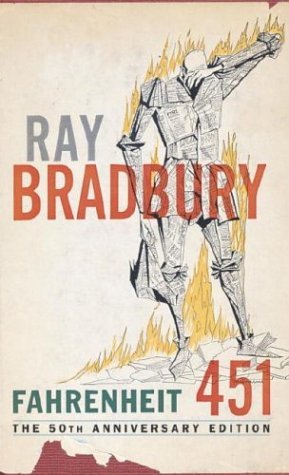
Fahrenheit 451

Guy Montag lives in a vapid, futuristic America where there are no books, no ideas, and no independent thought. (Sound familiar?) He spends his days as a fireman, burning illegal "worthless" books, including Shakespeare, Faulkner, and poetry, and his nights tolerating his mindless, TV-addicted wife, Mildred. Literature, knowledge, and appreciation of any of the finer things in life are all shoved aside in favor of superficial pop culture and the fast life. And then Guy meets Clarisse, a teenaged neighbor who (insert astonished gasp) thinks and appreciates nature and takes the time to talk to people! Oh my God! How dare she? This is earth-shattering behavior to Guy, who has grown accustomed to the fast-paced, self-obsessed society in which he resides. Soon, he's stealing the books he should be burning and is beginning to question his life. Once he discovers that there is more to life than TV and the saccharine sweet world he lives in, he becomes determined to change society. But at what price?

Fahrenheit 451 is one of the world's premier sci fi books and is one of my favorites. Why? I love Bradbury's writing, for starters. He has a style that is both evocatively descriptive and lyrical, yet still readable. (Bradbury has been accused of overusing adjective and noun sentence constructions. I won't argue that, but I still find his style readable and enjoyable.) Guy Montag is not the most mentally swift of heroes, but he has a good heart and it's encouraging to watch his transformation from an unthinking drone to an intellectual rebel. I also love the gripping, compelling plot - this book is a genuine page turner. And since it's a cool 160 pages, I guarantee you'll read it all in one setting. I particularly love the scene where Guy lashes out at Mildred and her idiot friends by demanding that they have an intellectual conversation and illegal poetry reading with him which, as you may guess, ends disastrously. That scene leaves me howling every time. I also like the unique dystopia that Bradbury creates. Rather than fashioning a totalitarian communistic society, like so many other dystopian writers, Bradbury's futuristic world bears a disturbing resemblance to modern-day America, with its rejection of knowledge and culture in favor of superficial pursuits. This book is often championed as a criticism of book censorship and it is. But the real target of Bradbury's anger is obsession with televison and superficiality in general. The people of this society didn't have book censorship and thought control thrusted upon them by force. They accepted it willingly because they were brainwashed with the box, and this makes the book all the more disturbing because of it.

But the main reason I love this book is because this book scares me! The very notion of a society that burns books tears at my very existence. I would be nothing without my books. Reading has been my favorite hobby since I was a toddler. What would I do with my spare time? I wouldn't have a job, because I work in a library. I wouldn't have a blog, because I blog on books. I wouldn't have a future, because my plan is to teach literature and history and write books. I wouldn't get Hanukkah and birthday presents, because that's what I always get. My God! I am Jewish - We're the "People of the Book"! What would we Jews argue with each other about if we didn't have books? Just thinking about this upsets me. (Of course, I got upset when my books were banished to the basement. I can still hear them whimpering like little lost orphans at night. *sheds tear* My poor darlings, there, there, don't cry, Rebecca and The Murder of Roger Ackroyd and Garfield 30 Years of Laughs & Lasagna: The Life & Times of a Fat, Furry Legend! *cough* I digress. I do this when I am upset...) And I assume that, since you're reading a blog devoted to books, you also love books. What would you do in a society like the one Bradbury describes?

Bradbury's Fahrenheit 451 is an amazing, thought provoking read. The narration is evocative, the plot is suspenseful, and the setting is eerily familiar. Read Fahrenheit 451. If it doesn't scare you, I don't know what will.

~

Next Week: I am going to try to read Ron Hansen's The Assassination of Jesse James By The Coward Robert Ford, an excellent historical fiction novel set in the American West. This is one of my favorite historical fiction books. I am rereading it just to blog on it. Yeah, it's that good.

14 January 2010

For Whom The Bell Tolls

Robert Jordan's orders are simple enough. At least on the surface they are, though he has his share of misgivings about them. Jordan, an American demolition expert who is fighting with Spanish Republicans versus the Fascists in the vicious Spanish Civil War, is assigned to destroy a key bridge with the aid of a band of a partisan band. Sound simple enough? However, unprofessional allies, bad weather, worse infighting, a budding romance, the threat of betrayal, and a growing realization that his orders are impossible to fulfil all collide to greatly complicate Robert's task. Will Robert succeed in his mission? Or will his obstacles get the better of him?

Ernest Hemingway's For Whom The Bell Tolls, in addition to having a title that yours truly thinks is one of the coolest on the market, is one of the world's classic war novels and is widely considered Hemingway's best novel. I was particularly impressed with this novel's intense realism. Hemingway was a soldier in WWI and served as a war correspondent in the Spanish Civil War, so his portrayal of combat and partisan life behind enemy lines is authentic and gripping. (Warning: A few of the scenes describing brutal atrocities against civilians, though told through flashback, are a bit difficult to read. The chapter describing the liquidation of one town disturbed me profoundly. I thought my readings about Nazi Germany and Soviet Russia had made me hard to shock. I stand corrected.) The real treat for me, though, was the characters. Robert Jordan is not my favorite protagonist, but I do like how complex Hemingway makes him. He is practical and levelheaded, but a bit distant and isn't always sympathetic. Robert's personality quirks were refreshing, because they made him seem more real than the flawless hero of many books. The supporting cast is superb. Hemingway's Spanish guerrillas are so colorful that the come alive: the brutal, inscrutable guerrilla leader Pablo; his brash, willful wife Pilar; morally upright, noble guide Anselmo; foulmouthed, hotheaded Agustin. By the time I finished this book, I felt like I knew them all.

I enjoyed this book, but I thought the pacing was uneven. The first and last parts of the book focus on the complicated mission to destroy the bridge and were suspenseful and entertaining. The middle part, however, slows down to focus on Robert's romance with Maria, a traumatized young woman who the partisans rescued from the fascists. I thought the romance was overly simplistic and a bit too pat. I just couldn't buy the "I saw you and immediately decided to devote my life to you" aspect of their relationship. Part of my problem was that, despite the constant talk of how wonderful their relationship was, it seemed more like blatant lust than true love to me. Also, Maria struck me as being so bland, especially as compared to the other Spaniard characters, that I didn't find her that interesting. I didn't dislike her; on the contrary, I felt sorry for her, but she seemed one dimensional and didn't intrigue me. My only other problem (and this is an odd one) is the profanity. Hehe No, I don't mean that there is too much. In fact, there was too little of it, if that makes any sense. Hemingway, in order to make this novel more marketable, choose to use euphemisms in place of cursing, That didn't bother me, novels with really heavy cursing annoy me, but he also chose to use the word "obscenity" in place of cursing. This confused and distracted me, especially when it was used multiple times in one sentence! This caused me to stop and try to decipher what was being said, so it ended up just disrupting the reading experience. As long as language is not used gratuitously, I do not mind it and actually would have preferred it in this case, because it would have been easier to read.

Pacing and language aside, For Whom The Bell Tolls is a powerful war novel with an exciting story and compelling characters. I have always been fascinated by Spain, but I am not as familiar with the Spanish Civil War as I should be. (Most of my knowledge is about foreign involvement in the war, rather than the actual conflict itself.) Hemingway's realistic, well-crafted book intrigued me and made me want to learn more.
~
Announcement: I loved posting three times a week during my winter break, but, alas, I returned to school this week. I like school, but this means that I can only post once a week now. (Waaa!) I will continue to use Wednesdays as my day to post reviews, as I did last semester. (My apologies for being late! Life has been crazy lately.) Unlike last semester, my reviews will be posted in the afternoon or evening, rather than the morning. Thanks to all of you for reading! I will try to continue to give you at least one post a week while I am in school. The good thing is I am taking World Lit. II with my amazing professor, so I should get to blog on some of my assigned reading.

Next Week: I will try my best to review Terry Pratchett's Guards, Guards! I have fallen in love with Discworld and am looking forward to blogging about this combo of humorous fantasy and crime.

31 December 2009

Hatchet

Before thirteen year old Brian Robeson embarks on a plane trip across the rugged wilds of North Canada to spend the summer with his father, his mother gives him a hatchet as a parting gift. Brian thinks little of it when he hastily clips the hatchet onto his belt, but a few hours later, after his pilot dies and the plane crashes hundreds of miles off course, the hatchet is the only possession that Brian has. Brian quickly learns that the only way he'll stay alive in the rugged wilderness is to learn to use his hatchet...and his wits.

My dear friend Bev loves Gary Paulsen novels and she recommended Hatchet to me. (Thanks again, Bev!) As I have mentioned on here before, I adore a good survival story, and the Newberry Prize-winning Hatchet is no exception. A good survival novel has to have an appropriate level of suspense and action, and Hatchet certainly delivers on that count. Between the terrifying plane crash, Brian's pitiful early attempts to stay alive, and his unnerving encounter with an angry moose, I couldn't put this book down. Author Paulsen is an avid outdoorsman (He's even competed several times in Alaska's grueling Iditarod dog race); consequently, he infuses much of his knowledge of the wilderness into this book, adding an authentic feel that many other survival novels lack. I also enjoyed Paulsen's prose. He writes with a blunt, pared-down style, and his prose has a naturalistic, conversational tone which, oddly enough, reminded me some of The Catcher in the Rye. (That's a weird comparison, but it kept coming back to me as I read.) Paulsen also effectively uses repetition in his narration, giving the text an almost lyrical narrative poetry sound.

The biggest strength of this novel, though, is Brian. He is so easy to sympathize with. Of course, it's hard not to be sympathetic to his plight, but he is also a genuinely likable character. He lacks the angsty, whiny attitude that so many teenaged protagonists have (and which I find to be a distasteful turnoff.) Brian is also a realistic teenaged character who is easy to relate to. He's levelheaded and intelligent, but he's also no superhuman: he's vulnerable; he makes mistakes. His ordinary qualities make him all the more appealing.

Hatchet is a young adult novel which will delight readers of all ages. This novel is well-written, engaging, and exciting - the perfect antidote to a dreary winter day. Erm, dare I say this without being too corny? You'll enjoy getting lost with Hatchet.

~

Next Time: For my first article of 2010, I will finally post my long-promised article on online book resources. I promised waaaaay back in September to add links to my blog. (You thought I forgot. Admit it.)) This article will serve as a tour guide, if you will, of my additions. I'll include some of my favorite internet sources for books and book recommendations (you guys have to promise you won't desert me for polished reviewers who do not ramble incessantly!), genre-specific websites, and online recommendations lists. If, and this if is highly contingent on my notoriously inept techno abilities, I can get them to load, I will also have links to prominent annual book awards and the New York Times' bestseller lists.

27 December 2009

The Glass Menagerie

The Wingfield family is in sad shape. Domineering mother Amanda clings to memories of her aristocratic Southern childhood, perhaps to block out her impoverished life in a St. Louis slum after being abandoned by her husband. Her son, Tom, feels trapped and has become bitter. He hates his boring warehouse job and seeks escape in late night movies and D.H Lawrence novels. His emotionally fragile, disabled sister Laura has withdrawn into her own private world, which centers on her collection of glass figurines (The menagerie of the title.) Amanda decides that the only way the painfully shy Laura will ever be able to amount to anything is to marry well, so the willful mother badgers Tom into inviting a friend over to help coax Laura out of her shell. If only Amanda knew what devastation this plan ultimately brings...

Tennessee Williams' classic drama The Glass Menagerie is a moving exploration of shattered dreams and shattered families. As you may recall from last week, I had a hard time choosing between this play and Williams' other classic, A Streetcar Named Desire. I still debated over which one to do to the last minute, but I ultimately decided on this play because, as much as I love A Streetcar Named Desire, I think this play offers a more satisfying reading experience. (On the other hand, reading A Streetcar Named Desire is great, but watching it is even better. Watch the 1951 version with Brando. I am not just biased because I think he's the greatest actor ever, well, maybe just a little. If you've never seen it, go watch it now!)

I thoroughly enjoyed The Glass Menagerie. This play, unlike many others, does not rely on convoluted plot devices or outrageous scenarios. Instead, it focuses on a very authentic situation and advances its plot based on dramatic tension. I know that's not every one's cup of tea, but this play is masterfully crafted and never once did it lose my interest. Furthermore, at less than 100 pages long, it's easily read in one setting. The characters are also so realistically drawn that's impossible to not relate to them. Growing up in the South, I have met my fair share of Amandas (some even in my own family) and their smothered offspring; consequently, I found Amanda the most interesting character, even though Tom's the narrator and Laura's the centerpiece. I especially liked the interactions between Amanda, Laura, and Tom. Their petty disputes and heated arguments are something anyone with family will relate to and, even more importantly, their relationships ring true. Williams based all of these characters on members of his own family, and I believe that adds to the realism. Finally, I was pleased with the dialogue - the Southern dialect is perfect. This is something I am nitpicky about, but Williams nailed it perfectly, everything from the sentence structure to the frequent insertions of "honey, " especially when employed after an insult...

My only problem with this play is some of the stage directions. Williams intended this as a "memory" play, in which the scenes are presented as distorted by the human memory, rather than as fact. The result is a dreamy atmosphere that, for the most part, I found effective. However, the stage directions also call for the use of a screen to flash images and text throughout the play. Although occasionally the instructions were amusing, for the most part, I found this distracting. Williams conveys so much through plot and dialogue, so I didn't see why this was needed at all. Most directors of the play seem to concur, since this element of the play is usually not seen when staged, even when the play was first released in the 1940s.

I am a firm believer that, though plays are fun to read, they are still best experienced in their intended state - as performed drama. Sadly, I have never seen The Glass Menagerie performed. It's a popular play, so you may be able to catch it at a local theater. If not, you could watch one of the several film/TV versions available. The best known is probably the 1987 version, directed by Paul Newman. I have never seen it, but I read that it is a faithful adaptation. Critics, however, squabble over the quality of the acting.

The Glass Menagerie is a compelling combination of family drama, tragedy, and Southern Gothic. Easy to read and achingly authentic, this play is a great way to while away a winter afternoon. The Glass Menagerie is one of the most renowned post-WWII American plays and is well worth your time.

~

Next Time: I will be reviewing Erich Maria Remarque's classic war novel All Quiet on the Western Front. I love the acclaimed movie that is inspired by this novel and bought myself a copy of the book with my Hanukkah money. (Yay!) I was trying to decide what to read next and Scott voted for this one. I am over halfway through the book, have enjoyed every bit of it, and should have a review up soon.

25 November 2009

Anthem

Ever heard that Twisted Sister song "We're Not Gonna Take It"? I can't say it's one of my favorites (I loathe Twisted Sister's lead singer to the depths of my classic rock soul), but that would be a great, er, anthem for Anthem's main character, Equality 7-2521. Equality 7-2521 resides in a nameless communist utopia (which bears a striking resemblance to Soviet Russia, not too surprising seeing as author Ayn Rand fled communist Russia as a young woman.) Rejected by the authorities at the group home he is raised in for being too independent, Equality 7-2521 is deprived of fulfilling his dream of becoming a scholar. As punishment for his "selfishness", he is chosen to be a lowly street sweeper. Down but far from out, Equality 7-2521 discovers a secret hideaway from the earlier capitalist "Unmentionable Times". The clever teen then makes a discovery that will threaten all he holds dear…

A couple of months ago I was kvetching to Math is a Plentiful Harvest about my lack of time to read Ayn Rand's colossal classics (The Fountainhead and Atlas Shrugged). Fortunately, Math is a Plentiful Harvest is an Ayn Rand devotee, and she suggested Rand's novella Anthem to me. (Thank you!) I get excited any time I get a book recommendation, but I got even more excited when Saya seconded Anthem as a book suggestion. Not one but two recommendations! I was also pleased because this book sort of tied in with Sashenka, my book from last week.
Anthem is a fascinating little book - it had me at the first sentence: "It is a sin to write this." If you know me, you know I am an exceptionally nosy person, and I had to find out what was up. Rand wrote Anthem as a protest against communism, and the result is a very compelling condemnation of Marxism. Rand's poignant, bleak story of one man's struggle for independence in the face of collectivism is quite powerful. However, I think the primary strength of this book lies in Equality 7-2521. He is such a sympathetic character. If you don't pity this poor kid (especially when he is still in the institution he is raised in and has his dream crushed), I question your level of compassion. His stark, almost lyrical first person narration is a big plus too. A unique twist Rand put on this book is that none of the characters, including Equality 7-2521 in his narration, refer to themselves as "I" or "me", instead they refer to themselves as "we". This took me a few pages to get used to, but it was an exceptionally effective way of rendering the dehumanization Rand saw as inherent in communism.

Now, I know some readers do not like reading novels with an underlying philosophy - they believe it distracts from their enjoyment of the plot and characters. Personally, as long as the book doesn't descend into a lecture, I am OK with a bit of philosophizing. This book stays with the story until the last chapter, which is Equality 7-2521's tirade against his socialist society. I didn't find it boring - I think that Ayn Rand had some fascinating beliefs, although I don't necessarily agree with her on everything. (Quick Refresher: Rand used her books to propound on her Objectivist philosophy. Namely, that the individual trumps the group. She didn't believe in unabashed selfishness, but she did believe that as long as one's actions were moral, self-interest should come first, not the needs of others.) I find her Objectivist beliefs, when applied to the person, harder to accept than when applied to government, but I can see how her experiences in Russia shaped her beliefs. I think if you read this with an open mind, you'll find a lot of thought-provoking material here, even if you may not entirely concede Rand's view.

Looking for a more meaty read than the usual? Try Anthem. This novel lays the groundwork for her better-known works and presents a powerful story, likable hero, and ultimately triumphant message in a compact 85 pages.

P.S. As I am sure all of you know, Thanksgiving is tomorrow. For starters, that means that I am posting this from the comfort of home on my own dainty little laptop and not fighting my savage classmates for a computer (I swear, our school library is like a scene from Lord of the Flies, just without the cool face paint.) *cough* Anyway, I would like to wish all of you a Happy Thanksgiving. I want all of you to eat until you EXPLODE! Wait! If you do that, you can't come back next week to talk about books with me. I don't want all of my readers to kill themselves with gluttony. So maybe just eat all you can hold. And pass me a piece of pumpkin pie while you're at it. Well, I was hoping for a bigger piece, but thank you. *sprints away with an abundance of pie*

~

Next Week: I should wrap up my Zella Kate Presents: The Medieval/Renaissance series with *drum roll* Hamlet! I am a huge Shakespeare fan, and Hamlet is probably my favorite Shakespearean play. I cannot wait to review it! Don't fear, if you're not fan of Billy, I will offer some tips that, even if they don't help you love Shakespeare, will help you understand and appreciate his work.

21 October 2009

Double Indemnity

Walter Huff is one of the best insurance men in L.A. He can see a scam from a mile away - there’s no fooling Huff. But then Walter gets involved with Phyllis, a woman who is trying to kill her husband to collect his insurance money. Against his better judgment, Walter agrees to help and relies on all of his knowledge of investigating suspicious deaths to craft the perfect murder. He thinks of everything – the crime scene, the evidence, the getaway, the alibis. The only thing he doesn’t factor in his malevolent equation is Phyllis. Faster than you can say “wrongful death”, Walter is drawn into a deadly game of deceit as his perfect murder starts to unravel.

I love good hardboiled crime fiction. It's so atmospheric and has the most fantastic plots and dialogue. But, alas, like most genre fiction, hardboiled mysteries have a bad name brought on by hack writers who have no business writing anything, let alone this genre. In the hands of a capable writer, hardboiled fiction is a privilege to read. In the hand of a bad writer, hardboiled fiction is mind-numbingly awful. Bad noir will kill your brain cells quicker than Al Capone had Bugsy Moran’s boys whacked at the St. Valentine’s Day Massacre. Fortunately, my favorite hardboiled writer, James M. Cain, is a master of the genre and his masterpiece (in my opinion) Double Indemnity is hardboiled fiction at its best.

Double Indemnity is fun to read, in large part due to the plot. This novel is very fast paced and has as many of twists and turns as a rickety roller coaster. (Double Indemnity was originally published as a serial; therefore, the story if full of cliffhangers!) And since Double Indemnity weighs in at a lean, mean 100 pages, it’s easy to get wrapped up in this book and read it in one sitting. If you don’t like mysteries because you think they’re clichéd, try Double Indemnity. There is no standard investigation in this book. The question isn’t who the murderer is, it’s will the murderer get away with it. The novel's considerable suspense is also generated through Walter’s impeccably realistic first person narration. Walter is a fascinating narrator. In a way, you want to despise Walter and you never really like him, but you must know what happens to him. It’s been a while since I’ve read hardboiled fiction, and when I started this one I kept thinking, “Why is this so different from what I have been reading?” I finally figured it out: Cain relies almost solely on action and dialogue to advance his plot. There is very little descriptive narration. This also helps move the plot along quickly, but don’t think for a minute that Cain doesn’t create a very realistic setting for his story. Cain is well known for creating very detailed descriptions of the occupations of his characters. His detailed descriptions through dialogue are, dare I say it, the Mark of Cain. This book is no exception. He goes into considerable detail about the insurance industry, in regard to accident policies and investigations (almost entirely through dialogue) and it’s never once boring. My only qualm with Double Indemnity: The ending is excellent, but the final chapter is a bit murky. It’s hard to figure out exactly what is going on. Otherwise, this book is flawless.

James M. Cain is one of the greats in hardboiled fiction…and for good reason. Suspenseful, authentic, and atmospheric, Double Indemnity is a hard book to put down. If you love hardboiled fiction, you must read Double Indemnity. And if you’re not a big mystery/crime fiction fan, this book is still a great read precisely because it is so original. If you're going to read just one James M. Cain novel, make it Double Indemnity!

Next Week: I am going to start a series! OK, it’s not a real series like Lord of the Rings or Anne of Green Gables, but it is my series. It is entitled (for lack of time to think of something better and less bureaucratic sounding) Zella Kate Presents: The Medieval/Renaissance Epics. (Say it with your most hushed, reverent Masterpiece Theater voice. There you go! That’s the spirit!) I am taking World Lit 1 this semester, and so far I’ve enjoyed all of the selections we’ve read. Wellll, after this week, we are starting medieval literature and will be covering Beowulf, Dante’s Inferno, and Hamlet. I decided to blog about each of those (not in consecutive weeks though. I think I’ll rotate between them and my pleasure reads every week or every other week.) So next week, barring unforeseen circumstances, I will meet you here with a review of Beowulf. Just bring your own swords. That Grendel may be a handful.

23 September 2009

The Haunting of Hill House


The imposing Victorian mansion Hill House is allegedly haunted. No one can stand to stay in Hill House for more than a few days before the eerie wailings and mysterious things that go bump in the night leave the residents wanting to flee. Dr. John Montague, a specialist in haunted houses, decides to investigate the truth behind Hill House. To this end, he recruits the home’s current heir, Luke Sanderson, and two women with previous paranormal experiences, the selfish, theatrical Theodora and the neurotic, repressed Eleanor, to help him study Hill House. At first, the four regard their expedition as a fun vacation, and then Hill House starts to live up to its reputation. Soon the intrepid ghost hunters have turned on each other and creepy happenings are afoot…

The Haunting of Hill House is a fun novel to read – it’s fast-paced and entertaining. What really stood out to me are the characters. They are so well-drawn. I thought author Shirley Jackson did an excellent job of sketching out her characters’ personalities and perfectly portraying their oh so realistic reactions to stressful situations. These characters’ suspicious, self-pitying sniping is a treat to read! The two characters I enjoyed most were Eleanor, the pathetic milquetoast middle-aged spinster, and Mrs. Montague, the self-assured, controlling wife of Dr. Montague. (I’m thinking that Jackson must have written these characters after encountering real-life versions of these people, especially the hideous Mrs. Montague.) But the most fascinating character is Hill House itself. The house takes center stage and becomes very much a character in its own right. As good as the characters are in this novel, the most important thing for a horror novel is whether or not it is, well, horrifying. Never fear! (Or rather, do fear): The Haunting of Hill House is genuinely scary! The haunting scenes are quite eerie and several passages absolutely sent chills up my spine.

My only problem with this novel, and it’s not a major one, is that, in true horror story fashion, the characters never seem to realize when they’re in imminent danger although a gerbil of moderate intelligence in the same situation would’ve already locked itself in its cage with a baseball bat and crash helmet. (Is stubborn stupidity a mandatory requirement for horror characters? Are they required to put that on a résumé ?) Jackson does manage to make her characters’ lack of common sense more plausible than many other writers, but it still irks me when I read about allegedly normal people of allegedly average intelligence shrugging off abnormal doings with a blithe shrug.

The Haunting of Hill House is a classic ghost story. I love Jackson’s classic horror short story ‘The Lottery” (an absolute must read!), so that’s why I decided to read this novel. The Haunting of Hill House is an entertaining and genuinely frightening read. Enjoy! (But don’t read this at night by yourself. I tried that and had to put it down until daylight!)

09 September 2009

Confessions of an Ugly Stepsister


Iris Fisher’s life has been unenviable of late. Her family fled England after the murder of her father and her Dutch mother, Margarethe, relocated Iris and her sister, Ruth, to Haarlem, Holland. Margarethe soon finds work as a maid for an eccentric painter. Within months, the ever so crafty Margarethe has weaseled her way into a marriage of convenience with a prosperous merchant who has a beautiful but very strange daughter named Clara, better known to the world as Cinderella. Or so Gregory Maguire's version of the Cinderella story goes...

I’ve never been a big fan of the Cinderella story. Oh, don’t get me wrong: The underdog side of the story appeals to me, and I love fantasies, but I’ve always had my doubts about the whole “happily ever after” ending. Plus, that plot just has too many holes: What woman in her right mind would marry a man who spent the entire evening dancing with her, but can only identify her based on her shoes? (I’ve always had a sneaking suspicion that Cindy married for money.) With my doubts about the Cinderella myth, I found Maguire’s retelling of the story – through the eyes of one of the ugly stepsisters no less – quite interesting.

One thing I really liked about this book is how well-written it was. Maguire’s narration is witty and eloquent, and he did a great job of writing dialogue that sounds authentically 17th century but is still readable. The precise historical detail really impressed me too – you feel like you’re actually transported back to Holland four hundred years ago. As well told as the story is, the real appeal (for me) was how realistic the characters were. Clever, sensitive, but woefully plain Iris is easy to sympathize with. Although Iris is the heroine, Clara isn’t exactly demonized – she’s bratty and selfish, but she’s definitely not the villain. That honor goes to Margarethe. Margarethe is the a combination of every crass, obnoxious, bossy middle aged woman that you've ever met in your life. She’s terrifying in her authenticity! I actually cringed during scenes that featured her. I also thought Maguire did a skillful job of weaving his subplots in. I usually find the side stories in novels distracting - not so with this book. The depiction of the Dutch Baroque art world is fascinating, and the mysterious, recurrent flashbacks of the Fishers’ flight from England are intriguing. My only complaint: The pacing in the final section (which covers Cinderella’s ball) seemed kind of hurried. After Maguire so methodically and intricately pieced together the background, I thought the resulting climax’s quick pacing seemed a touch abrupt. Then again, Maguire’s take on the ball is so much more logical than the traditional version and the final chapter has such a neat twist, so I can’t complain too much.

I really enjoyed this novel. It's a fun book to read. Maguire did a fantastic job of retelling the Cinderella story while still retaining all of the original elements. I’ve been meaning to read Gregory Maguire's books for a while now. I really hope his other books are as good as this one. I look forward to reading more fairy tales from the "villain's" perspective!

26 August 2009

In Cold Blood


I have a criminal confession to make: I love true crime books. Always have. I still remember the scene of my first crime, er, true crime story : I was six years old and sitting on the top step of my great-grandma’s back porch. The perpetrator in question was a Reader’s Digest article about Waneta Hoyt, the NY State housewife who murdered all five of her children one-by-one, because she couldn’t stand to hear them cry. I was really intrigued and profoundly disturbed by that article, and I’ve loved true crime ever since. In fact, my love of true crime stories led me to seriously consider becoming an attorney or psychologist. (This was before I came to my senses and realized that history and literature are my true passions.) I still love reading a good true crime book, though, and I recently decided to read the granddaddy of all true crime stories: Truman Capote’s In Cold Blood.

This book proves that old adage: “Truth is stranger than fiction.” I don’t think Capote could’ve conjured up a more warped story if he would’ve tried. In the early morning of 15 November 1959, prominent, well-to-do farmer, Herbert Clutter; his wife, Bonnie; and their two teen aged children were brutally murdered in their rural Holcomb, Kansas home. Two months later, police arrested a disturbed, neurotic, crippled aspirin addict named Perry Smith and his former cellmate from the Kansas state penitentiary – smooth-talking, manipulative, psychopathic con-man Richard Hickock – as the murderers. In his book, Capote meticulously records the incidents leading up to the murder, the crime itself, Smith and Hickock’s bizarre time on the lam, the police investigation of the Clutter murder, the arrest, the suspects’ trial, and Smith and Hickock’s execution five years after the fact.

In Cold Blood is one of the most gripping books I’ve ever read – I couldn’t put this book down once I started it. The first section, where Capote alternates between describing the assailants’ preparation for the murder and the Clutters’ last day alive, is one of the most suspenseful things I’ve ever read. The murder itself is an interesting one, but what really sets this book head and shoulders above other true crime is Capote’s meticulous research and fine writing. Capote interviewed everyone connected to the crime (from the police investigators to the Clutters’ neighbors to the murderers themselves) and read all of the documents connected to the case while working on In Cold Blood, and his hard work paid off. He really captures the atmosphere of these events, and he also manages to get inside Smith and Hickock’s heads. (As despicable as these two were, I can’t say I envy Capote’s task, but the result is quite interesting, especially when these two losers begin to turn on each other) Capote also pioneered a new writing technique with In Cold Blood. Capote called this book a Nonfiction Novel. I wasn’t quite sure what to expect from that when I first started reading; I feared that this book would feature random moments where the author ad libbed whatever he thought sounded best. I was wrong - thankfully! In his Nonfiction Novel, Capote combined the eloquent, lyrical style, descriptive narration, and realistic dialogue that a novelist would use, except in the case of In Cold Blood, everything is factual and told with the objective tone of a journalist. This book is very well-written, and I think that’s what makes it so good.

I won’t say I enjoyed reading this book: it’s a very morbid topic, and the Clutter murder was a horrific, senseless, unjustifiable crime, but In Cold Blood is a fascinating read. This book is, hands-down, the absolute best true crime story I’ve ever read. In Cold Blood is a must-read for true crime aficionados, but anyone looking for a well-written book will relish Capote’s style and innovative approach.