Showing posts with label classic horror. Show all posts

18 July 2010

The Picture of Dorian Gray

Dorian Gray is gorgeous. No, really, he is. Just ask anyone, including Dorian. If 19th century England had People magazine, he'd snag Sexiest Man Alive every year. Sadly, though, as so many wise sages have pointed out, "Beauty fades." And Dorian is terrified of the idea that his youthful good looks will leave him. One day, after viewing a painting that his artist friend Basil has done of him, Dorian has a sudden fit of petulance, in which he wishes the portrait would age for him and that he would never have to have his stunning face marred by the effects of time. As luck would have it, his wish is mysteriously granted. He never ages, but the painting does. In fact, the painting doesn't just age; it also reflects all of the nasty sins and debauchery that Dorian engages in. Dorian initially finds this amusing and tries to see how much he can alter the picture through his own actions, but then things get complicated. As in involving murder complicated . . .

The Picture of Dorian Gray is Oscar Wilde's only novel. I am more familiar with Wilde's plays and his famous witty one-liners, of which I am a big fan. (Nobody comes close to Wilde when it comes to wielding sarcasm.) When I finally sat down to read this Victorian horror classic, I knew with Wilde as the author, it would be a true original. I was not in the least disappointed.

This is not one of those stories that's going to keep you up at night, expecting to be attacked by a boogie man. But it is creepy and very atmospheric. What I especially liked about it was the story's setting and tone. Most Victorian Gothics feature brooding country mansions and remote settings. I love these kinds of Gothics, but this tale is set in London and follows Dorian through the superficial urban upper class society that he is such an intrinsic part of. The resulting tone is amusing and at times more reminiscent of a comedy of manners that lampoons society's hypocrisy. This novel was denounced as hedonistic in its time, which amuses me because at one point in the book, Dorian's mentor, Lord Henry, explains that "The books that the world call immoral are books that show the world its shame." Speaking of Henry, he's easily my favorite character here. No, he is not the noblest character in this book. In point of fact, he's actually even more dissolute than Dorian. But Wilde gives Henry all of the best lines, including somewhat mystical sounding philosophical quips that never failed to put a smile on my face, even when they made absolutely no sense.

This book was written in the 1890s, so if you dislike the more flowery style of the 19th century, you may find this book a bit slow in spots. Nevertheless, The Picture of Dorian Gray is the fascinating tale of one man's moral collapse and the portrait that reflects his inmost secrets and haunts him relentlessly. Extra kudos for one of the best ending paragraphs I've read in a horror tale. If you're a fan of atmospheric literary horror or Victorian literature, you'll love this book.

~

Next Week: Hmm . . . I am not sure. I have a huge stack of books I am reading through as summer winds down, so I can't guarantee what will be reviewed next time.

~

This Week in Literary History:

16 July 1951: J.D. Salinger's classic coming of age novel The Catcher in the Rye is released. I must admit, when I first read this novel, I sorta hated it. Holden's rambling narration nearly drove me to the brink of insanity. But I talked to so many people who said the book changed their life and I felt like a bad English major for hating on it (and secretly I did love the episodic plot and the extremely realistic dialogue-like tone of the narration), so I kept reading this novel. It became a bit of an obsession to uncover what it was that was so magical about this book. Each time I read it, I liked it more. Finally, after the third read, something clicked and now I really like this novel and defend it to people who hate on it. The Catcher in the Rye features a complex protagonist with a memorable voice in an adventure that is alternately poignant and hilarious. I'd venture to say that you won't soon forget Holden Caulfield.

13 June 2010

The Birds

Part-time farm worker Nat Hocken is a quiet man who is not easily excited or rattled. But when he watches the local birds suddenly become vicious, Nat begins to suspect that something is very wrong, though nobody else chooses to believe him. Birds will birds, right? As others shrug off the threat of berserk birds as a bit daft, Nat is determined to protect those dearest to him from this bizarre menace, which leads him to a desperate fight for survival.

How many of you have seen Alfred Hitchcock's classic horror film The Birds? Hitchcock is one of my favorite directors--he shares that title with Joel Coen. Well, Joel has him slightly beat, but I still adore Hitchcock's work. (Everyone must see The Trouble with Harry, I demand it! Do it now!) But I have never watched The Birds. I am a bad Hitchcock fan. Whatever. After you watch The Trouble With Harry, watch Strangers on a Train, too. It's extra creepy in a weird way. I am getting distracted. Ahem. How many of you know that The Birds is based on a novella by famed British suspense writer Daphne Du Maurier? I did not know that until a couple of weeks ago, which embarrassed me greatly, because I love Du Maurier. She is the author of quite possibly my favorite novel--Rebecca (If you haven't read that, do it now! Mrs. Danvers is the creepiest housekeeper ever! And Rebecca is, well, something to behold ^^)--and I love her other work as well, so I promptly checked out a copy of The Birds and read it. Dame Daphne didn't let me down.

I think the reason this novella is so disturbing is the precise reason that it shouldn't be. I mean, come on, it's a bird invasion! Compared with a zombie or alien invasion that seems quite tame. But Du Maurier, with her genius for making the mundane malevolent, ensures that a mass attack by birds is just as, if not more, spooky than undead flesh eaters. (Let's face it, birds have sharp pointy beaks and talons, and they are somewhat more speedy than zombies.) ^^

Set in rural Cornwell, England--a favorite setting for Du Maurier--The Birds plays very much with the idea that even the most idyllic hamlets are not immune to horror. I am a sucker for books with English settings--especially West County settings--so I enjoyed the British atmosphere, but I also think the rural setting made this more ominous and sinister than an urban setting. Rather than giving us a large group of characters to focus on in an emergency, Du Maurier instead limits her focus to Nat, his wife, and two small children. The result is an intense, claustrophobic tale. This story isn't super scary, but it is quite ominous and there are several scenes that are especially chilling. I enjoy atmospheric type suspense and horror very much, so I appreciated that this book wasn't the text equivalent of a slasher movie.

I also liked that the protagonist Nat is not an annoying idiot. So many horror/suspense tales have a cast of pure knuckleheads who I despise and wish death upon. (Hehe I am usually not disappointed.) Nat is resourceful and astute, and his intelligence is a major reason why I was rooting for him and was sympathetic to him. His wife is a little bit clueless, and consequently is annoying in a harmless sort of way, but she is not the focus of the story, so I was fine with that.

The Birds is an atmospheric suspense tale that is perfect for fans of more psychological horror. With its isolated setting and likable protagonist, this book reminded me very much of M. Night Shyamalan's alien invasion movie Signs, which is another one of my favorites. And, at only 30 some pages, this chilling tale is the perfect way to while away a humid summer afternoon. (Apologies for the somewhat intentional pun.) ^^

~~~~~

Next Week: I have a special treat for all of you! I am pleased to announce that I will be doing an early review of Krista D. Ball's paranormal fantasy novella Harvest Moon. This is a great story that I can't wait to share with all of you! :)

~~~~~


Today in Literary History: June 12th, 1942: On her thirteenth birthday, Dutch Jewish teenager Anne Frank is given a diary. She took the diary with her one month later when her family went into hiding from the Nazis, and she wrote in it regularly during her two years in seclusion. This diary--which went on to become an international bestseller as The Diary of a Young Girl--is one of my favorite books. I highly recommend it.

23 September 2009

The Haunting of Hill House


The imposing Victorian mansion Hill House is allegedly haunted. No one can stand to stay in Hill House for more than a few days before the eerie wailings and mysterious things that go bump in the night leave the residents wanting to flee. Dr. John Montague, a specialist in haunted houses, decides to investigate the truth behind Hill House. To this end, he recruits the home’s current heir, Luke Sanderson, and two women with previous paranormal experiences, the selfish, theatrical Theodora and the neurotic, repressed Eleanor, to help him study Hill House. At first, the four regard their expedition as a fun vacation, and then Hill House starts to live up to its reputation. Soon the intrepid ghost hunters have turned on each other and creepy happenings are afoot…

The Haunting of Hill House is a fun novel to read – it’s fast-paced and entertaining. What really stood out to me are the characters. They are so well-drawn. I thought author Shirley Jackson did an excellent job of sketching out her characters’ personalities and perfectly portraying their oh so realistic reactions to stressful situations. These characters’ suspicious, self-pitying sniping is a treat to read! The two characters I enjoyed most were Eleanor, the pathetic milquetoast middle-aged spinster, and Mrs. Montague, the self-assured, controlling wife of Dr. Montague. (I’m thinking that Jackson must have written these characters after encountering real-life versions of these people, especially the hideous Mrs. Montague.) But the most fascinating character is Hill House itself. The house takes center stage and becomes very much a character in its own right. As good as the characters are in this novel, the most important thing for a horror novel is whether or not it is, well, horrifying. Never fear! (Or rather, do fear): The Haunting of Hill House is genuinely scary! The haunting scenes are quite eerie and several passages absolutely sent chills up my spine.

My only problem with this novel, and it’s not a major one, is that, in true horror story fashion, the characters never seem to realize when they’re in imminent danger although a gerbil of moderate intelligence in the same situation would’ve already locked itself in its cage with a baseball bat and crash helmet. (Is stubborn stupidity a mandatory requirement for horror characters? Are they required to put that on a résumé ?) Jackson does manage to make her characters’ lack of common sense more plausible than many other writers, but it still irks me when I read about allegedly normal people of allegedly average intelligence shrugging off abnormal doings with a blithe shrug.

The Haunting of Hill House is a classic ghost story. I love Jackson’s classic horror short story ‘The Lottery” (an absolute must read!), so that’s why I decided to read this novel. The Haunting of Hill House is an entertaining and genuinely frightening read. Enjoy! (But don’t read this at night by yourself. I tried that and had to put it down until daylight!)

06 August 2009

Dracula


I’m getting sick and tired of people who refer to the creatures in the Twilight Saga as vampires. I beg to differ. Vampires are not sparkly wimps with whiny guilt complexes. Vampires are big, bad creatures of the night who unremorsefully prey upon the souls (and blood) of innocent victims. I firmly believe that an intervention program for Twilight fans needs to be created, so that these people can recognize real vampires. These poor, misguided souls should be introduced to the biggest, baddest vampire of them all – the most diabolical (and quite awesome) Count Dracula.

After centuries of terrorizing his native Transylvania, the Count has decided to relocate to Victorian England. As can be expected, his bloodsucking ways upset some of the locals. Lord Godalming (after his fiancée succumbs to Dracula) joins forces with his two close friends, Quincey Morris and Dr. John Seward; English attorney, Jonathan Harker (whom Dracula used to come to England); Harker’s wife (and Dracula’s possible next victim), Mina; and Dutch vampire expert, Professor Van Helsing, to end Dracula’s reign of evil. Will they succeed? Can Dracula be stopped?

Although this book was regarded as schlock when it was first published and some readers still denounce Dracula as trashy, I really enjoyed this novel. I found Dracula’s misdeeds and Van Helsing and his associates' quest to kill Dracula quite entertaining…and scary. There are several scenes in this book that just flat-out made my skin crawl! The pacing is really good too. The first part of the book (when Harker is in Dracula’s castle) is terrifying; after Dracula arrives in England, the story then becomes something of an intriguing mystery as you wait for the characters to realize exactly what Dracula is up to; and the finale is a really exciting chase as Van Helsing and company pursue Dracula back to Romania. This book is told through multiple points of view and entirely through diaries, letters, and documents. I’m a big fan of stories with multiple points of view and experimental narration, so I enjoyed this unique approach. My only qualm: Occasionally Bram Stoker’s writing is too melodramatic for my taste (specifically the newspaper article on Dracula’s arrival in England), but I didn’t find this to be too distracting – just a little overdone.

Dracula is a horror classic for a reason. Dracula is a formidable villain, and Van Helsing is a worthy adversary. What I really liked about this book, though, was it’s genuinely scary. Other 19th century horror classics I’ve read (such as Frankenstein and Dr. Jeykll and Mr. Hyde) were really good and the concept of the novels were terrifying, but I didn’t actually get scared reading those books. Not so with Dracula. (In fact, as I’m writing this review, I have one eye looking over my shoulder in case a caped Romanian count with suspiciously pointy teeth drops by.) If you’re looking for an exciting adventure and a blood chilling horror read, get a copy of Dracula (and some garlic and crucifixes – just in case.)

21 July 2009

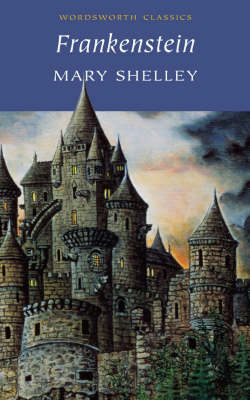
Frankenstein


If you were to take a random poll asking people what comes to mind when they think of "Frankenstein", they'll probably tell you that they envision a green monster with bolts in his neck moaning like a zombie while a crazy-haired scientist shrieks, "It's alive!" and a hunchback named Igor looks on. This is a great summary of most Frankenstein movies. Fortunately, Mary Shelley's book Frankenstein has none of these elements and is all the better for it.

The basic plot of Frankenstein will be familiar to most people, even if they're unaware that there is a book about Frankenstein. A brilliant doctor (named Frankenstein) creates a hideously ugly creature. The creature then begins terrorizing the good doctor and creates a tremendous amount of mayhem and horror in the process. What sets Frankenstein the book heads and shoulders above Frankenstein movies is the portrayal of the creature. Instead of a dumb, lumbering brute, the creature is an extremely intelligent, articulate, inquisitive, kind, and sensitive being who appreciates nature and literature. His better qualities make him an even more frightening villain once his anger at Dr. Frankenstein (for creating and then abandoning him) is unleashed. Victor Frankenstein also emerges as a more complex and flawed character. Intelligent and basically decent, he eventually realizes his error in creating the monster. Initially, I greatly sympathized with the creature, but as he wrecked his vengeance on the doctor, I began to feel for Victor. Although flawed, the doctor is not unlikeable. These two complex characters are what made this book a great read for me. By painting each one as more gray than black or white, Shelley makes her story seem much more real and, consequently, terrifying. Shelley's classic horror story is also a powerful meditation on revenge, obsession, and responsibility. This book is far more philosophical than it gets credit for being, yet this in no way makes Frankenstein a struggle to read.

The book has its share of flaws, but these problems do not negatively impact the book. The supporting characters, compared to Frankenstein and the creature, are not fleshed out well. Then again, they really don't need to be. These characters serve to illuminate Frankenstein and the creature's good and bad sides, so they don't really need to be as deep and interesting. Furthermore, all of these characters are present in reminiscences of the doctor and the creature, so it makes sense that they'd be recalled with a bias, for good or bad. The only other issue I had with this book was the structure. Because it is told entirely through reminiscence, the action occasionally lags a little. This is most obvious in the first few chapters. However, once Frankenstein creates the monster, the pace picks up and the book becomes quite engrossing.

Overall, I really enjoyed Frankenstein. The book's philosophical weight both surprised and delighted me. I also found the story quite entertaining. This story definitely benefits from the complex characters that Shelley created. This book, by being complex, is more terrifying and intriguing than the watered down versions presented on film.